
The History of Leica Watches
The DNA of Watchmaking
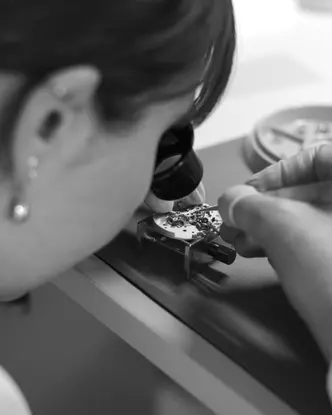
The DNA of watchmaking has always been present in the Ernst Leitz workshops, in every optical instrument and every Leica camera. It becomes visible in the manufacturing process, in the precision of the craftsmanship, and in the brand itself.
At just 20 years old, Ernst Leitz I moved to Neuchâtel, Switzerland, in 1863 to learn the art of watchmaking at Matthäus Hipp’s telegraph and watch factory. This became the starting point of his career, as he learned how to translate something large into something small, to focus on the essential, to master precision work and to use the traditional materials of watchmaking. He also gained insight into the craft of serial production. He later brought all this accumulated knowledge back to Wetzlar, Germany, where he began building optical instruments, focusing on microscopes. The precision of his optics earned him great recognition within the scientific community.

9037-99 Ernst-Leitz I
From Optics to the First Leica Camera
Our heritage as we know it today is rooted in watchmaking. The first major horizontal camera by Leitz appeared on the German market in 1880. This marked the beginning of further developments, such as the production of additional lens types like duplex lenses for different focal lengths as well as lenses for micro- and macrophotography. Around 1900, the first projectors and handheld cameras were also introduced.
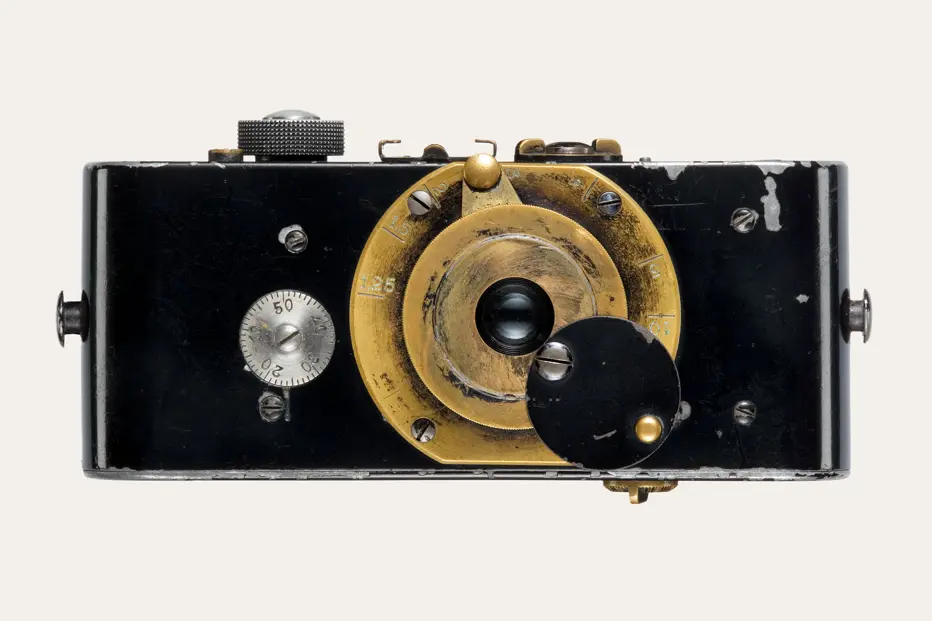
The true breakthrough in photography came when precision mechanic Oskar Barnack, who in 1914 invented a smaller, lighter camera that maintained outstanding image quality: the Ur-Leica, affectionately nicknamed ‘Lilliput’. To this day, this invention shapes our identity. As the first camera to use 35mm cinema film in landscape format, the Ur-Leica made photography mobile and suitable for everyday use. Symbolically, it marks the beginning of the history of Leica and stands for craftsmanship, engineering excellence, inventive spirit, and a new photographic mindset.
Unique Timepieces Since the 1980s
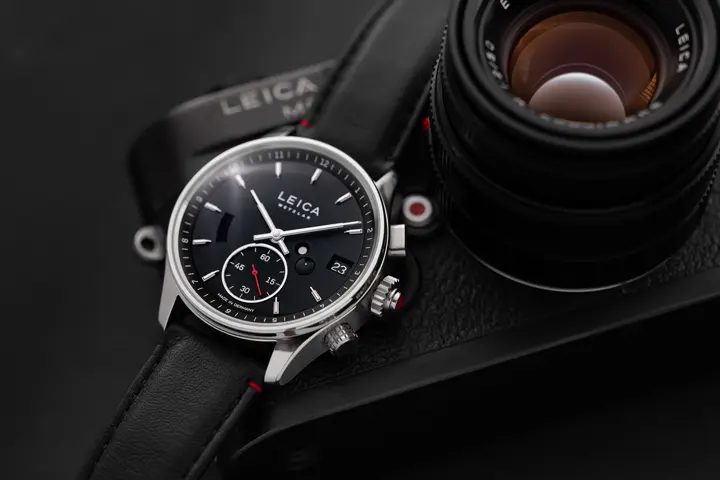
Returning to the company’s roots, the very first Leica watches were created in the 1980s and 1990s when we experimented with watches several times. There was indeed one watch equipped with the automatic ETA 7750 chronograph movement that was partially sold as a special edition alongside selected Leica cameras.
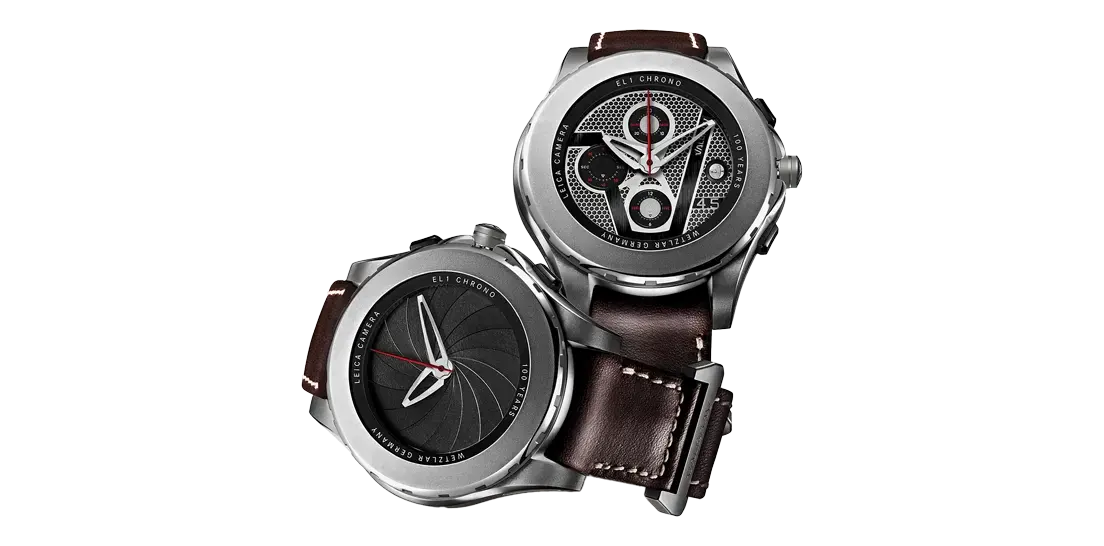
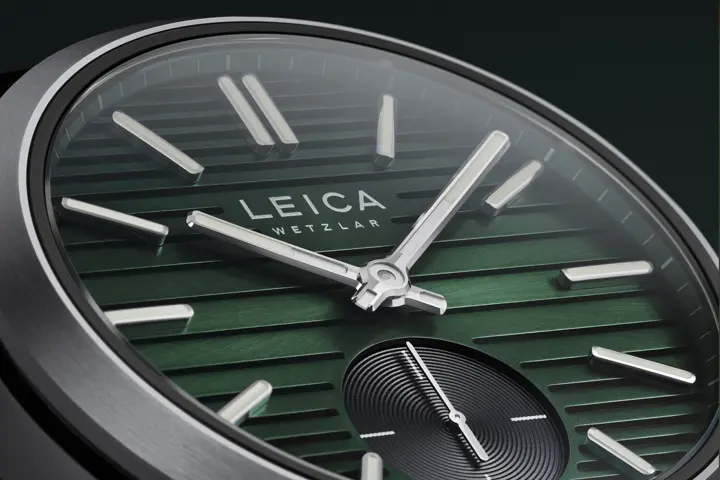
However, the true beginning of modern watch production emerged with the move to the new Leitz-Park in Wetzlar in 2014. In collaboration with Valbray, the limited Special Edition Valbray EL1 Chronograph was launched to celebrate the 100th anniversary of Leica. The independent watchmaker Valbray from Lausanne created this edition, limited to 100 pieces, featuring a case back engraved with the Leica logo and the words ‘100 Years of Leica Photography’.
The watch’s standout feature was its unique mechanical diaphragm system, consisting of 16 individual blades, mirroring the function of a camera lens. The Valbray EL1 Chronograph was released in two versions: 50 pieces in titanium and 50 pieces with black DLC coating.