
Street Photography in the Morning Mist, Surrounded by Beer Mugs
Oktoberfest at 28 mm
Most people are familiar with Oktoberfest through clichés of overflowing beer mugs, brass bands, and crowds singing late into the night. However, when photographer Teo Crawford arrived at Munich’s Theresienwiese festival grounds before the official opening, he encountered a completely different scene. “We started off in the very quiet phase, at the beginning before anything even started”, he recalls. “It’s certainly not the kind of party energy that you’d expect.”
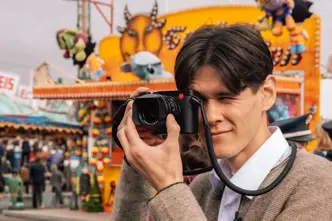
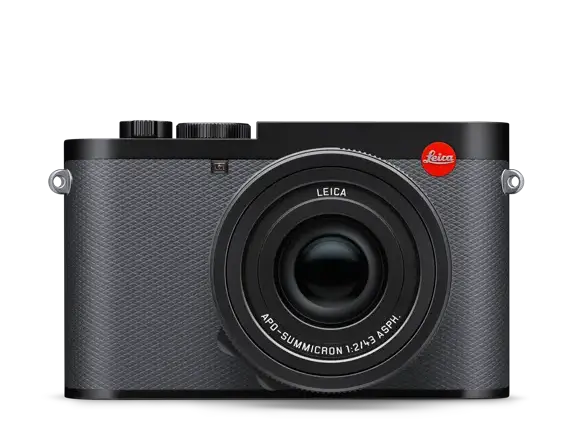
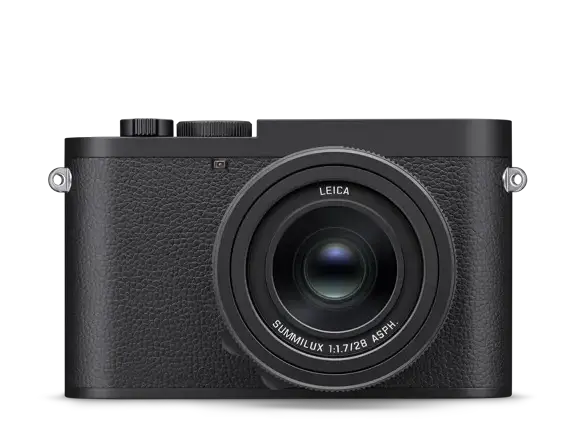
Photographer Teo Crawford documented Oktoberfest in Munich using the Leica Q3’s fixed 28 mm lens, tiltable display, and intuitive controls to capture quiet moments, milling crowds, and the hustle and bustle of the festival.
Subscribe to our newsletter and immerse yourself in the world of the Leica Q. Discover new products, inspiring works from the community and moments captured by the unique character of the Leica Q.
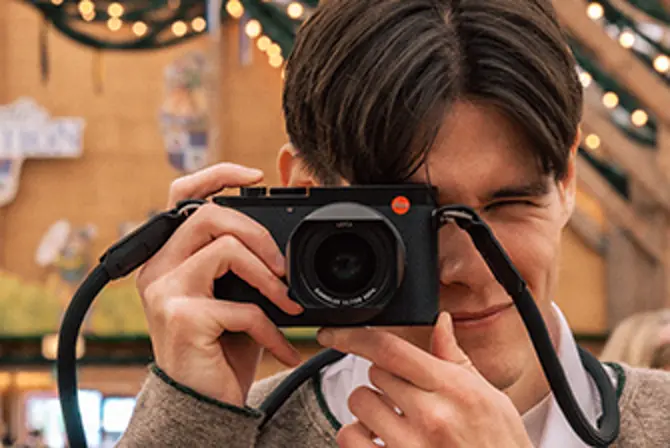
I’m not looking to produce perfect pictures. I’m searching for moments that evoke an emotional response in me.
Teo Crawford

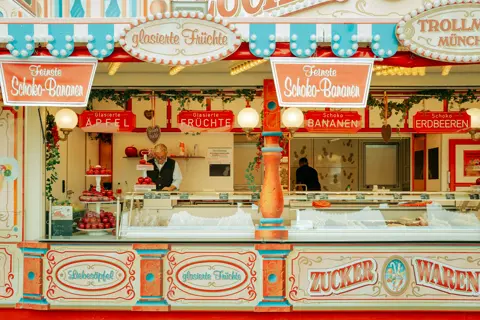
More Than Just Beer and Brass Band Music
The first thing to learn about Oktoberfest becomes clear very quickly: it isn’t just a single event, but a whole temporary city.
In Munich, this is known as the ‘Wiesn’. As the world’s largest Volksfest, it has been shaping Bavarian culture since 1810. For just over two weeks each year, the open space at the Theresienwiese festival grounds is transformed into a world of its own: over a dozen enormous festival tents spring up, many of which are steeped in decades of tradition and some of which date back centuries. Each tent has its own character, history, regulars, architecture, and atmosphere.
The livelier the place became, the more Teo’s energy soared: “It was way more fun to shoot when everyone’s here, when the place is alive, and things are going on.”
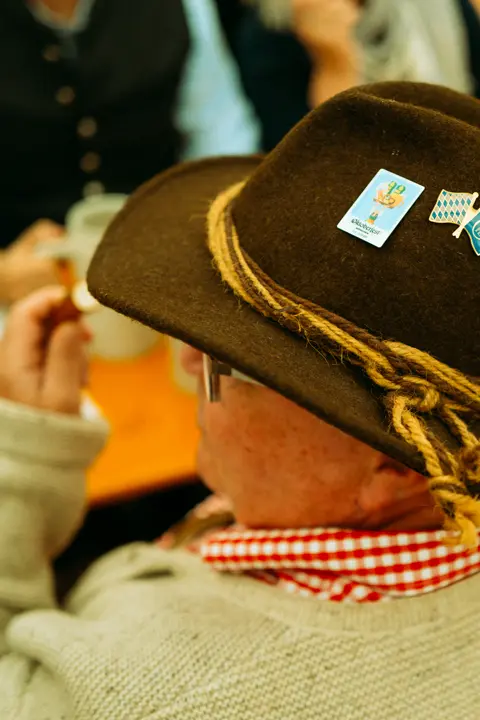
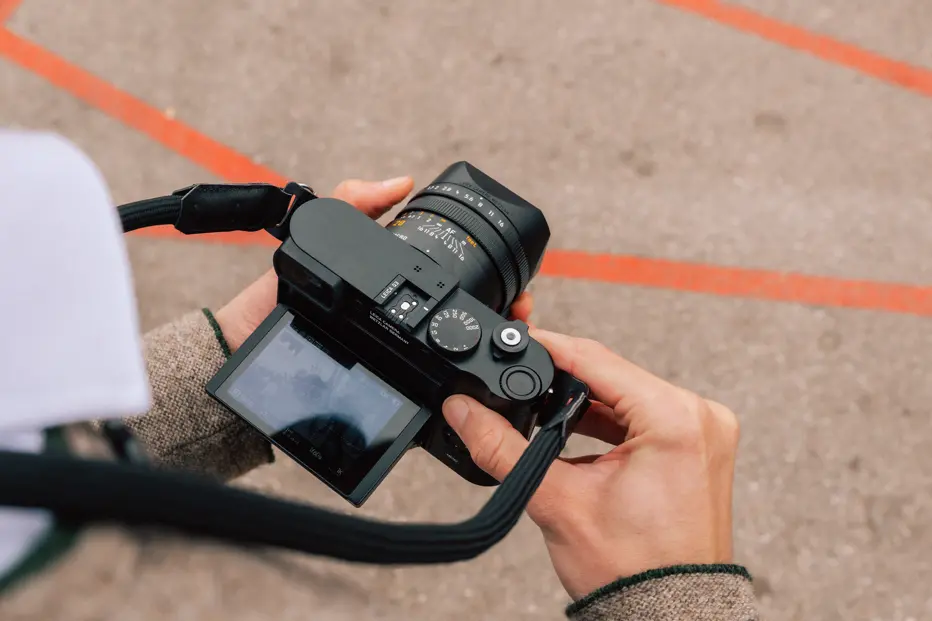
Using the Leica Q3’s tiltable display, Teo took photos from low, unobtrusive angles of view – “an angle that is not my eye level”. According to him, a powerful photo begins with an interesting subject and intriguing light. If neither of these elements materialises as planned, he relies on his willingness to experiment: “Have a little more courage to just try things out. It’s okay to have blurry photos, to have grainy photos. Photos don’t have to be perfect.”
What Can We Learn From Teo Crawford’s Approach?
Why is it worth arriving at the venue early?
The best photos aren’t always taken when Oktoberfest is at its busiest. If you arrive early, you’ll experience a completely different atmosphere: Fog hangs over the festival grounds. The streets are empty. The first rays of light set the scene. There are lulls before the hustle and bustle begins. These moments can reveal just as much about a place as the crowds that appear later in the day.
How can movement and perspective make a photo more interesting?
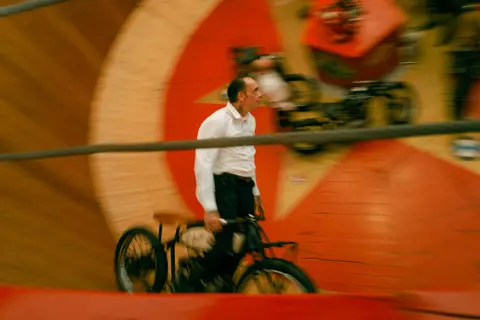
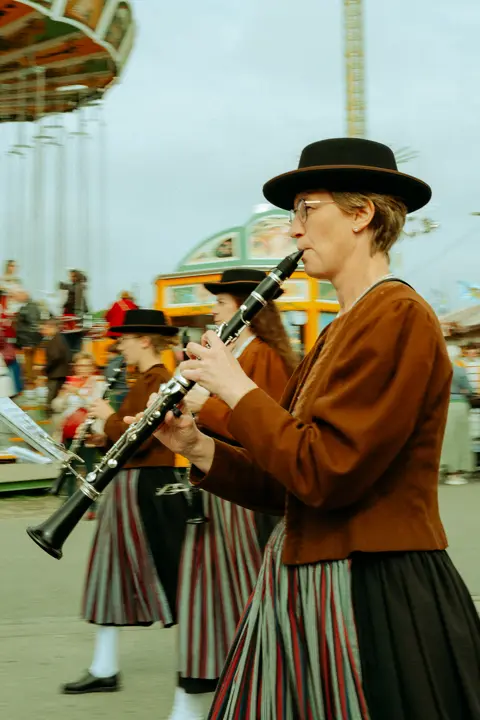
Rather than freezing every scene in razor-sharp focus, introducing a slight motion blur can capture the energy and dynamism of the moment. It’s also worth experimenting with low camera angles. An unusual perspective often creates more compelling compositions and allows viewers to immerse themselves more deeply in the scene.
How can you convey more than just a subject?
Instead of waiting for the perfect shot, Teo takes a photo as soon as something catches his eye. The Leica Q3’s 28 mm lens is ideal for this: it enables you to get close to your subject while still capturing the surroundings. The result is images that capture not only people, but also the atmosphere and context of a moment.
Teo’s Setup for Oktoberfest
Poised Before the Moment Passes
Teo believes a camera should be an extension of the hand – quick and intuitive, and an integral part of everyday life. Rather than being a barrier between photographer and subject, it should support the creative process. This is precisely why the Leica Q3 was ideal for capturing the spirit of Oktoberfest. “I really appreciate the flexibility that an everyday camera offers. You can document everything that happens in life without being too distracted by the camera.”
This philosophy also shapes the way he works. Rather than spending time thinking about technical aspects, Teo focuses on what is happening in front of him. He reacts spontaneously to light, movements and situations, always looking out for images that convey a feeling rather than simply capturing a moment.
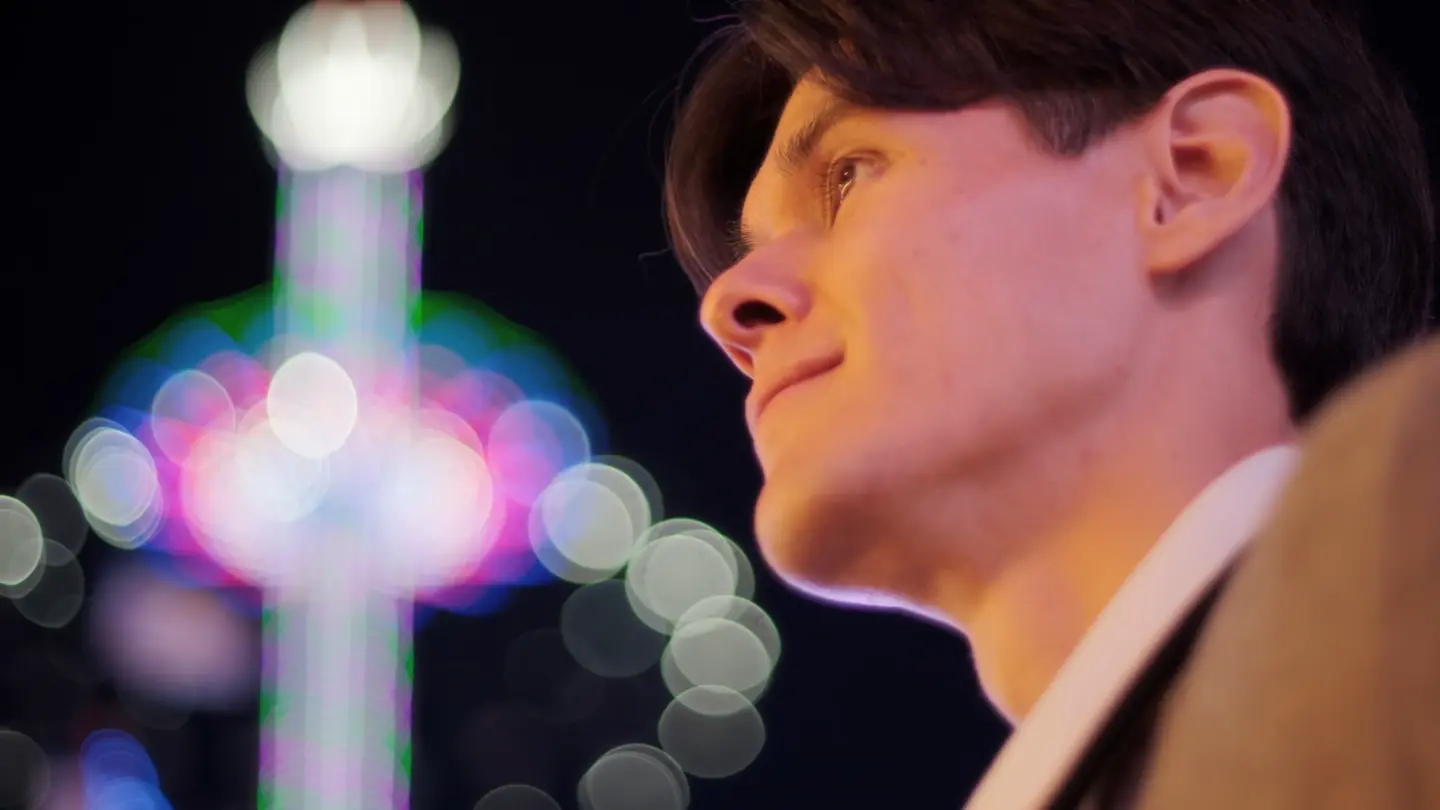
With a shutter speed of 1/50 s, Teo captures the motion blur of the fairground rides, approximating the distinctive look of film at 25 frames per second. The rides become trails of coloured light, and the crowds become dynamic shapes.
Away from Oktoberfest, Teo is deeply rooted in analogue photography and shoots with vintage SLR cameras. He has also taken the time to discover the Leica M6 equipped with a rangefinder for himself. The most important thing for him with every camera is seamless operation: a tool that allows for intuition, doesn’t interrupt the moment, and, above all, is a joy to use. “You just can’t beat someone having fun.”
Teo’s Q3 Settings at Oktoberfest
Shutter speed: 1/50 s
Motion blur from fairground rides and crowds
Perspective: low angles of view using the tiltable display
Unobtrusive, intuitive and experimental


I like to incorporate photography into my everyday life. This allows you to capture everything that’s happening around you without becoming too distracted by the camera in your hand.
Teo Crawford

About Teo
Teo is a photographer and filmmaker who shares his work and thoughts on photography with a dedicated YouTube community. Passionate about analogue photography, he shoots much of his personal work on film using vintage SLR cameras. He is renowned for his insightful videos on cameras, creativity, and the photographic process, which range from in-depth explorations of iconic brands to candid reflections on his own growth as a photographer. At the heart of his work lies a simple conviction: the best tool is one that doesn’t get in the way. Equipment is never the goal; it’s the means to an end. Teo believes that the fun and enjoyment brought by the process are the most important factors, and that good photography is the inevitable result. This is a philosophy that he has demonstrated time and again, whether he is shooting with a decades-old film camera or documenting everyday life with whatever camera he has to hand.
His visit to Oktoberfest with the Leica Q3 marked his first collaboration with Leica. This was a project that came about shortly after he explored the brand’s history for his own channel, tried out the Leica M6 rangefinder camera, and visited Leica’s headquarters in Wetzlar.
FAQ About Taking Photos at Oktoberfest with the Leica Q3
| Is the Leica Q3 suitable for capturing Oktoberfest? Yes, the Leica Q3 is perfect for taking to Oktoberfest. Thanks to its compact size, it’s easy to carry around all day, and the 28 mm lens is ideal for capturing wide-angle scenes and spontaneous street photography moments. This means you can get right into the thick of the action and take photos without being held back by your equipment. |
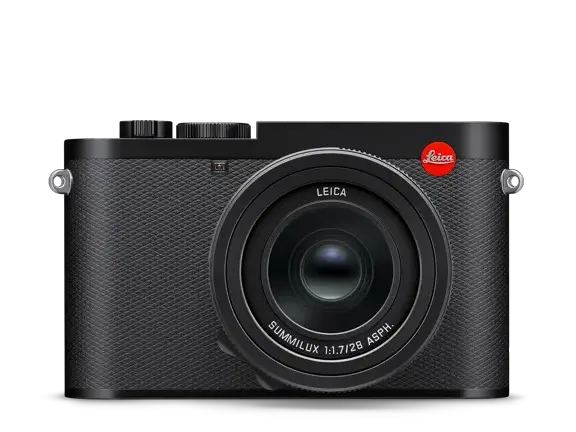
| What focal length does the Leica Q3 use? The Leica Q3 features a fixed 28 mm lens. This wide-angle focal length is perfect for capturing crowds, fairground rides and the atmosphere at Oktoberfest while staying close to your subjects. |
| What shutter speed did Teo Crawford use to create motion blur? Teo shot with a shutter speed of 1/50 s, as well as other settings. This makes movement visible, giving the images a more dynamic feel. The effect is similar to the natural motion blur seen in classic film footage. |
| How do you take photos discreetly at Oktoberfest? You can take discreet photos with a compact camera by keeping your movements steady and using natural perspectives. Teo used the tiltable display on the Leica Q3 to take photos from low angles of view without drawing attention to himself. Fairground stalls can also provide additional cover. |
| What are the essential elements for taking good photos of Oktoberfest? To take good photographs at Oktoberfest, you need interesting subjects, intriguing lighting and authentic moments. It’s often the small gestures, unusual perspectives or unexpected lighting that create powerful images, rather than big events. |
| What is the best time of day to take photos at Oktoberfest? Many of the most interesting photos are taken in the morning or outside of peak hours. However, nighttime can be just as captivating: as soon as the fairground rides, stalls and festival tents are bathed in light, a whole new visual world emerges. Lights reflect off surfaces, colours become more intense and backlighting can be used to deliberately create bloom effects, lens flares or light leaks, which lend the images an atmospheric quality. |