
A Star Between two Worlds
Ever since taking ballet herself as a child, photographer Anita Pouchard Serra has been drawn to this performing art. In her series, she accompanies French-Argentinian ballet dancer Ludmila Pagliero, a star of the Paris Opera, offering a glimpse behind the scenes, which focuses on both the dancer and the person.

The Interview with Anita Pouchard Serra
How important is movement in photography to you?
Anita Pouchard Serra: I think movement is something magical when it happens in a photo. But it also makes me want to explore how that movement works, how there could be a mini-choreography or something that brings the body into a certain position, pose or emotion. And so does the movement of my own body. Sometimes it’s really funny to see my body; there’s kind of a dance that unfolds around the person and the situation I am photographing. So I think of it as a game – there’s movement on both sides of the camera.


Beyond physical expression, what does dance convey?
For me, dance in general is the most natural thing there is. It’s something that cuts across many societies. It can be ritualistic, it can be seductive, it can be trance-like; it can be so many things that I feel it’s deeply connected to what it means to be human. And then there’s the beauty of ballet in particular. It’s like how it conveys stories and emotions; sometimes through understanding characters, sometimes purely through the senses. I think that’s unbelievable.
The dancer Ludmila Pagliero ended her career in Paris last year; is your series a tribute to her?
Actually, the farewell chapter shows the final year of nearly eight years of work. So, it’s an excerpt from a much longer project. But last year in particular was a special one, partly because of how many times we got to see each other, both for the formal farewell in Paris and for the tour. It was the first time I’d ever toured with her and the company, and, well, it was going to be one of the last. It was nice to see all these different sides of her – as a dancer, as a person, as a colleague.


How did the project come about eight years ago?
One day in Argentina, while reading the newspaper, I saw that there was a star dancer at the Paris Opera – an étoile – who was born in Argentina and who had trained at the Teatro Colón. And I started looking into her: I watched videos and interviews, and I felt something very close to me. Her journey seemed incredible, and one day I felt the urge to propose a project to her that would span both sides of the ocean we shared. At that time, I was just starting out in my career as a photographer. I wrote to her that I sort of had this idea, and to see if we could talk about it. In 2017, we met up and talked at the Café de l’Opéra in Paris, and in 2018 I took the first photo, after receiving authorisation from the Paris Opera.
What exactly interested you about working with her?
One thing that was clear from the very beginning of my work with Ludmila was that I wasn’t interested in dance photos per se. Performance photography can be the most beautiful thing there is, but I was a little more interested in all the other aspects. The small details, her relationships with others, not just with dancers, but with technical and artistic staff. Her relationship with the space, and Ludmila in different places, whether in Latin America or Europe. Everything that happens backstage, the little moments, the small details about the dancer and about the person; and how all of that influences how she dances and shines on stage later on.


What did you pay particular attention to in your photographic process?
I’d say that what interests me are the stories, and my role is to tell them through photographs. So, rather than individual photos, I look at how they’ll come together. That’s something that excites me, to look for that while I’m out there taking photos; and it excites me to look for it once we have the material and we’re trying to edit and tell a story. Going back to movement, I pay close attention to people’s postures and gestures to try to understand them, and when it comes to choosing or looking for a photo, I look for those specific gestures.
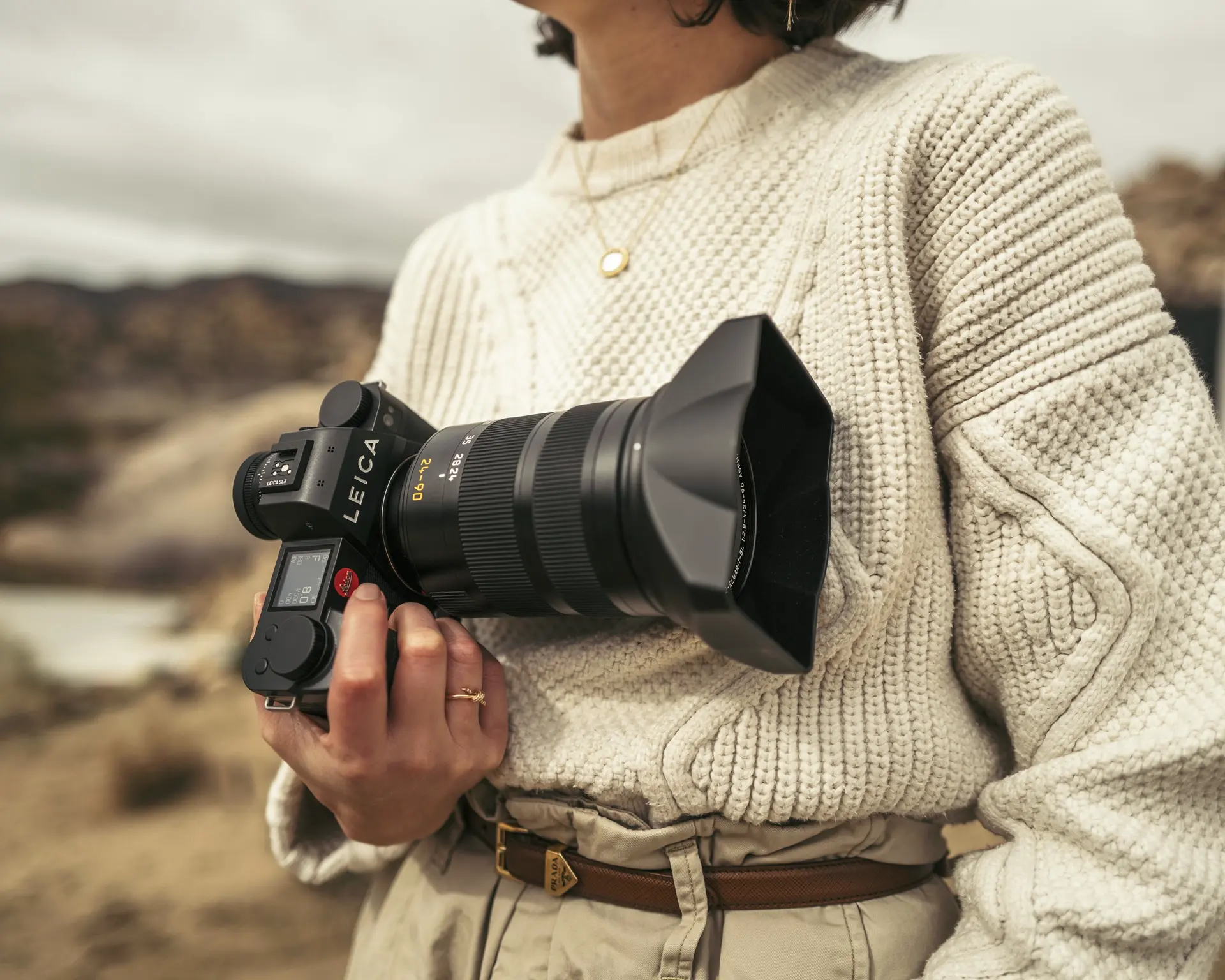
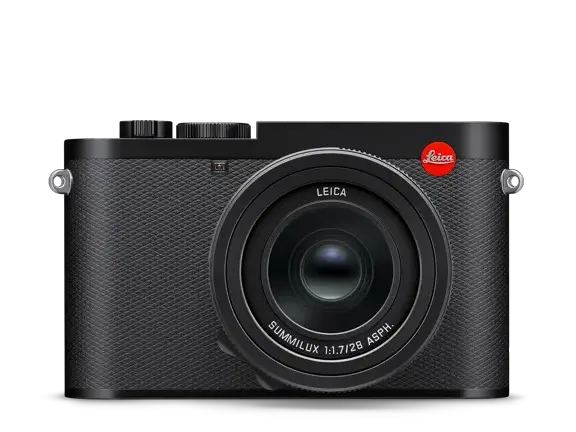
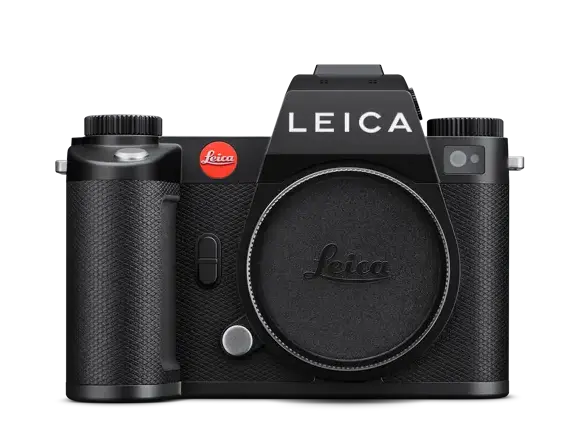
You took photos with the Leica Q2 and SL2
Leica is spectacular in terms of light. Its lenses are incredible, especially in these contexts where there’s very little light at times. For me, it’s also really nice to work with and hold in my hand, but also having the files with such a wealth of detail. You see the full range and depth the files offer, so you can work on them with the finest precision. And I think the Leica also brought a sense of craftsmanship and excellence to this project, which really fits well.

Why is your series called A Star Between Two Worlds?
Since we were going to put on an exhibition at the Maison de l’Argentine as part of the farewell celebration, we were looking for a title. Matís, the son of Ludmila’s partner, suggested this title, and that’s the one we kept. It also has a lot to do with the beginnings of the project between France and Argentina, what Ludmila represents here at the Paris Opera and in French dance, but also the inspiration she brings to many Argentinians, especially dancers, in Argentina.


What fascinates you about portrait photography?
I think that over the years it has become one of my favourite exercises. It stresses me out just as much as I enjoy it. It’s really beautiful to see what happens when you’re doing a portrait session with a little time to spare; how the body gradually relaxes, how chatting and how waiting a bit bring about other photos. I like when people relax and start to connect with an emotion they might be feeling inside, and that emotion then comes through to the camera. So, for me, portrait photography is a really beautiful exchange; it’s a challenge, but it’s also somewhat magical.
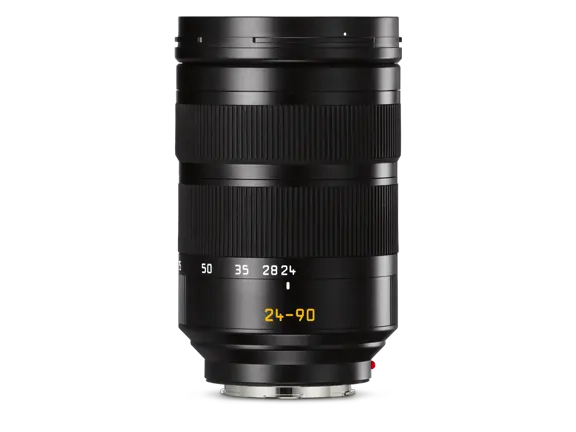
Equipment: Leica Q2, Leica SL2, Vario-Elmarit-SL 24–90 f/2.8–4 ASPH.

About Anita Pouchard Serra
Anita Pouchard Serra is a French-Argentinian photographer who lives in Buenos Aires and works between Latin America and France. She often photographs personal themes that are connected with current, social issues, such as identity, migration, territory and women’s rights.
Her works and long-term projects have received numerous honours, including the UN Special Award for South American Journalism on Migration in 2021 and the Fundación Gabo’s Gabo Award in 2024. She was part of the 50 ans de photographie française (50 Years of French Photography) photo book and exhibition curated by Michel Poivert. Her pictures have been published in The New York Times, The Washington Post, Le Monde, Die Zeit and El País. She also lectures in visual storytelling.
© Anita Pouchard Serra. All rights reserved.