Fred Stein: Portraiture by an Eyewitness
Robert Capa I Gerda Taro 1936

At the end of April, the exhibition Fred Stein: City. Life. Portrait will honour the life’s work of the photographer who was forced to leave Germany in 1933. After years in exile in Paris, he settled in New York City in 1941, where he focused on portraiture. Be it Hannah Arendt or Albert Einstein, some of his images are now considered photographic icons of the 20th century.
The exhibition at the Leica Gallery Wetzlar will run from 29 April to 14 June 2026. Issue 4.2026 of LFI magazine will feature a comprehensive portfolio of Stein’s oeuvre.
Fred Stein and the Leica
“The Leica taught me photography.”
Fred Stein (1909–1967) liked to use this blunt statement to summarise his experience and entry into the medium. Though he studied law, he was able to make good use of his passion for photography following his forced emigration from Germany: in Paris and later in New York, the amateur quickly became a leading proponent of street photography.
The fact that he also made a significant contribution to the history of 20th century photography as a portrait photographer, is evident when you consider his extensive body of portraiture work: over the course of more than three decades, he captured striking images of over 1,000 personalities from the worlds of politics, art and culture. From Robert Capa and Gerda Taro to Willy Brandt and Hannah Arendt, and on to Albert Einstein and Marlene Dietrich: viewed from a historical perspective, his work represents a veritable who’s who of the 1930s to the 1960s.
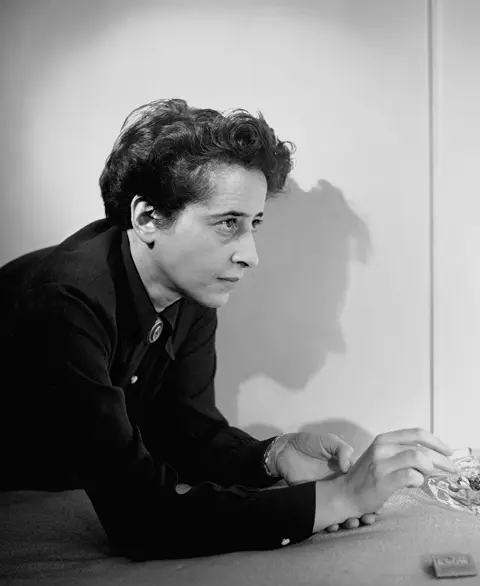
Hannah Arendt I New York 1944
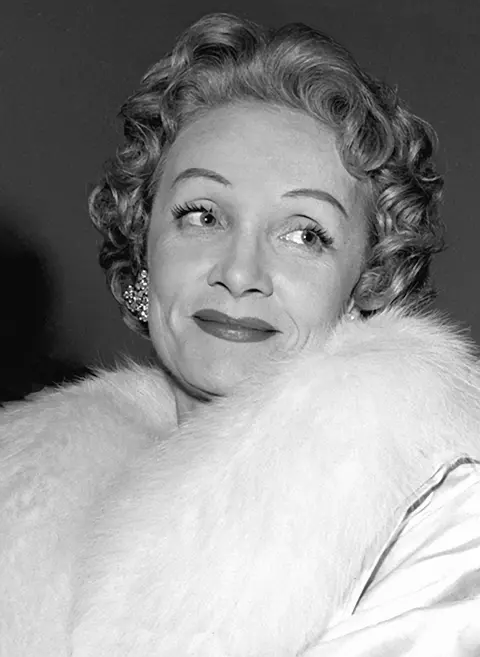
Marlene Dietrich I New York 1957
During his years in Paris, Stein began taking pictures of many other exiles with whom he developed close connections, while also deliberately seeking them out and photographing them at political or cultural events. The pictures were not an end in themselves, but were meant to help establish Stein as a photographer. He hoped that a new network would help him make contacts with publishers and magazines willing to print his pictures.
After fleeing to the United States, Stein continued to pursue his career as a photographer, turning increasingly to portraiture. His early death when he was just 58 hindered the realisation of larger portrait projects – and his oeuvre was forgotten. It is primarily thanks to his son Peter Stein, who processes and maintains this photographic legacy, that the significance of Fred Stein has returned to the awareness of the general public.
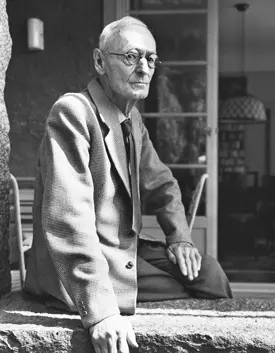
Hermann Hesse I Montagnola Switzerland 1961
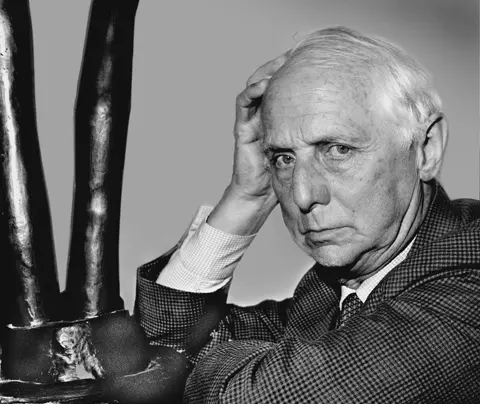
Max Ernst I New York 1962
Flight and Exile
Stein was preparing his second state examination and planned to pursue a career as a lawyer in Germany. However, on 30 June 1933, after the National Socialists seized power, he not only lost his livelihood after being dismissed from the judicial service in Dresden, but also faced the threat of persecution and arrest on political and racial grounds. Stein and his wife Lilo only had a small window of opportunity to escape into an uncertain future: under the pretext of going on their honeymoon, the couple managed to escape to Paris via Prague. In their luggage was a Leica I they had purchased together. From that time on, it would essentially be their means of earning a living, offering Stein a new existence and life perspective.
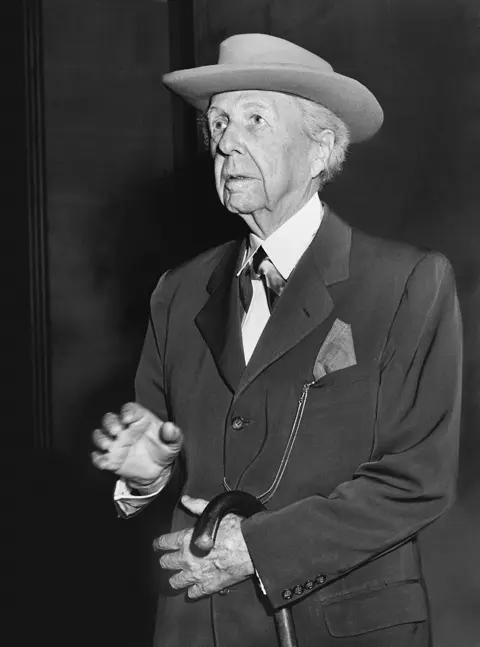
Frank Lloyd Wright I New York 1952
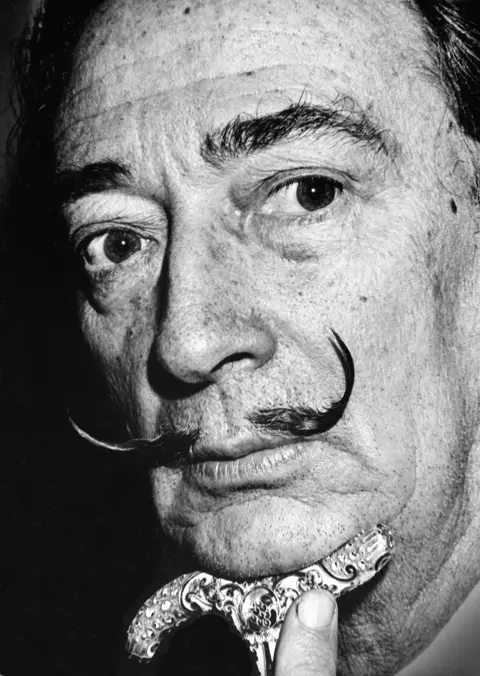
Salvador Dalí I New York 1963
Paris
After arriving in Paris, Stein turned his attentive and curious eyes towards life in the city and on its streets. People were always at the centre of his photographic interest. As part of the German emigrant community in Paris, Fred and Lilo Stein maintained many contacts, including with Willy Brandt, Bertolt Brecht, Robert Capa and Gerda Taro, who even rented a room in their apartment. They supported the anti-fascist resistance, offering their hospitality in their small home on the seventh floor of a building in Montmartre.
Initially, Stein’s portraits were taken without commission or prior arrangement. He attended political and cultural events as much as possible. During that period, he also produced impressive shots of Heinrich Mann, Bertolt Brecht and Ernst Busch. Only a few pictures made it into the magazines of the time. The striking thing about Stein’s pictures is the great intimacy he achieved in them. Using tight cropping, he created his own, unique version of portraits of intellectuals.
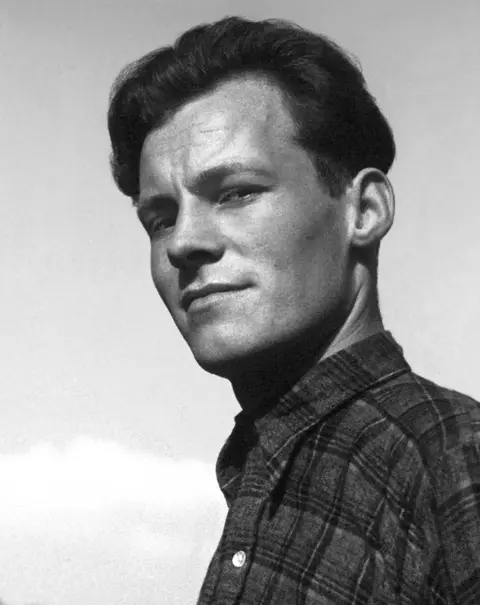
Willy Brandt I Paris 1937
New York
After being detained and imprisoned in France, it was with sheer luck that Stein and his family managed to immigrate to the USA. After arriving in New York City on 13 June 1941, he continued to work on portraiture. His best-known portrait to this day was taken on 27 February 1946 when he visited Albert Einstein, the 66-year-old winner of the Nobel Prize for Physics, in Princeton, New Jersey.
Portrait photography became a fundamental part of Stein’s work in the US. He not only gained recognition through publications and his first exhibitions, but his camera also gave him access to many prominent figures of the times. With many of them, he shared the experience of flight, displacement and new beginnings.
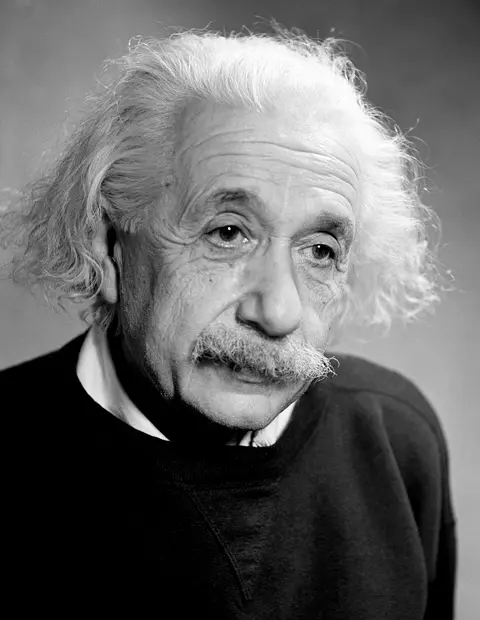
Albert Einstein I Princeton New Jersey 1946
Germany
It was not until 1958 that Stein returned to Germany for the first time. Here too, he photographed prominent personalities from the worlds of politics, industry, science, culture and the media. Thus, he once again met Willy Brandt, who had by then become Mayor of West Berlin.
In 1961, Stein returned to Germany for three months, to collect additional pictures for his planned photo book Deutsche Porträts (German Portraits). In the end there were images of over 100 personalities, though only a small selection was published in October 1961, by Ernst Battenberg Publishers in Stuttgart.
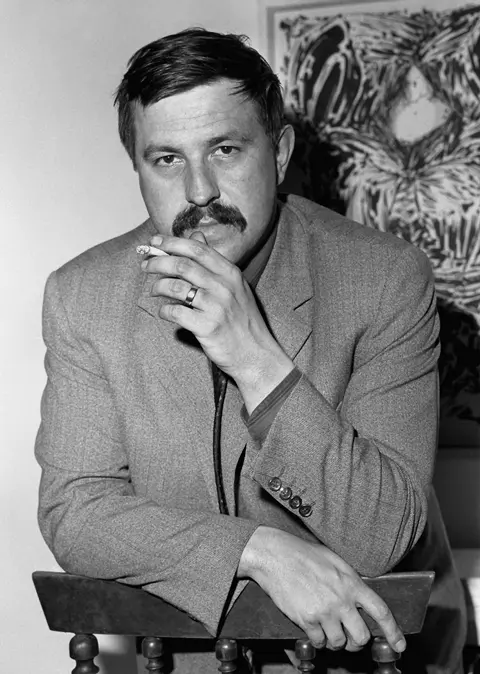
Günter Grass I New York 1965
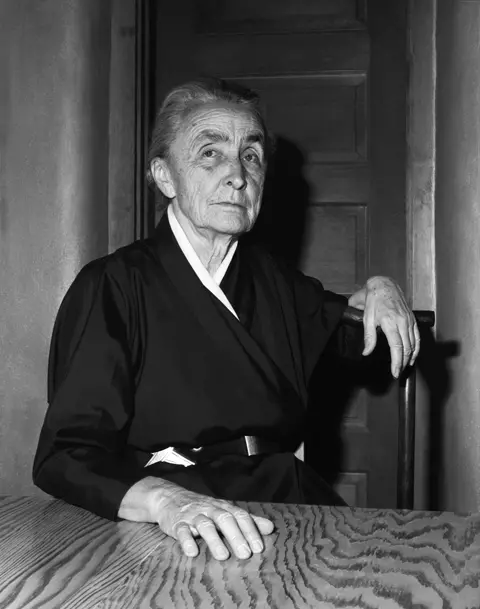
Georgia O´Keeffe
Over the last years of his life – from 1962 until his passing in 1967 – Stein dealt intensively with German history and its past during the Nazi era. Another book project, with the working title Das war nicht unser Deutschland. Ein Lesebuch für die Kommenden (That Was Not Our Germany: A Reading Book for Those to Come), remained uncompleted. Together with Stein’s portraits, it was to include an anthology of texts by 100 German-speaking authors; but the project was met with nothing but rejections from publishers. It seemed that the time for an intellectual reappraisal of the Nazi era on a cultural level was yet to come.
What remains are Stein’s striking portraits – rediscovering them in their entirety is an ongoing task. The exhibition at the Leica Gallery in Wetzlar showcases a small selection of them – alongside his finest street photography shots.
The exhibition at the Leica Gallery Wetzlar will run from April 29 to June 14, 2026.
Issue 4.2026 of the LFI magazine will carry a comprehensive portfolio of Stein’s oeuvre.
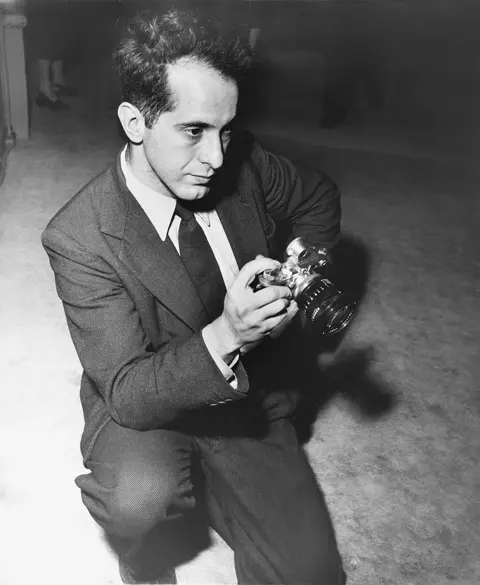
Robert Frank I New York 1954
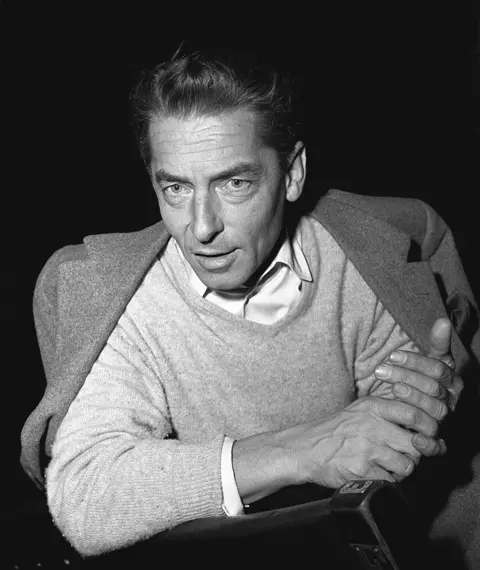
Herbert von Karajan 1955
“Full recognition of a person is not in the exterior identity alone, but elaborated and made convincing by some visible element of individuality. The photographer is therefore alert to attitude, gesture and expression, and snaps the shutter at the critical moment when these signs all blend together to describe the inner personality.”
Fred Stein
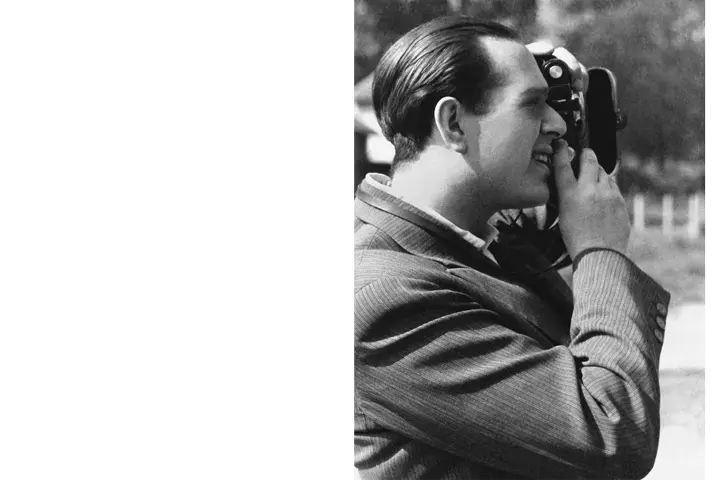
Fred Stein with the Leica I 1937 I ©Fred Stein Archive
About Alfred Stein
Alfred “Fred” Stein was born on 3 July 1909 in Dresden, the son of a Rabbi. Very politically engaged, he became a member of the Socialist Labour Youth when he was 16. He studied law in Heidelberg, Munich and Berlin. On 30 June 1933, he was dismissed from judicial service on antisemitic grounds and was no longer admitted to the second state examination. In August 1933, he married Liselotte ‘Lilo’ Salzburg (1910–1997). Their mutual wedding gift was a Leica I. At the beginning of October, they fled Germany and he opened Studio Stein in Paris in 1934. Lilo supported him in all his business and technical tasks. With the start of World War II, Stein was imprisoned for ten months in internment and labour camps. After escaping from a camp, he met up with his family again in Toulouse in 1940. They immigrated to the USA on 6 May 1941, arriving in New York City on 13 June. He was granted American citizenship in 1952. On 27 September 1967, Fred Stein died in New York after a short illness. His archive is maintained by his son, Peter Stein.