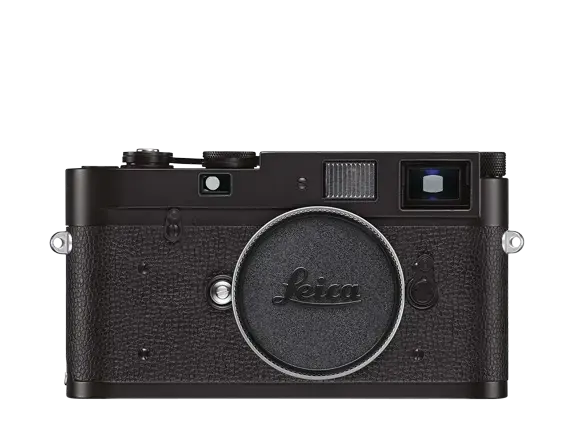
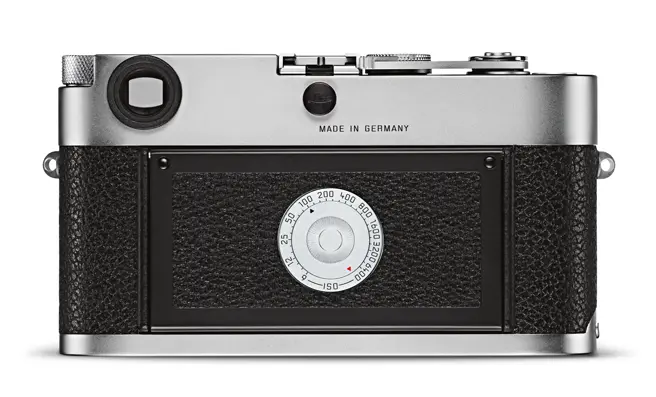
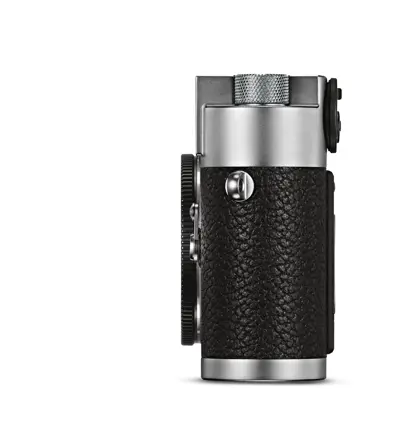
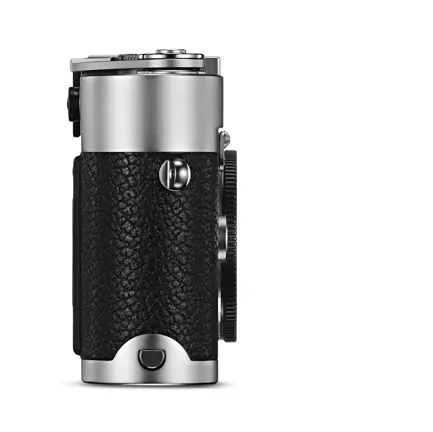
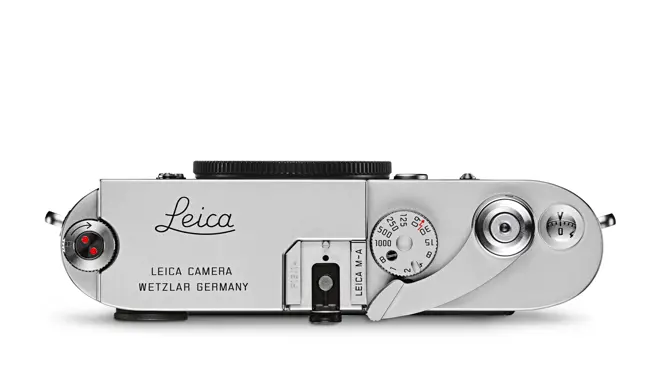
Leica M-A (Typ 127)
L'Essentiel
Appareil compact argentique à viseur
Obturateur plan focal contrôlé mécaniquement
Avec sélecteur de cadrage
Purement mécanique : sans mesure de l'exposition
Sans batterie
Design minimum sans le logo Leica sur le devant
Barillet de vitesses, bague de diaphragmes sur l'objectif et viseur à télémètre pour la mise au point : le nouveau Leica M-A (Typ 127) a tout ce dont un appareil photo a besoin. Plusieurs de ses composants étaient déjà utilisés pour les tous premiers appareils M, exactement sous la même forme qu'aujourd'hui.Il n’y a pas eu de changement de la mécanique de précision durant les 60 dernières années ; il n'y a aucune raison pour qu'il y en ait durant les 60 années à venir. Le Leica M-A est la perfection pure de la photographie argentique et symbolise désormais le retour à l'essence de l'art de la photographie par l'ultra-précision de l'ingénierie.
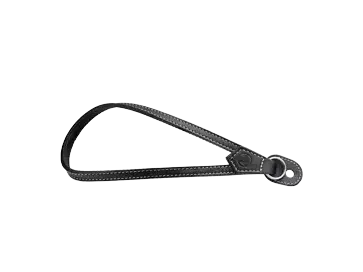
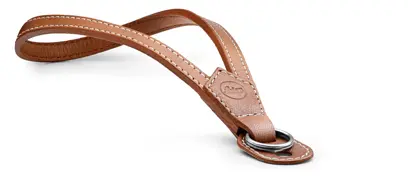
Boîtier, courroie, bouchon de boîtier
Marque: Leica
Nom de l'entreprise: Leica Camera AG
Adresse: Am Leitz-Park 5
Pays: Germany
Code postal: 35578
Ville: Wetzlar
Personne responsable: Leica Produkt Support
Adresse e-mail: info@leica-camera.com
Numéro de téléphone: +49 6441 2080 111
SAFETY REMARKSGeneral Information
- Always store small parts as follows:
- Out of the reach of children
- In a safe location, where they will not get lost or stolen
- State-of-the-art electronic components are sensitive to static discharge. You can easily pick up charges of several 10,000 volts by simply walking on synthetic floor coverings. A static discharge can occur when you touch the camera and especially if it is placed on a conductive surface. A static discharge on the camera housing poses no risk for the electronics. Despite built-in safety circuits, you should avoid direct contact with external camera contacts like those in the flash shoe.
- Use a cotton or linen cloth instead of a microfiber cloth from an optician's (synthetic) when cleaning the contacts. Make sure to discharge any electrostatic charge by deliberately touching a heating or water pipe (conductive, grounded material). Dirt deposits and oxidation on the contacts can be avoided by storing your camera in a dry location with the lens cap and the flash shoe/viewfinder cap attached.
- Only use accessories specified for this model to prevent faults, short circuits or electric shock.
- Do not attempt to remove parts of the housing (covers) yourself. Repairs must be done at authorized service centers only.
- Protect the camera against contact with insect sprays and other aggressive chemicals. Petroleum spirit, thinner and alcohol must not be used for cleaning. Some chemicals and liquids can damage the camera housing or the surface finish.
- Rubber and plastics are known to expel aggressive chemicals and should therefore not be kept in contact with the camera for extended periods of time.
- Prevent any sand, dust or water penetration into the camera, e.g., during snowfall or rain or on the beach. Be extra careful when changing the lens and when inserting or removing the film. Sand and dust can damage the camera and lens. Moisture can cause malfunctions and even irreparable damage.
Lens
- A camera lens can have the effect of a magnifying glass when exposed to direct frontal sunlight. The camera must therefore be protected against extended exposure to direct sunlight.
- Attaching the lens cap and keeping the camera in the shade or ideally in its camera case will help prevent damage to the interior of the camera.
Batteries
- Improper use of the batteries or the use of unapproved battery types may result in an explosion.
- Do not expose rechargeable batteries to sunlight, heat, humidity or moisture for prolonged periods of time. Likewise, batteries must not be placed in a microwave oven or a high-pressure container as this would pose a fire or explosion hazard.
- A damaged battery can damage the camera.
- The battery must be removed from the camera and must be replaced immediately if there is a strange smell, discoloration, deformation, overheating or leakage. Continued use of the battery may result in overheating, which can cause a fire and/or an explosion.
- Never throw batteries into a fire as they may explode.
- Keep the battery away from sources of heat if there is leakage or if you smell burning. Leaked fluid can catch fire.
- Keep batteries out of the reach of children. Batteries can cause suffocation when swallowed. Swallowed batteries can also result in serious injuries or lead to death.
- If you suspect that a child has swallowed or ingested a battery button cell, call an ambulance immediately.
- Inspect the product regularly and make sure that the battery compartment cover is properly secured. Do not use the product if the battery compartment cover is not adequately secured.
- Dispose of used batteries immediately and safely, out of the reach of children. A battery can still be dangerous even if the device can no longer be used.
- New and used batteries, or batteries with different voltages or from different manufacturers, should not be used together.
- Remove the battery if you will not be using the camera for a long period of time.
- Return defective batteries to a collection point for proper recycling in accordance with relevant regulations.
- Oxidation of the battery surfaces can cause the power circuit to be interrupted and the LEDs to go out. In this case, the batteries must be removed and cleaned with a clean cloth. The contacts in the camera may also need to be cleaned.
First Aid
- Battery fluid may cause blindness if it comes into contact with the eyes. Rinse the eyes thoroughly with clean water immediately. Avoid rubbing. Seek medical attention immediately.
- Leaked battery fluid poses an injury hazard when it comes in contact with clothing or skin. Rinse the affected areas thoroughly with clean water.
Carry Strap
- A carry strap is usually made of very robust material. You should therefore keep it out of the reach of children. A carry strap is not a toy and poses a strangulation risk.
- Use the carry strap only for its intended purpose on a camera or on binoculars. Any other use poses the risk of injury and may possibly result in damage to the carry strap and is therefore not permitted.
- Carry straps should also not be used for cameras/binoculars during sports activities that pose a risk of entanglement (e.g., when mountain climbing and similar outdoor activities).
Tripod
- When using a tripod, check its stability and turn the camera by repositioning the tripod rather than turning the camera itself.
- When using a tripod, also ensure that you do not overtighten the tripod screw or use excessive force.
- Avoid transporting the camera with the tripod attached. This could cause injury to yourself or others or damage the camera.
Flash
- Use of an incompatible flash unit with the camera can, in a worst case scenario, lead to irreparable damage to the camera and/or the flash unit.
Camera/Lens
- Note the serial number of your camera and lenses, as this is extremely important in the event of loss.
- Depending on the model, the serial number of your camera is engraved on the flash shoe or on the underside of the camera.
- A lens or the camera bayonet cap should always be fitted to prevent dust, etc. from entering the interior of the camera.
- For the same reason, lenses should be changed quickly and in as dust-free an environment as possible.
- Camera bayonet caps or rear lens caps should not be kept in your trouser pocket, as they attract dust which can get inside the camera when you put them back on.
Film
- Make sure that the film ISO value is set correctly on the ISO setting dial.
- Have exposed film developed directly.
Inscrivez-vous maintenant et bénéficiez d'une extension de garantie
En enregistrant un compte Leica, bénéficiez d'une extension de garantie de 12 mois sur votre produit Leica enregistré.
Cette offre s'applique à tous les appareils photo et objectifs Leica des séries M-System, SL-System et Q, ainsi qu'aux montres Leica. Elle est automatiquement activée après avoir complété votre profil et vous être inscrit pour recevoir les Leica News.