
Odzala
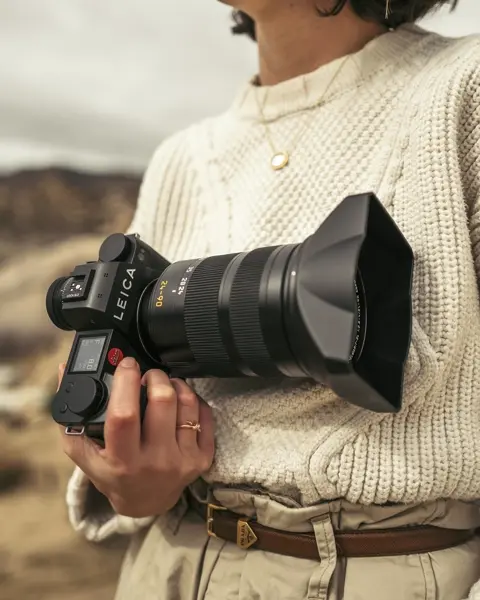
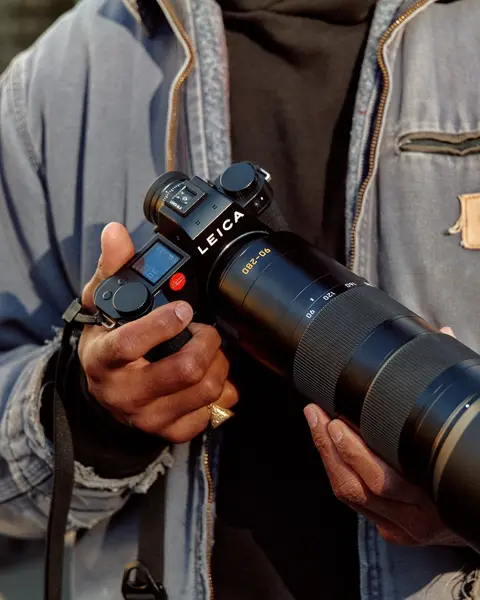
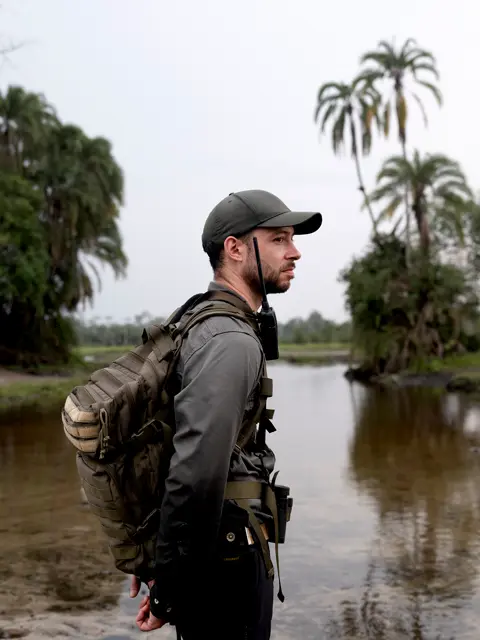
Over a million hectares of thick tropical rainforest, just a handful of visitors per day, and gorillas who decide how close they want to come: Odzala-Kokoua National Park follows its own rules. In collaboration with researcher Magdalena Bermejo, Depardon took his Leica SL into the park, knowing full well that he was only there as a guest. He spoke with us about how it feels to encounter a silverback at a distance of five metres, and what these animals reveal about our own selves.
The Interview with Mathias Depardon
What was your first impression when you arrived at Odzala-Kokoua National Park?
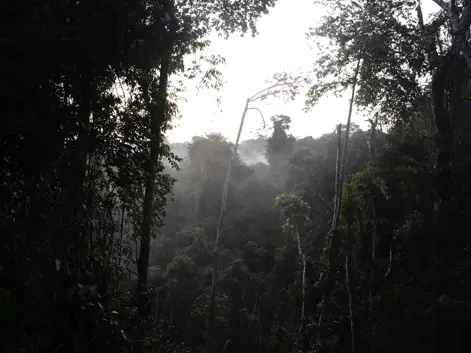
Odzala-Kokoua is such an amazing and unique place – the first impression is being face to face with such vast and dense nature. Spanning 1.3 million hectares, Odzala-Kokoua is a mosaic of swamp forest, savannah-forest landscapes and a maze of river systems.
The rainforest lets in almost no direct light; how do you deal with the near-closed canopy and the extreme contrasts it creates?
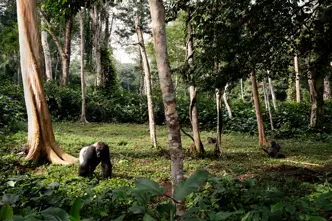
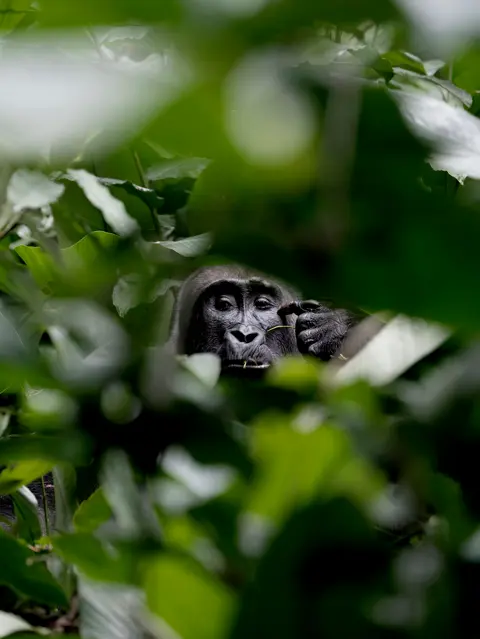
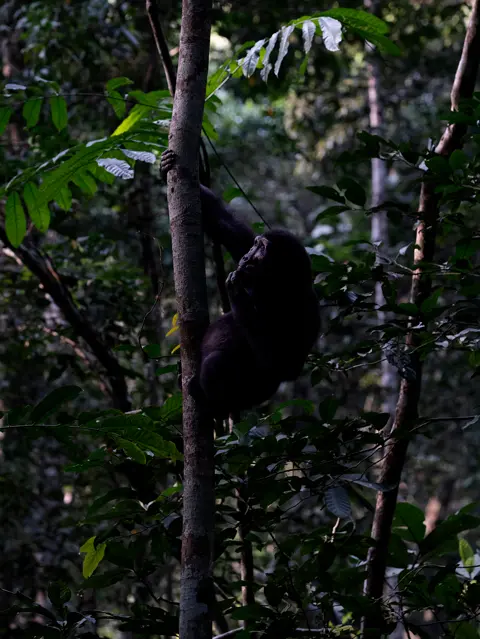
It’s tricky when you’re shooting with backlight and very low light overall, photographing living primates who are climbing up very large trees. Plus, you can’t really move from your initial position within a distance of 5-7 meters. You have to wait for the right moment when the light and these western lowland gorillas meet.
How close do you actually get to these great apes – and how do you decide when to raise your camera or consciously hold back?
Most of the time you stay at a distance of 5-7 meters, but this can vary upon the situation – I was at times closer to a silverback. However, it’s the primate who chooses to get closer to you, not the other way around. We share 90% DNA with these gorillas, which means that at times you can interpret their reactions pretty much like you would with a human.
Magdalena Bermejo has been conducting research in Odzala for many years; has her scientific perspective on the apes influenced the way you look at them through the lens?
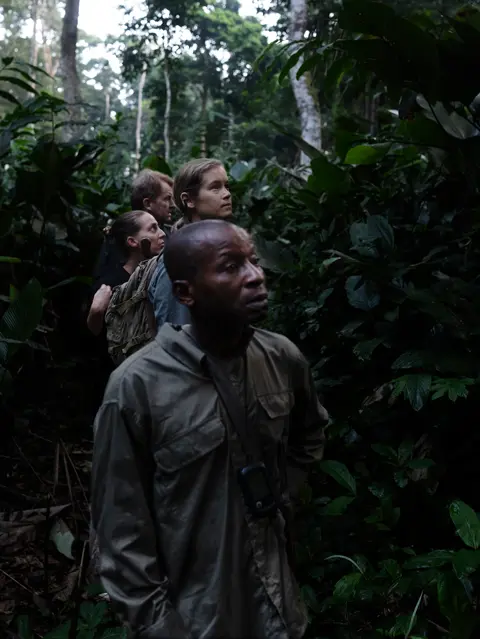
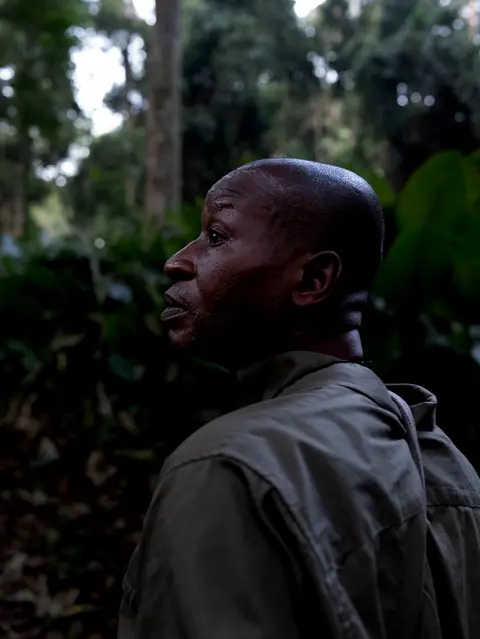
As a visitor in Odzala, you’re financing the research led by Magdalena Bermejo and her team. Just a reminder: these lowland silverbacks are endangered and through leading research the primates are given a safe context for their survival. The experience is unique, with a limited guest list entering the park: you go out with a tracker who was once a gorilla hunter himself, to meet the gorillas with a maximum of 3 to 4 people. This is quite a privileged situation and very different from certain safaris elsewhere in Africa. You will only spend 30 minutes with a group of gorillas within any given day – the idea is that they not become too accustomed to human presence. The guides and trackers do not want to interfere with them too much: the idea is that the primates retain their habits within this rainforest, and their way of living is not distorted.
The trackers walking through the forest with you were once gorilla hunters themselves?
Yes — It’s great to know that, through education and their contact with Magdalena and her team, they’ve changed their perspective. Most locals are now more connected with their environment and realise how rich and yet how fragile it is. The research led at the Odzala reserve has allowed locals to make a living without sacrificing the ecosystem in their region.
Was there a particular moment that left a lasting impression on you?
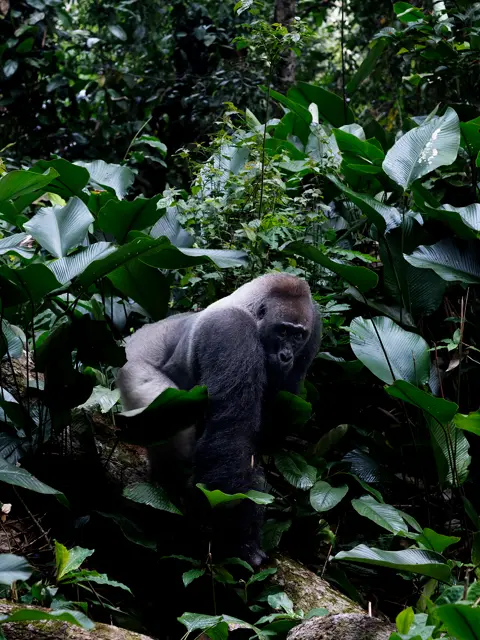
Our group ended up close to a silverback family while the group’s dominant male was away. As we were approaching the family, he returned and charged us to scare us away. I could hear him running behind me at close to 30/40km an hour. We were a threat to him and the group: he was clearly unhappy and I must say that was a scary moment. The guide and tracker managed the situation very well, however, and we had to leave very quietly after having faced this male silverback.
What sets photographing in the Congo rainforest apart from other places where you've worked?
It’s the constraint due to the low light, the moving primates, and the fact that you’re not really mobile while taking photographs. It’s challenging.


What do you hope viewers of your images will come to understand – about gorillas, and perhaps also about ourselves?
That we are very different and yet very alike: again, gorillas and humans share 90% of the same DNA, which makes them very human. They play an essential role in maintaining biodiversity in the forest homes where they forage, allowing a wider array of plant species to find sunlight and thrive.


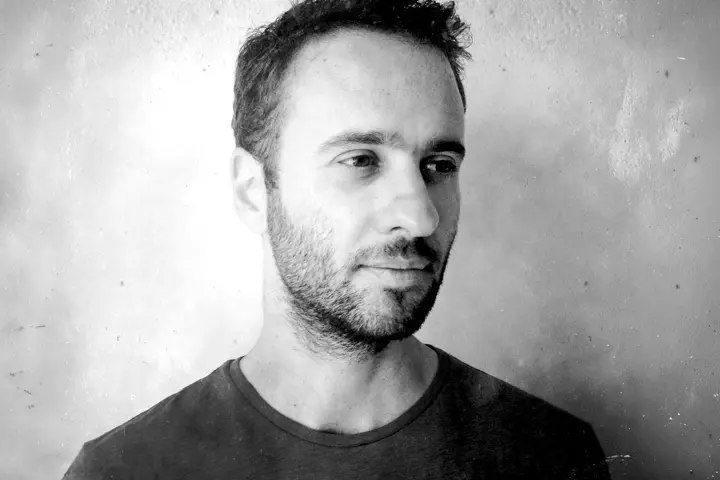
© Benjamin Girett
About Mathias Depardon
Mathias Depardon grew up in France, Belgium and the USA. After studying communications and photojournalism, he worked for the Belgian newspaper Le Soir, before dedicating himself to reportage photography. His immersive approach has contributed to the production of large-scale projects dealing with ecological and social issues. His work has appeared in numerous international magazines.
© Mathias Depardon. All rights reserved.