Where Light Shapes Space

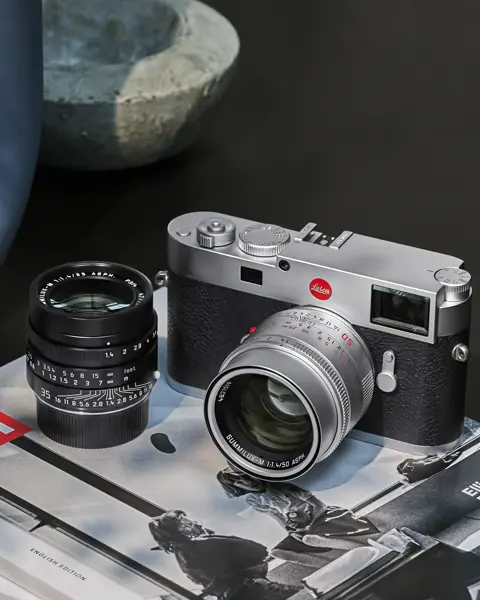
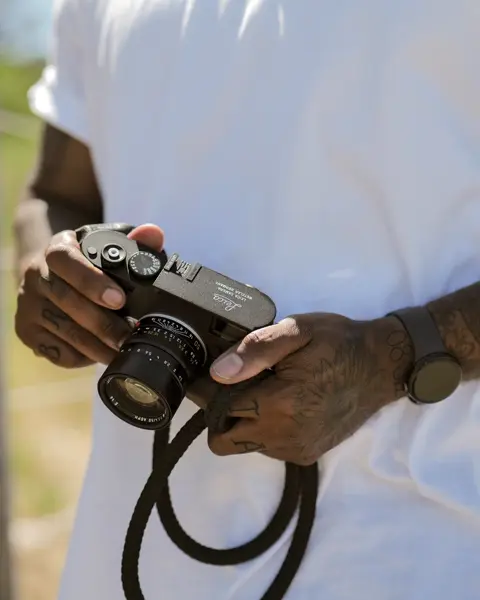
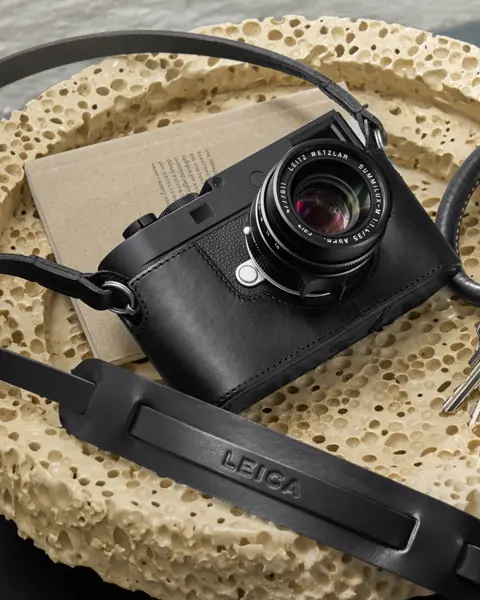
Belgian photographer Geert Verstrepen has built a distinctive visual language rooted in black and white, where light, contrast, and composition take precedence over all else. Working at the intersection of architectural, street, and documentary photography, his images explore the relationship between space and human presence with a refined, minimalist approach. Driven by both precision and intuition, Verstrepen captures the quiet rhythm of everyday environments, transforming them into timeless, contemplative scenes. Today, he works primarily with his Leica M9 and M10, cameras that perfectly align with his vision and reinforce his pursuit of purity, simplicity, and essential form.
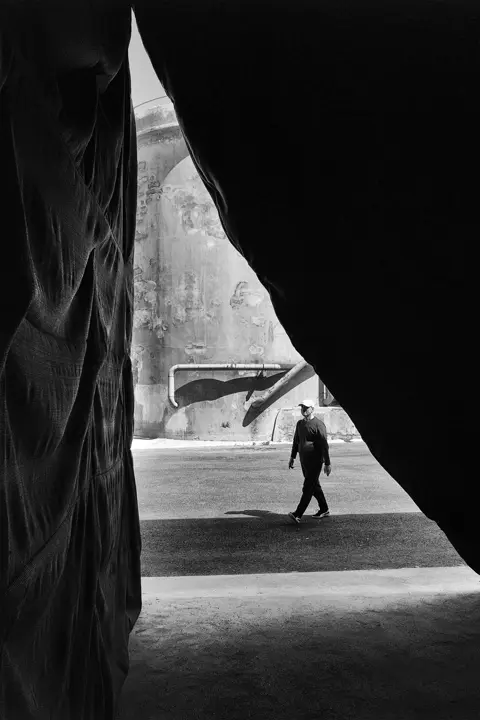
The Silent Dialogue Between Space and Presence
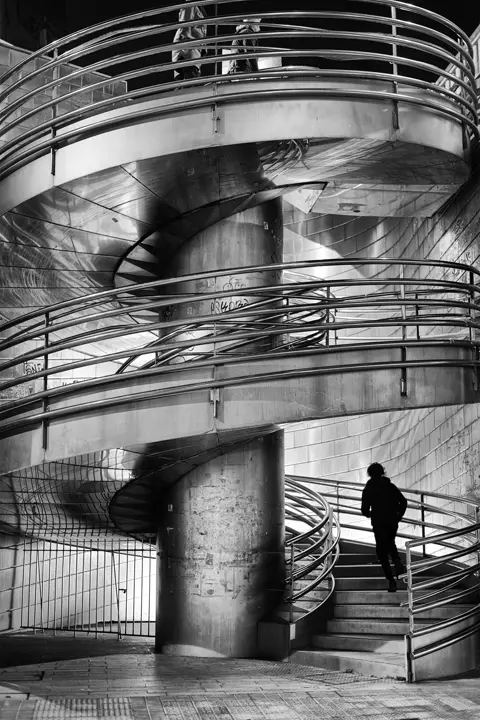
Your black and white series conveys a strong sense of stillness and composition. What drew you to explore the relationship between architecture and the human figure?
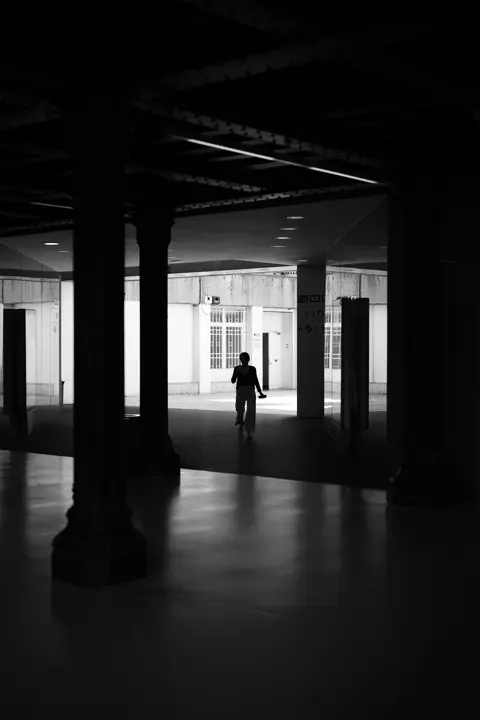
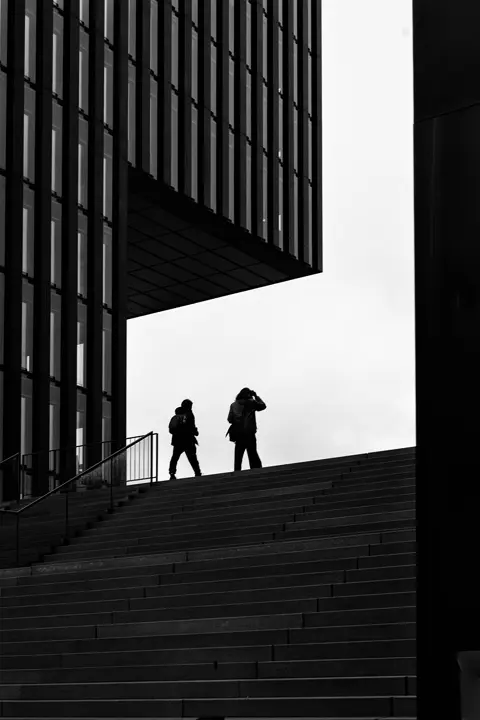
My fascination began with the way architecture subconsciously guides us, how lines, volumes, and empty spaces move us and position us within a space. When a human figure appears within this setting, a subtle tension arises, a dialogue between the designed and the accidental. For me, that silence is not an absence, but a charged moment in which presence becomes noticeable.
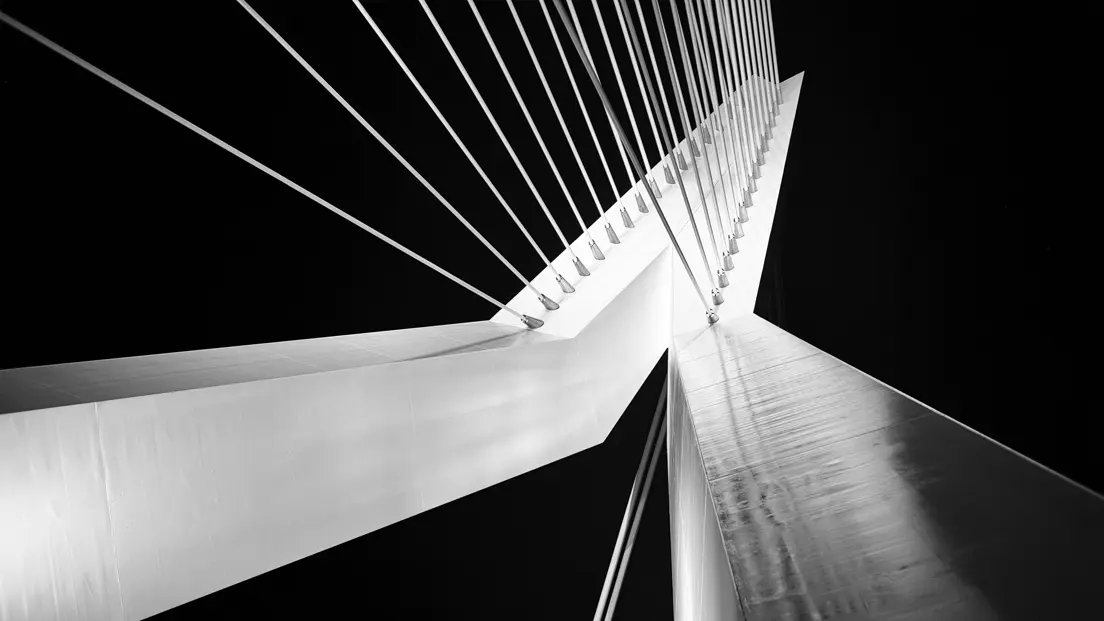
Why Black and White Remains Essential
Black and white has long been central to your work. What does it allow you to express that colour cannot?
For me, black-and-white photography is timeless. Without colour, much of the visual distraction disappears too. What remains is the essence: light, shadow, form, and composition. The image becomes more direct, purer, and it takes the viewer straight to the heart of what is being shown. My affinity with black and white also dates back to my childhood. I grew up with black-and-white films and images, and that aesthetic has become deeply rooted in my visual memory. It shaped the way I see things, even before I started taking photographs myself. Today, black and white feels to me not as a limitation, but as a conscious choice — almost like a language. It is a form of expression that goes beyond registration; for me, black-and-white photography is not a style, but an art form in its own right.
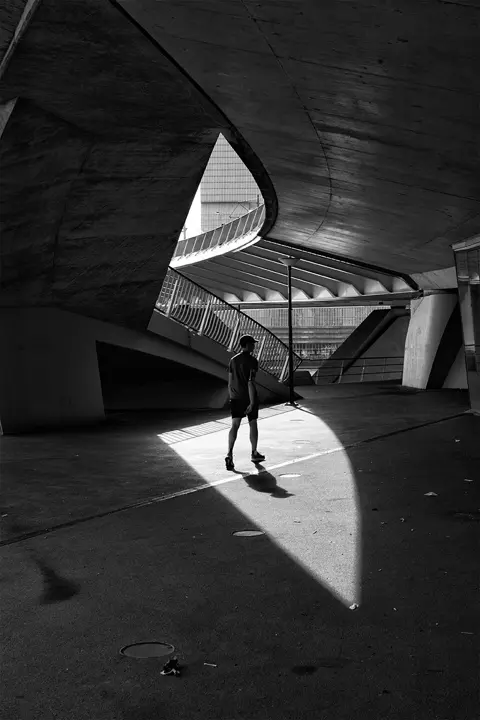
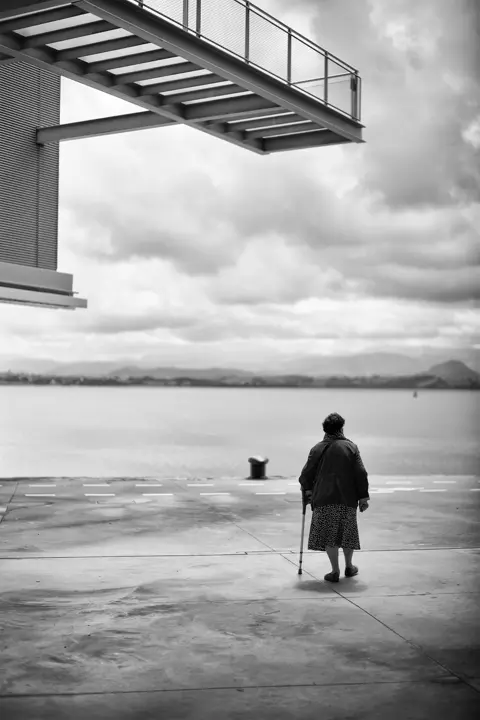
Slowing Down to See: The Leica M Experience
The Leica M demands a particular intimacy with your subject. How does working with a rangefinder shape your relationship to architectural spaces?
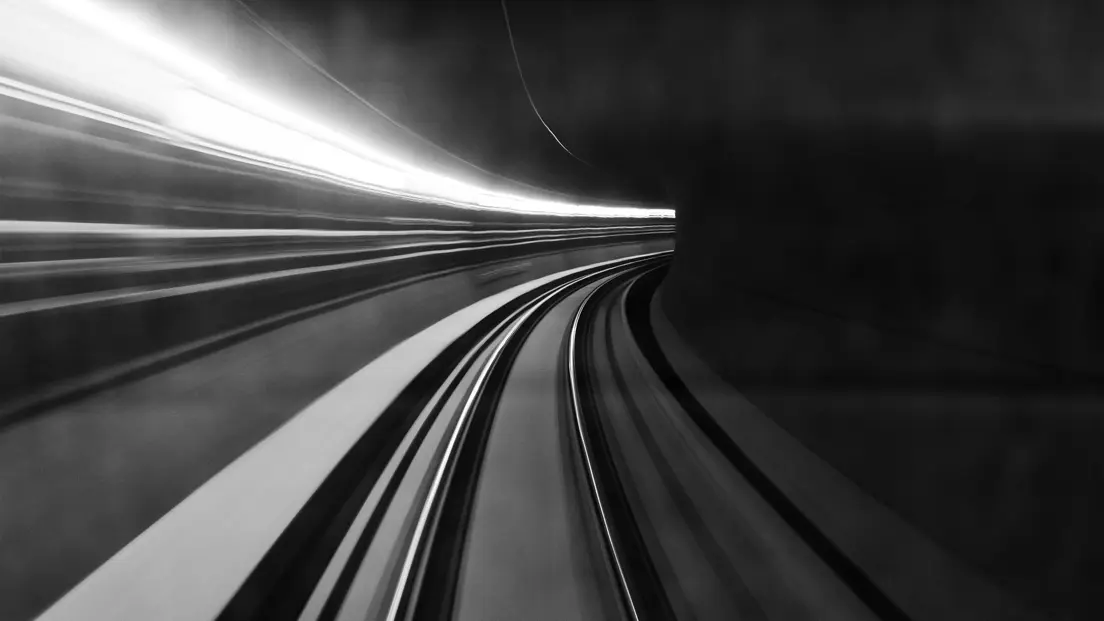
The Leica M brings an interesting duality to my way of working. On the one hand, the camera slows me down. It forces me to look consciously, to carefully construct my framing and focus. I take the time to let an image develop, rather than forcing it. On the other hand, I know the camera so well that it has almost become an extension of my body. Within that slowness lies speed too: when everything comes together, light, composition, and presence, I can react immediately, without thinking. It is precisely that balance between reflection and intuition that shapes my approach to photography. It might sound strange, but I couldn’t go out without my M anymore.
Inviting Stillness and Interpretation
Many of your images evoke a contemplative, almost meditative atmosphere. What emotional response do you hope to elicit from the viewer?
First and foremost, I naturally hope that the viewer will appreciate my images, that they evoke something that appeals to them visually. But for me, it goes further than that. I want my photographs to raise questions, for the viewer to pause for a moment and wonder exactly what they are seeing. A certain degree of doubt is allowed, the image doesn’t have to reveal itself immediately. Sometimes there is also a more specific intention behind an image: a feeling, a tension, or a subtle message that I want to communicate. But I always leave room for interpretation, because every viewer brings their own experience to it.
The feedback I receive from people all over the world means a great deal to me. It is remarkable to see how images affect different people in such varied ways. That sense of connection, across borders, gives me the motivation and inspiration to further develop my work and to keep searching for images.
About Geert Verstrepen
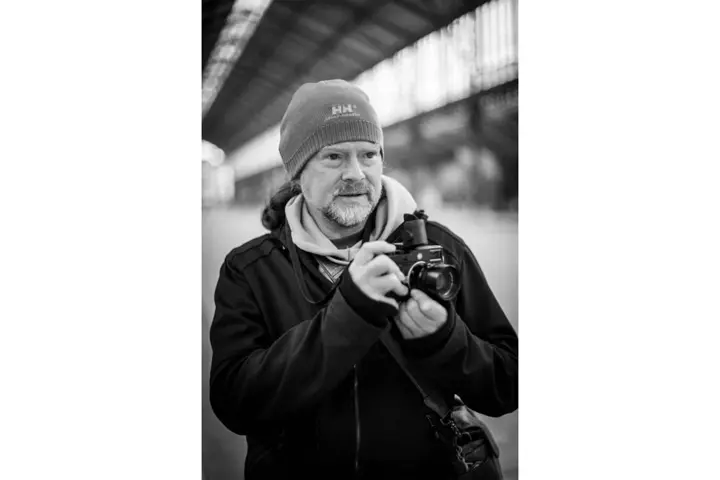
Geert Verstrepen, born in Belgium in 1968 and still based there, developed an early passion for black-and-white photography that continues to define his visual language. His approach remains rooted in precision, intuition, and a deep sensitivity to light.
His work focuses on the immediate environment - ranging from architecture and landscape to street photography. In recent years, he has increasingly devoted himself to documentary work, characterized by clarity, light, and a refined, minimalist aesthetic.
His photographs have been widely published and recognized with numerous awards.