

A new dawn in Brazil
A little-known chapter in the history of photography is being rediscovered in a new exhibition in Frankfurt.
Immerse yourself in the world of Brazilian photography from the 1940s to the 1960s with our Leica gallerist and curator in Frankfurt, Alina Hofmann.

German Lorca "Oca", 1954
Layers of time
In the photograph “Oca” by Brazilian photographer German Lorca (1922–2021), the photographer's grandmother leads her grandson to an architectural icon of the future. Several layers of time overlap in this 1954 photograph—the past, as seen through the grandmother's eyes, intersects with the present of her grandson as they set off together on their way to the futuristic “Oca” building in Ibirapuera Park in São Paulo. Architect Oscar Niemeyer—known for his innovative buildings for the Brazilian capital Brasília—based the name and design of his building on traditional indigenous huts (“ocas”). A look at the country's own history is combined with the search for new forms of expression for the future.
Brazilian visual language
The organic lines, curved diagonals, and urban concrete structures in the middle of a city park illustrate what Brazilian modernism is all about: urban structures meet natural lines, hard materials meet soft forms. It is precisely this contrast that inspires. Not only in architecture, but also in photography, Brazil explored new ways of expressing a modern visual language from the 1940s to the 1960s.
This period was marked by immense cultural, social, and political upheaval: the population of São Paulo multiplied in a very short time, new ambitious construction projects were intended to symbolize the new beginning, and the population was recomposed from a wide variety of cultures. The images of contemporary photographers reflect this transformation in Brazil and seek a new visual language that does justice to this era of change, industrialization, and cultural renewal.
-
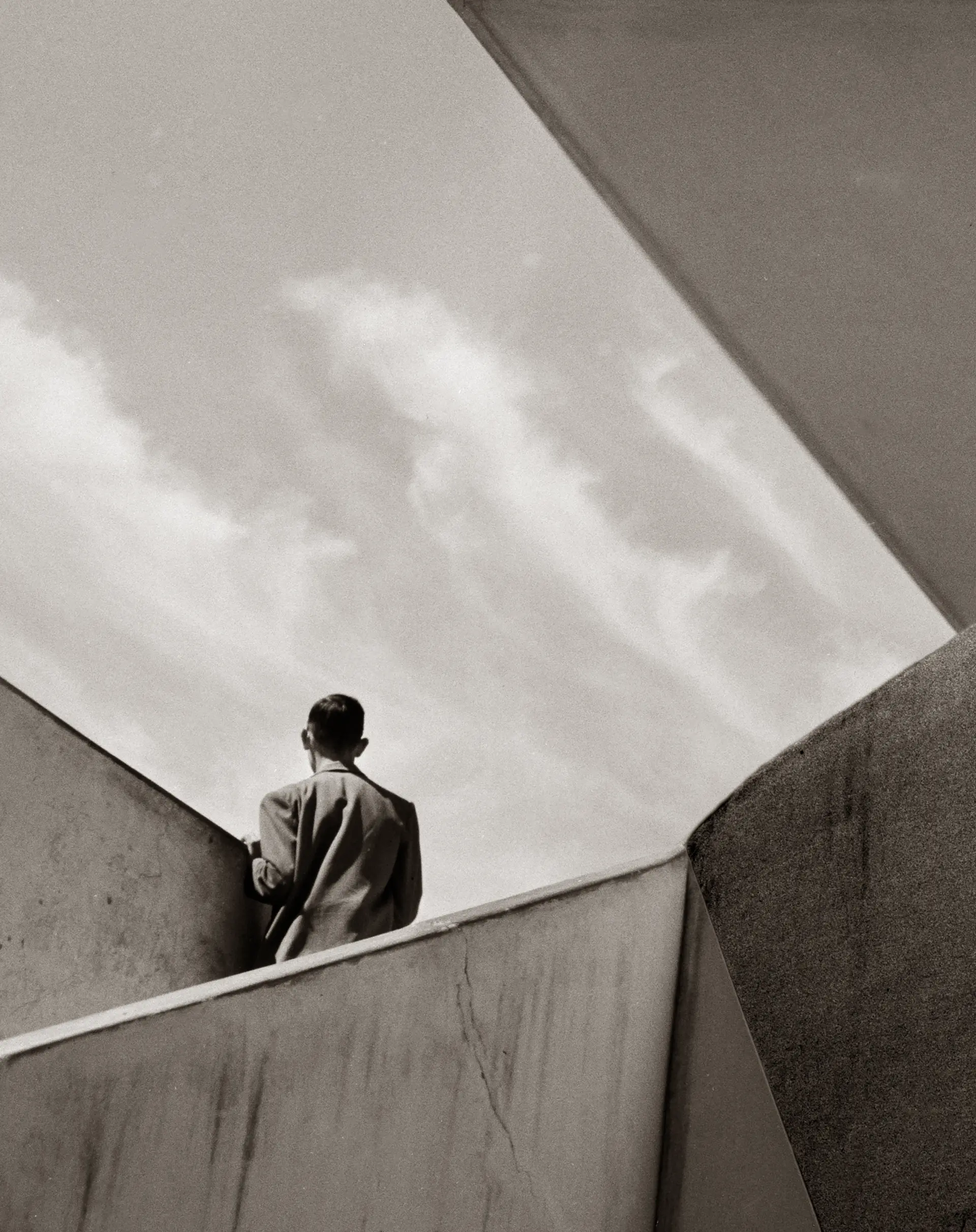
Nelson Kojranski "Composição com Figura", 1950, Kobbi Gallery
-
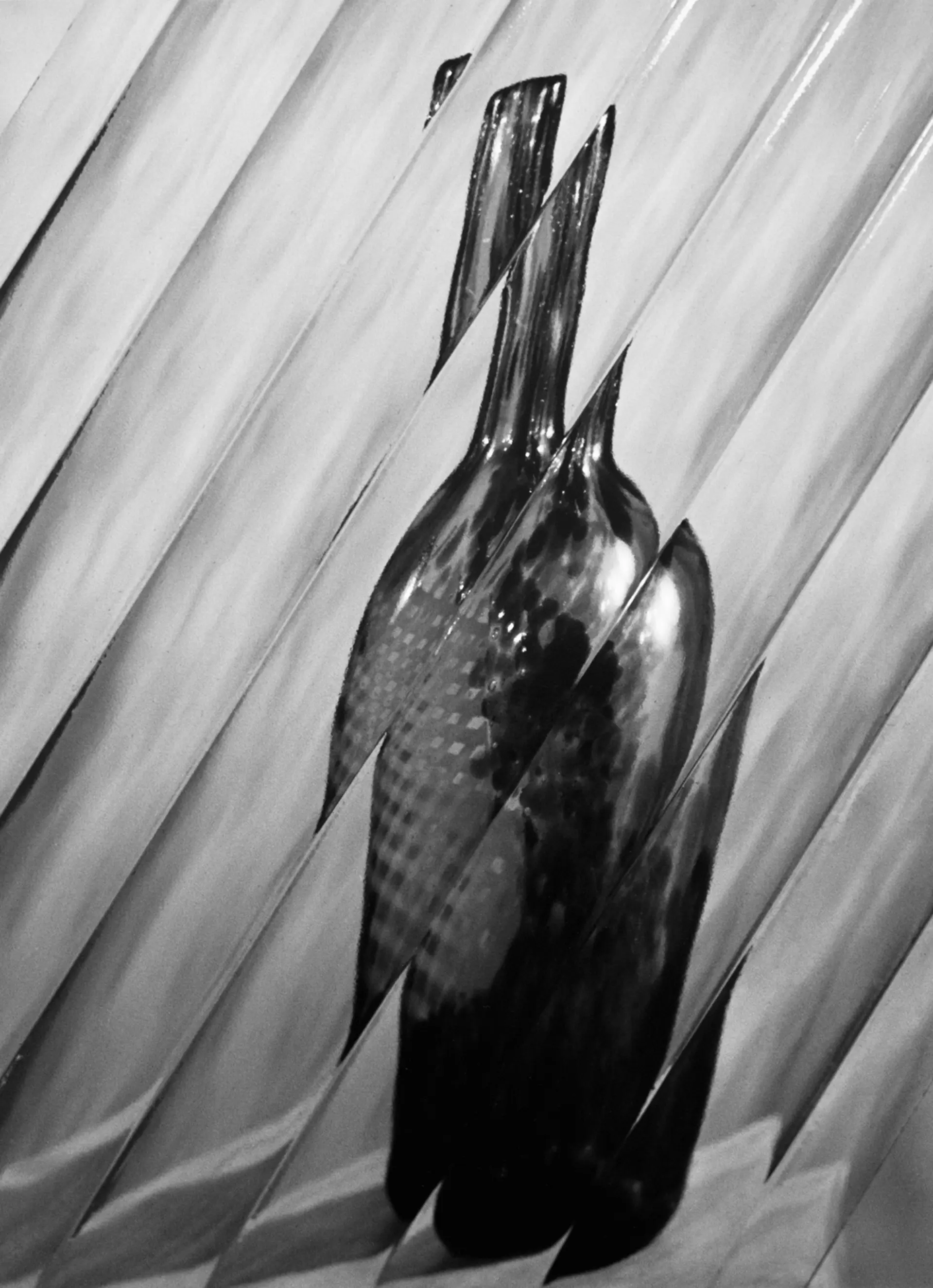
Gaspar Gasparian "Mediúnico", 1952
-
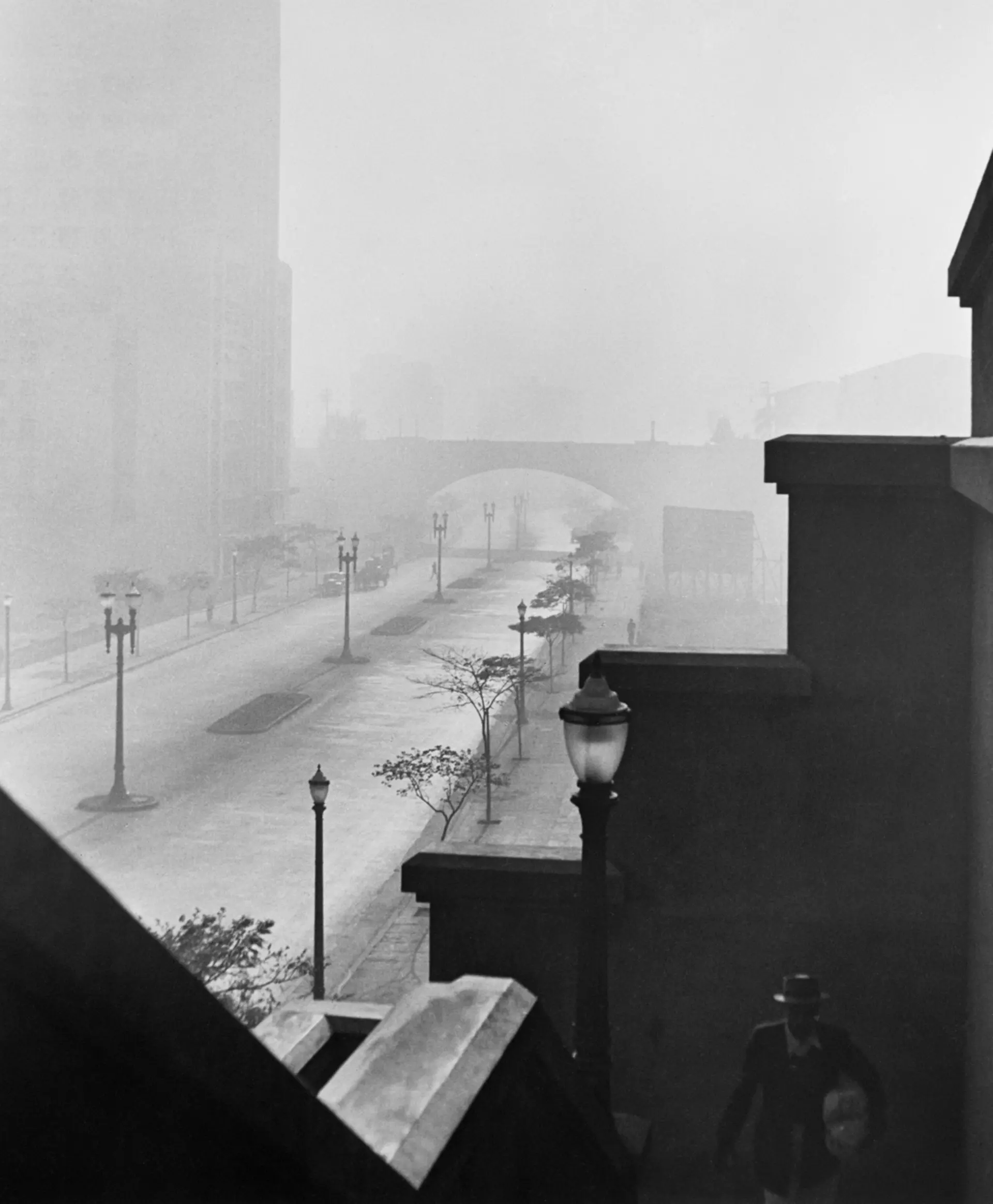
Gaspar Gasparian "Visao Paulista", 1943


Of photo clubs and Leica cameras
In order to find this new visual language, ambitious photographers joined together in photo clubs to explore the city with their cameras - one of the largest associations of this kind was the Foto Cine Clube Bandeirante (founded in 1939 in São Paulo), a group of photographers who embodied the originality and innovation of Brazilian modernist photography.
Among them is German Lorca, who took the picture “Oca.” A portrait of him, taken in 1952, was even used in an advertisement for Leica. In conversations with Lorca's son, which I had the privilege of conducting with him during the preparations as curator of the new Frankfurt exhibition on Brazilian photography, it became clear how connected his father was to Leica; he owned a total of seven Leica cameras with seven lenses. The advertisement also features a quote from the photographer that, for his son, captures the “heartbeat of his father's entire photographic work”.
A photograph happens for the photographer, and he makes it happen.”
- German Lorca

Waiting for the decisive moment and enabling it at the same time – it is this tension that characterizes many of the photographs taken by the Foto Cine Clube Bandeirante.

German Lorca "No Desfile - Binóculos", 1960
In addition to German Lorca, numerous other photographers actively participate in the activities of the São Paulo Photo Club. José Yalenti founded the club in 1939 together with Benedito Duarte and Eduardo Salvatore, the latter of whom shaped the association for many years as its president, combining pictorialist influences with modernist traits in his visual language. Thomaz Farkaz, Gaspar Gasparian, and Geraldo de Barros also became famous, but photographers such as Gertrudes Altschul, Barbara Mors, and Palmira Puig-Giró also organized exhibitions, published magazines, and actively sought exchanges with international photographic associations.
The photo club members critiqued each other's work at weekly meetings and also participated in (inter)national competitions, where they sought public criticism. These processes of exchange can be seen on the backs of the photographs—each image was stamped after being submitted to a competition or magazine, so that the image's journey is recorded and can be relived again and again to this day.
Zeitgeist of a new era
When viewing images such as “Antúrio,” “Le Diable Au Corps,” “Reflexos,” or “Mediúnico,” which will be on display at the Leica Gallery in Frankfurt from February 20 to May 13, 2026, parallels to photographers such as Man Ray, Edward Steichen, Alfred Stieglitz, Florence Henri, or Germaine Krull become apparent. Abstractions, reflections, and inversions are used to capture the zeitgeist of a new era internationally. Sometimes these visual dialogues between European and Brazilian photographers are even directly sought after, as in the case of a picture titled “Homage to Mondrian,” which pays tribute to the Dutch painter Piet Mondrian, who became famous for his constructivist paintings with clear-cut lines.
-
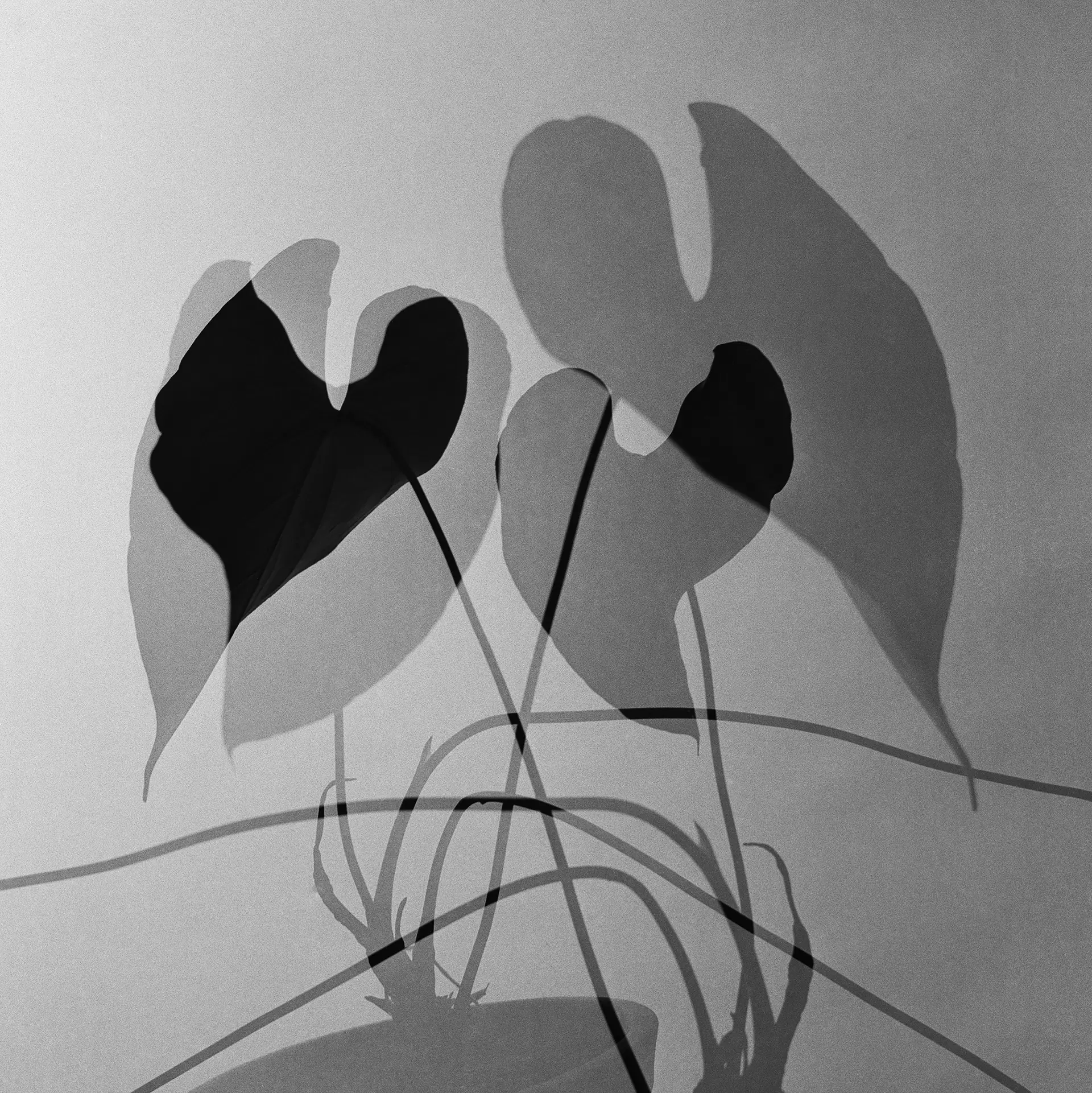
German Lorca "Anturios", 1960
-
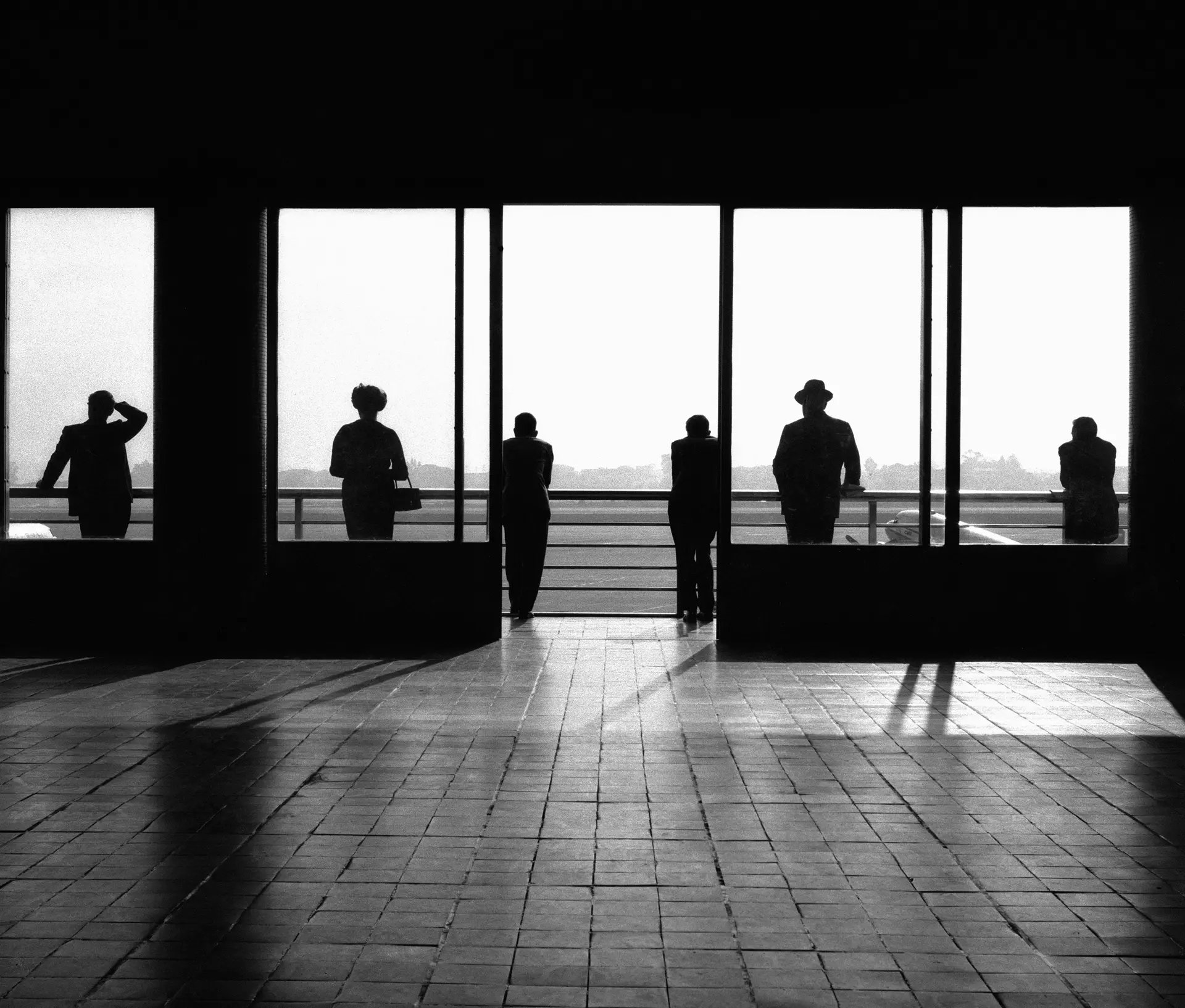
German Lorca "Aeroporto", 1965
-
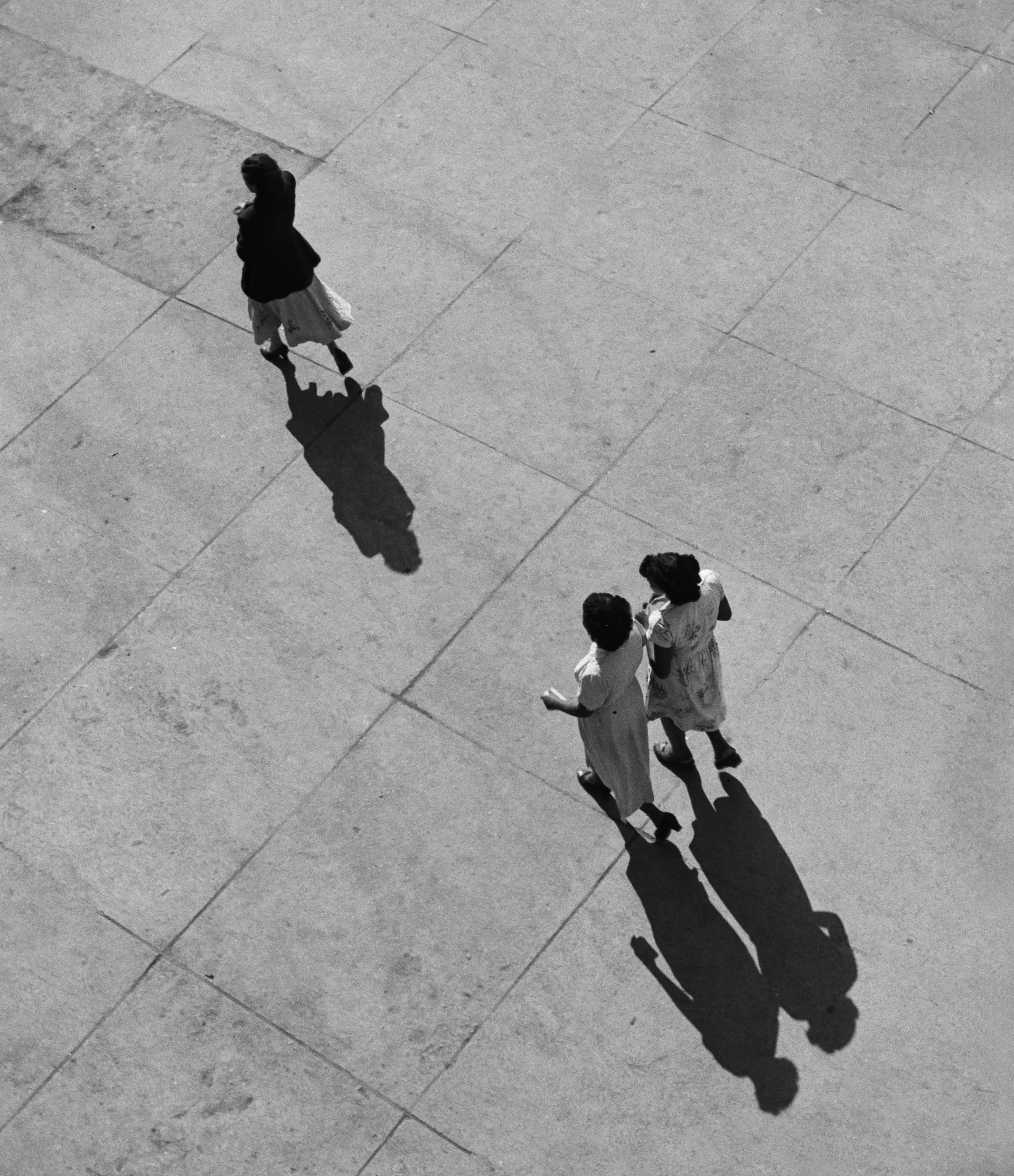
Nelson Kojranski "Transpondo Quadrados", 1950, Kobbi Gallery


The recognition that many Brazilian photographers have received in Europe and the US is reflected both historically in numerous competitions and in the current exhibition landscape of recent years. A compilation of Brazilian photographs, which have been shown with great success at the Tate Modern in London (2018), the Museum of Modern Art in New York (2021), and the Arles Photo Festival (2025), is now also being presented at the Leica Gallery in Frankfurt. This is the first time in Germany that a comprehensive group exhibition has been dedicated to modernist photography from Brazil.
The exhibition “Modernidade! Photography from Brazil from 1940 to 1960” will be on display at the Leica Gallery Frankfurt from February 20 to May 13, 2026.