
Between Light, Film, and the Darkroom
A Conversation with Kit Young
In an age when images are captured and shared within seconds, analogue photography represents a slower pace, deliberate decision-making, and a close connection to the creative process. Photographer Kit Young is among a growing number of artists who continue to embrace this medium. In this interview, we explore his creative process, his relationship with film, and the role that the darkroom plays in shaping his work.
In an era dominated by digital technology, what continues to draw you to analogue photography? What is it about working with film that still inspires and challenges you as a photographer?
Kit: In a nutshell: the darkroom.
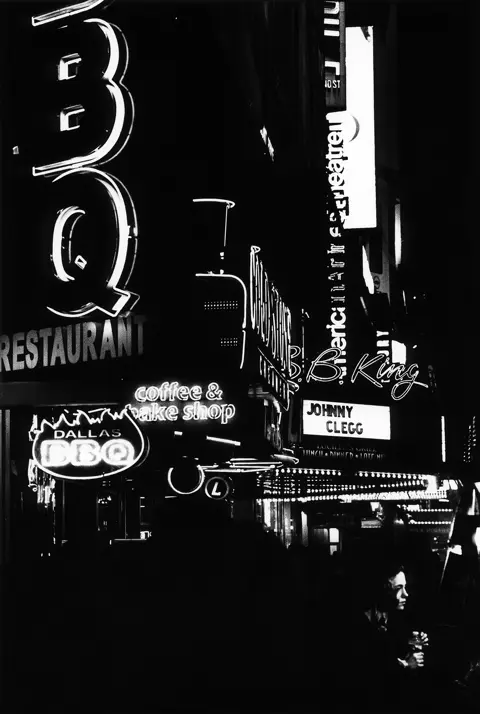
For me, photography is about more than just taking pictures, it’s about making pictures too. I consider myself to be a photographer and a printmaker. I think that’s an important distinction to make. I don’t just take photographs, I make photographs too. The photographer in me is responsive, impulsive, reacting to subject matter on the spur of the moment, more often than not giving very little thought to anything more than the lines and tone of what’s in front of me, the printmaker in me is methodical, exacting, always working in a more meditative way.
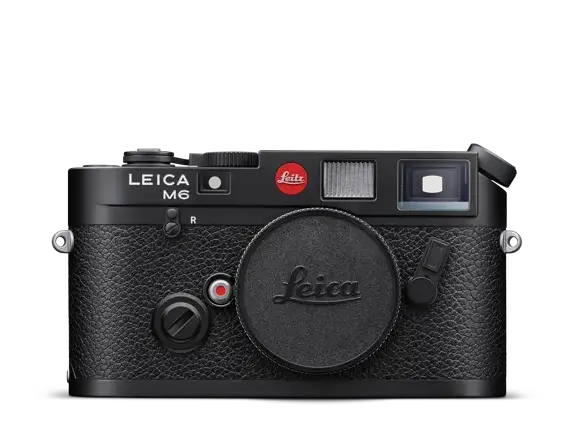
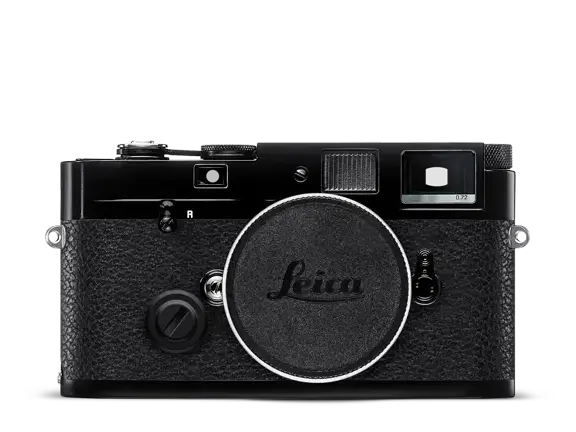
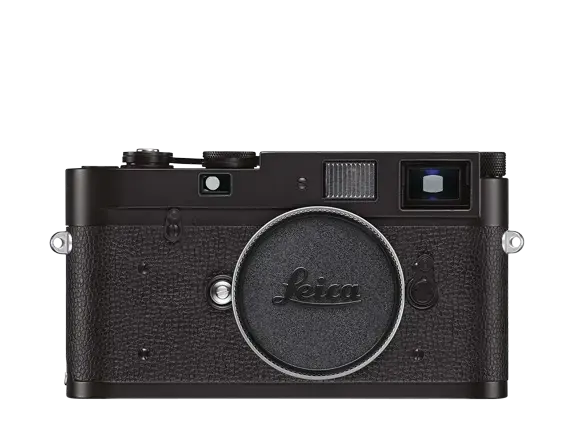
Obviously, I need to use my cameras to obtain a negative. I trip the shutter of my Leica film camera and, in a fraction of a second, a latent image is committed to film.
However, the darkroom part of the process takes me days, weeks, months and years to explore and perfect. The darkroom provides me with a physical space in which I can refine the image by metaphorically peeling back the layers of a negative in an attempt to reveal the thing that made me want to take the photograph in the first place. It’s at this point that a negative – a mechanical recording – finds a more human view. This part of the process is very important and should not be rushed. Exploring, testing, failing and, eventually, succeeding is what enables the printmaker to evolve and grow.
From Inspiration to Image
Every photographic project begins with an idea, an observation, or a place. Particularly in analogue photography, where immediate feedback is absent, many concepts evolve during the process itself, gaining depth and meaning along the way.
Can you walk us through your creative process when starting a new project or series? Where do your ideas come from, and how do they evolve from an initial concept to a finished photograph?
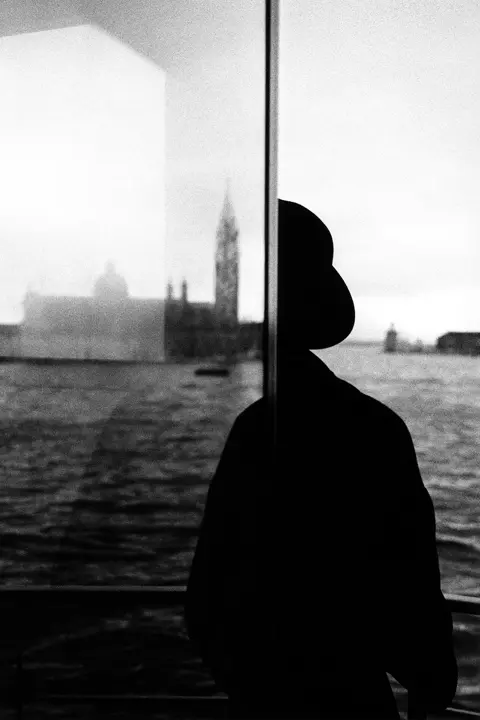
Kit: I think it’s important to be honest here: I have never had an idea for a project or a series and then worked on it. I always make work first, and a series or project reveals itself when it’s ready. Sometimes a body of work can emerge after just a few hours of photographing a city but other times it can take years, even decades, for a body of work to reveal itself – such is the case with my Venice work and, more generally, my landscape work.
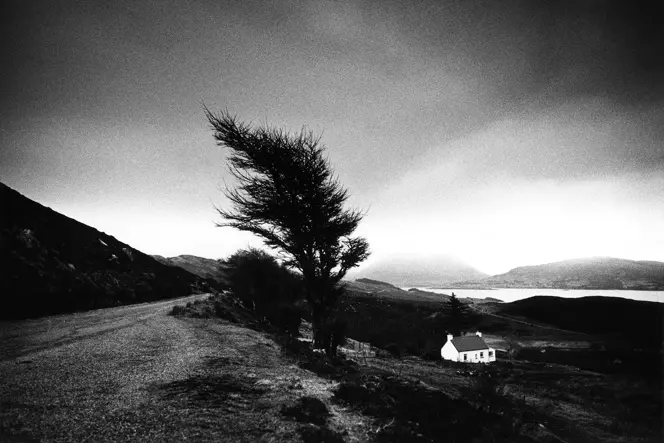
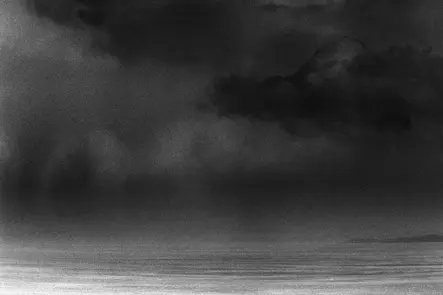
The negatives aren't necessarily easy to interpret in the darkroom, particularly as I sought to explore the inner light of my subject matter – by ‘inner light’ I mean the light that seems to emerge from objects rather than fall on them, a light that is like a conversation between things, a light that is the possession of the landscape, invariably radiating skyward.
Often, a book I have read inspires me to spend time in a certain landscape and attempt to uncover its secrets. I usually wake up well before sunrise, hang a camera around my neck, and start walking through the landscape in total darkness. I find that this helps me to tune into my surroundings.
Time is an important factor in photography and, for me at least, it certainly isn’t a matter of always striving for quick turnarounds or streamlined ways of working. There must always be room for exploration and deviation if nuance in the work is to be found.
I like to explore what could be described as the delicate dance between the real and the imaginary, where, through seemingly unrelated moments in time and space, photographs transport the viewer to a parallel place.
Embracing the Unexpected
One of the most fascinating aspects of analogue photography is that not every step can be fully controlled. How do you approach accidents, imperfections, or unexpected outcomes, and have any of these moments significantly influenced your work?
Kit: This is a great question! I often look at my negatives and think: did I really see that? It’s an odd question to ask yourself, but I think it stems from the sense that the unknown and the unexpected have come together to create something truly astonishing.
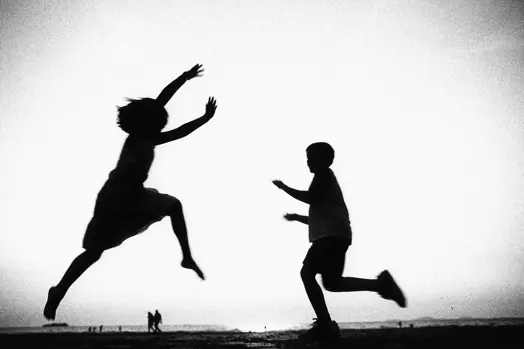
When out and about with a camera, I raise the viewfinder to my eye and take a photograph whenever I felt inclined to do so. This is how I take pictures. There’s no premeditation or pre-visualisation involved – it’s a matter of looking, losing myself and then reacting to the shapes, lines and tones that are in front of me – that’s it. It’s a subconscious act; think too much and the interest in the scene the that originally piqued my interest fizzles away before me. It’s in the darkroom where all of the thinking happens as the printmaker in me tries to devise ways of interpreting the negatives (sometimes it’s an impossible task!). The end result, though, is about striking the right balance between the photographer’s gaze and the printmaker’s vision to turn the negative into a tangible object: a unique, hand-made silver gelatine print.
I’m not sure if a photographer is always able to see and understand everything on a conscious level. It seems obvious to me that the subconscious is working hard when the shutter is tripped. Despite being precise and fine instruments, I think that film cameras demand that their operators relinquish total control at some point, learning to embrace the unknown and the unexpected.
As mentioned above, I’ve never quite been able to get fully embrace the notion of ‘pre-visualisation’. I would argue that a lot of my work is unexpected, and accidents and imperfections, and the ways they’re dealt with, are very much part and parcel of the creative process.
The First Encounter with the Negative
Photographers describe seeing a developed negative for the first time as a special moment. What goes through your mind when you hold a newly developed strip of film in your hands, and what are you looking for at that stage?
Kit: Viewing negatives for the first time is always an exciting experience. Ideally, some time has passed before I do this. I pick a contact sheet, mark the interesting frames with a slash using a red pencil and then leave it alone for a few days. I’ll then repeat the process. It can take several weeks of repeatedly looking at a contact sheet before potential frames reveal themselves.
From experience, I have found that the frames I select early on in this process usually don't stand the test of time. The more interesting frames require more time to understand as well as greater degrees of interpretation in the darkroom.
Sometimes, the scrutinised contact sheets are returned to my negative folders. I attribute this to an inability to envisage a direction for the work. Time usually helps with that, which is why it can take me many years to create specific prints or bodies of work. I think it's important not to rush these decisions.
The Darkroom as a Creative Space
Between the negative and the final print lies another crucial stage of the photographic process. It is here that mood, atmosphere, and visual expression are carefully refined. How does working in the darkroom shape your creative vision, and what opportunities does it offer that you don't find elsewhere?
Kit: I use picture-taking and picture-making to show how I see things as opposed to showing what something looks like. I use the negative as a starting point, and then, through a series of practical and aesthetic decisions, I begin to shift focus by heightening and lessening effects with a view to creating a final print in the darkroom that, I hope, shows a little more than what I started off with.
Working in the darkroom, the printmaker has the immense privilege of working in the space that exists between the enlarger lens and the blank sheet of paper held by the easel. This space is full of poetic potential, where the weight of light finds its final form. In my workshops, I often tell participants that there’s a certain magic at play when creating a print by hand in the darkroom. It's a type of magic that I don't fully understand or can explain. Perhaps it has something to do with the transformation that occurs when a past experience (the negative) is interpreted, or reimagined, to produce a photograph that is seen for the first time (the print). It’s about ‘the unknown’ and finding beauty when you least expect it.

Craftsmanship in an Age of Infinite Possibilities
In a world where digital editing tools offer endless possibilities, what makes the experience of creating a print in the darkroom unique? Is there something about the tactile and hands-on nature of the process that fundamentally changes your relationship with the image?
Kit: A friend once lent me a digital Leica M camera. I took hundreds of photographs and often forgot that I wasn’t using film. When I gave the camera back to my friend. He asked me why the memory card was still full of images and if I had downloaded them. “Oh, no,” I replied. “I can’t take the files into the darkroom, so there’s little point in downloading them…”
While my prints are only available in very small editions, I tell my gallerists that each print I make is, in fact, unique. The tiniest of variations in chemical dilutions, main exposure times and subsequent dodge and burn stages which require using my hands – sometimes for minutes at a time – to sculpt the light hitting the blank sheet of paper, mean that, no two prints will ever be the same. It’s the hands-on nature of the process that turns a ‘print’ into an ‘object’.
My love of photography is rooted in the darkroom and I think the look of my work is embedded in the materials. Of course, I could shoot digitally, apply filters and grain in post-production, but for me, it’s the organic nature of the results achieved in the darkroom that connects my vision to the physical process of creating images. It's all about the dance between light and alchemy, and it always hangs by a thread.
Looking Back - and Ahead
The tools we use inevitably influence the way we see. Working with film often fosters a heightened awareness of light, timing, and observation, encouraging photographers to engage more deeply with their surroundings. Over time, this approach can shape not only a body of work, but also a way of understanding the world.
Looking back at your body of work, how has analogue photography influenced the way you see and interpret the world around you?
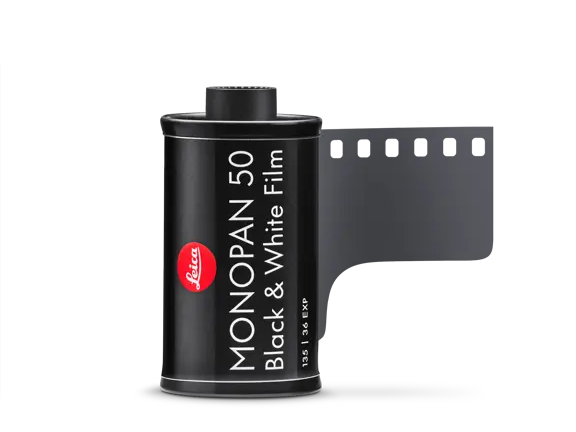
Kit: I think film photography and working in the darkroom has provided me with a framework for exploring a way of seeing, and, ultimately, this way of seeing finds its freedom within the limitations imposed by the medium itself: black-and-white film, light, chemicals and paper. I’m unsure what the future holds for my work, but for now, I feel very fortunate to have access to the materials that enable me to discover light in the dark.
For those considering their first steps into the world of film and darkroom printing, few perspectives are more valuable than those of photographers who have dedicated years to mastering the practice. What advice would you give to photographers who are interested in exploring film photography and darkroom printing for the first time?
Kit: Find a darkroom and go there regularly to practice making prints! All too often, people are put off the idea because they don’t have a huge space filled with state-of-the-art equipment. It’s a shame because, at its core, darkroom printing is incredibly simple, and you don’t need much to get started.
The silver gelatine prints used to make my first booklet, Paris Couplets, published in France in 2018, were all made in a makeshift darkroom in a tiny, terraced house. I blacked out the room with a sheet of MDF over the window, put the chemical trays in the bath and propped up the enlarger between the toilet and washbasin. My (very understanding!) wife had to give me ten minutes’ notice if she needed to use the bathroom so that I could clear a safe path for her.
One of the most important things you can do in the darkroom is to make notes about the prints you’re making. I learned the hard way. Years of making single prints without taking notes came back to haunt me when I started exhibiting my work. Reverse engineering a darkroom print without notes is possible, but laborious.
© José Sarmento Matos

The interview was conducted by Sonja Kruchen as part of the current exhibition “Between City and Silence” at the Leica Gallery in Munich.
Exhibition period: July 24 to October 24, 2026.