

Deeply Curious About Life.
A new retrospective in Frankfurt highlights the work of Saul Leiter (1923–2013), whose poetic and abstract works have long been an established part of the history of photography.
Our Frankfurt gallerist Alina Hofmann met with Margit Erb and Michael Parillo, the married couple running the Saul Leiter Foundation, and spoke with them about the famous photographer and painter in Leiter’s former New York studio.
Let us start at the beginning: Do you remember where you first met Saul, and what your first impression of him was?
Margit: I started working for Howard Greenberg Gallery in 1995, and I was the front desk receptionist. So when Saul came into the gallery, I was the first face that he saw.
I can’t remember exactly the first time that we actually met, but I do remember the first time he took a picture of me. I was mailing invitations for an exhibition, and I had a big bag of envelopes in my arms. I lifted them up and put them on my head, and Saul took a picture of me. That’s my first memory of having fun with him and seeing that he always had his camera with him and was ready to photograph whatever and whomever.
I was definitely charmed by him from the beginning. We were instantly friends.
Michael: I remember very well the first time I met Saul, which was at an opening at the gallery. Margit and Saul had been friends for a few years at that point, and Margit and I had been together for many years by then. She brought him over and said, „Michael, this is Saul. Saul, this is Michael.“ And Saul said to me, „I hope you two are very happy together…and if not, it’s your fault.“ [laughs]
What did a typical day for Saul look like? Did he even have such a thing as a typical routine?
Margit: He spent a lot of time at the Strand bookstore. He was a big reader, very much like his father. And he painted every day. He sat in a corner here and did watercolor illustrations, often abstract, in his sketchbooks. And then just walking around and photographing. That was his daily routine.
Did Saul see himself as part of the so-called New York School, or would he have said that he was standing on the outside looking in?
Margit: He went to galleries and museums, so he knew what other photographers and artists were producing. One of the first exhibitions he saw in New York was Henri Cartier-Bresson at MoMA. That may have been the exhibition that inspired him to pursue photography further.
But I don’t think he ever saw himself as part of a group. He knew that he was an outsider.
You mentioned in a talk of yours that Saul would have made a great art history professor.
Margit: Oh yes, he had a vast knowledge of art history, but he also would have been a good professor because he would have been thoroughly entertaining. He would have kept it light and fun. I think that you should have fun when you’re looking at art. You shouldn’t always be so serious.
Michael: He said, „I laugh too much. It’s a minor fault.“ If he’d been a teacher, one thing is for sure: It would be a non-standard curriculum!
Saul is best known for his early color work, but he also made truly beautiful black-and-white images that are a little more unknown. Why is it, you think, that his color work is more famous at the moment?
Margit: I don’t know why his color work is more famous at the moment. It surprises me sometimes. Maybe it’s because his first book was color.
When „Early Color“ [the now sold-out edition from Steidl] came out in 2006, it added a new voice to the conversation about color street photography. It helped to slightly redefine the history of photography by adding this character who was doing this work starting in the late 1940s and through the 50s, before color was really accepted as serious art photography and only black and white was considered real art.
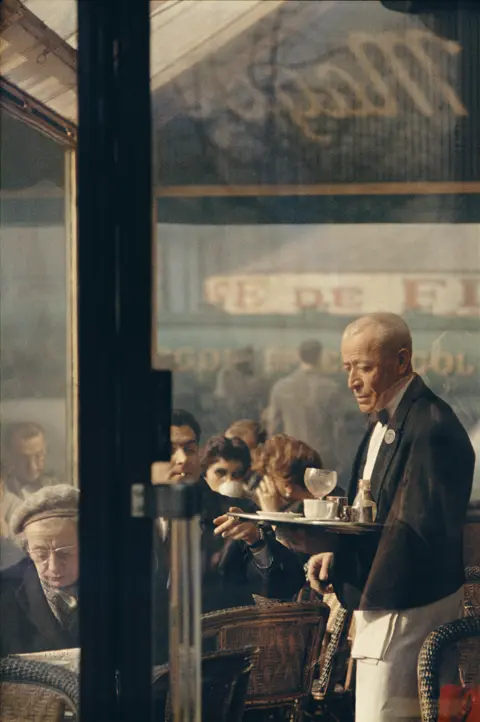

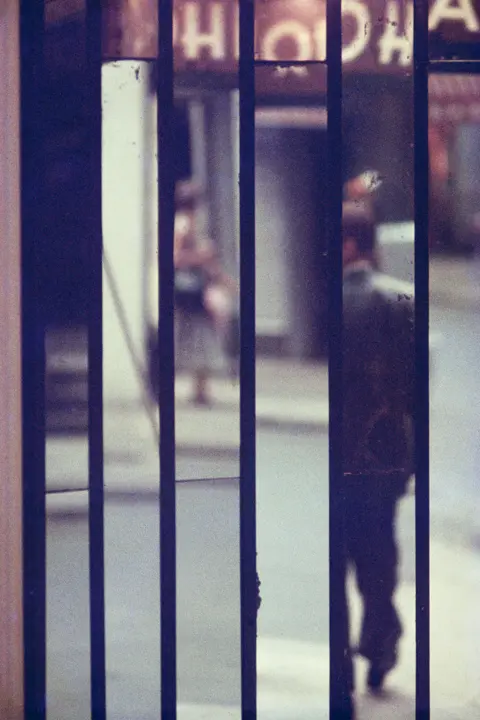
Michael: Saul said that life is unfolding in color. He believed that color photography was just as worthy as black-and-white photography.
Margit: It’s the same old story with Saul. It’s like the world still has to catch up to him, because he’s just too far ahead of all of us. Our next project for the Saul Leiter Foundation is uncovering his black-and-white negatives and seeing what’s there. The digital archiving methods of today versus 10 years ago are going to really help us do this.
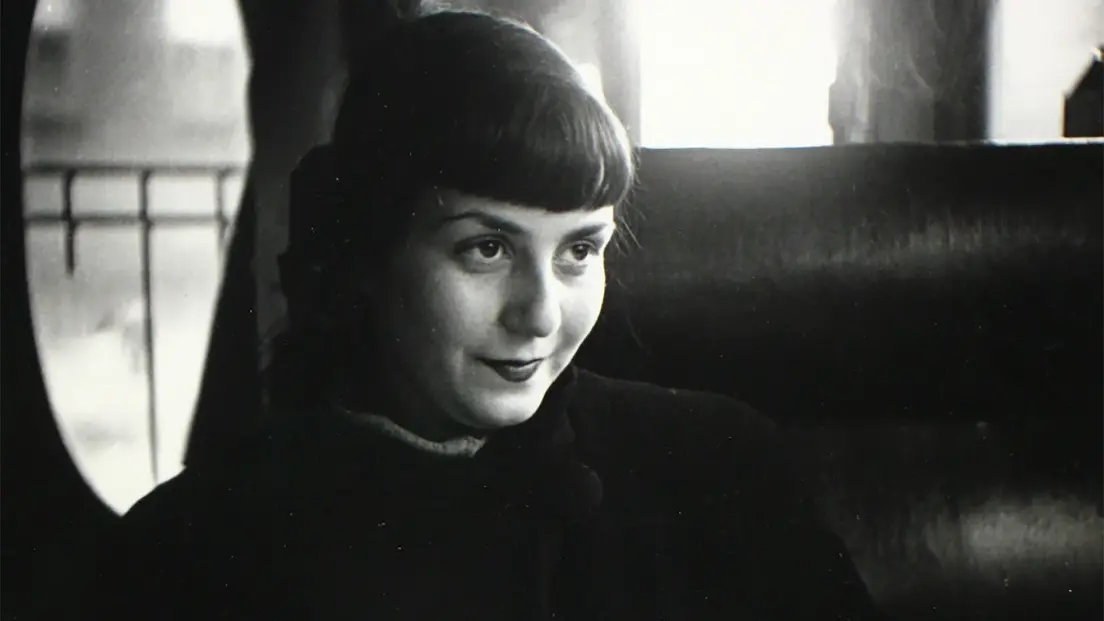
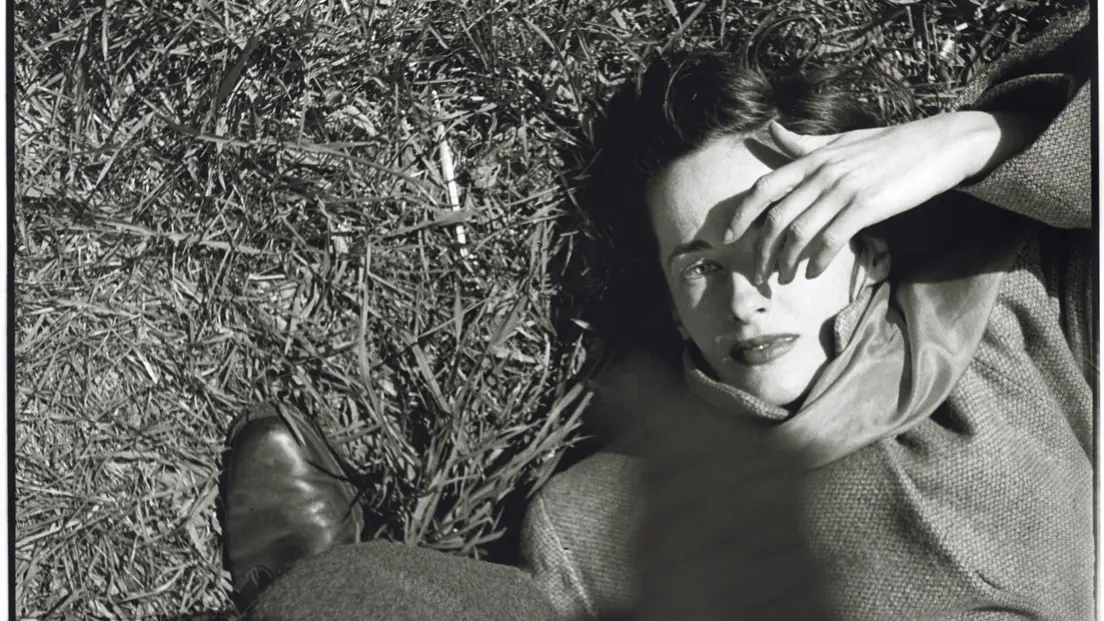
So the „Unseen black and white“ story is coming!
You also mentioned the influence of the MoMA – Edward Steichen and Alfred Stieglitz were early protagonists in shaping the debate around photography. Can you tell me the stories about them and Saul?
Margit: Steichen and Stieglitz were two giants in the photography world. We still feel their shadows today. Saul actually went to Alfred Stieglitz’s gallery 291 once, to hopefully meet Stieglitz. And when he got to the gallery it was empty. It was quiet. So he wandered around and he found a little door. He opened the door, and there was Alfred sleeping in his bed. Imagine Saul Leiter standing there, looking over a sleeping Alfred Stieglitz. The two of them unfortunately never connected.
Michael: Steichen immediately recognized Saul’s talent and included him in the „Always the Young Strangers“ show at MoMA in 1953. He also made Saul part of his slide talk about the emerging idea of color photography. The earliest versions of Saul’s printed color work are four prints in the MoMA archive that Steichen had printed.
As one last question for now: Do you have a favourite photograph by Saul?
Michael: I do have a lot of favorites. There is this one image…

It's like a whole epic movie in one image. It’s got this really interesting subject, and then it’s got all these tantalizing text elements. The name of the department store. And then the secondary figures, and Mary’s gloves and hands. A still life only for the hands. I can just stare at it for hours.
I want to truly thank you for this conversation and I am grateful that we are doing this beautiful show together.
exhibition period: May 22 to August 26, 2026
opening hours: Mo-Fr 10 a.m. to 7 p.m. | Sa 10 a.m. to 5 p.m.
(link to virtual showroom with overview of available prints)
Friday, July 24: movie screening with Tomas Leach
from June to August: monthly guided curator’s tours