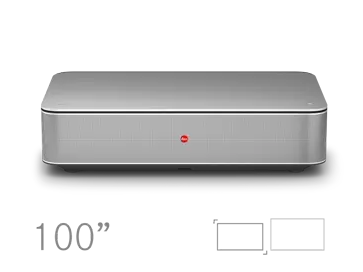
Light, Scale and Design
Jay Osgerby about Design and the Leica Cine 1
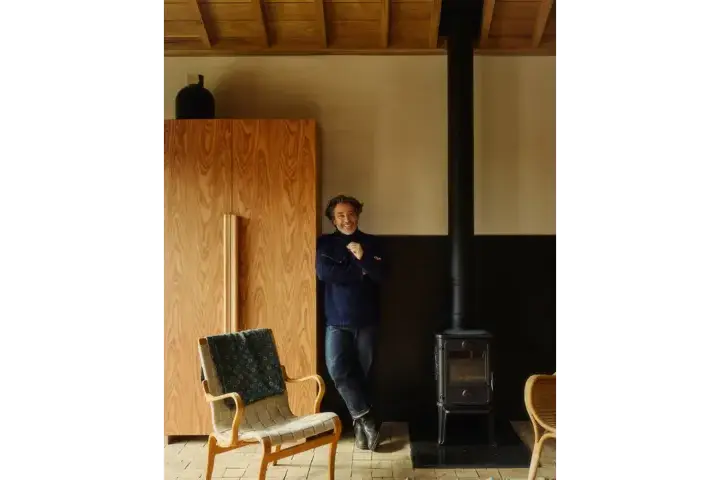
Few designers have shaped contemporary industrial design as quietly yet profoundly as Jay Osgerby. Across furniture, transport, lighting and objects for the home, curiosity is the common thread in his work. A constant drive to explore, experiment and ask the questions that lead to his design work.
The results often unite advanced engineering with a distinctly human sensibility: objects that are precise without feeling clinical, and enduring without demanding attention.
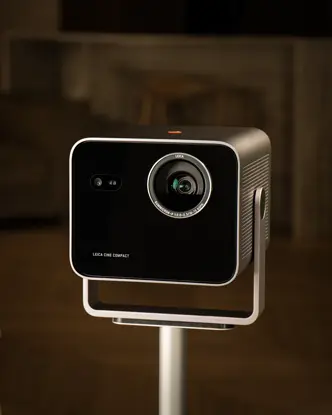
In this conversation, Osgerby reflects on why understatement may be one of design’s highest achievements: the moment an object or space feels so natural and intuitive that the design itself almost disappears. He also explains why the USM | Leica Cine Collection – a meeting of modular furniture, optical precision and home cinema – belongs to that tradition.
Interview with Jay Osgerby
Leica: Do you remember the moment when you realised that design and art would define your career? What fascinated you most about shaping objects and spaces at that time?
Jay Osgerby: From quite an early age, I was drawn to how things are made and how they behave in everyday life. There wasn’t one defining moment; it was a gradual realisation that design can change our experience of the world, often through very small decisions. I was fascinated by the point where function becomes emotional – where proportion, material or the feel of an action can make an ordinary object quietly rewarding to use.
What continues to excite you today about designing objects and environments,especially when working with light, materials and spatial experience?
What excites me is the opportunity to create environments that feel intuitive and calm yet are highly considered. Light is fundamental because it changes throughout the day and continually redraws a room: it reveals texture, alters colour and establishes atmosphere. As a designer, you are balancing precision with emotion – making something work seamlessly while also changing, often almost imperceptibly, how people feel in a space.
Ultra-short-throw projectors like the Cine 1 are redefining how we experience visual media at home. How do you see their role within contemporary living environments, especially from a design perspective?
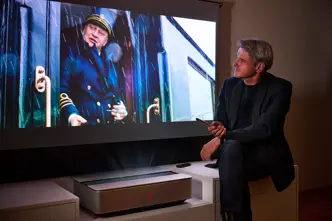
I think they represent a very natural evolution. A conventional television continues to dominate a room even when it is switched off; it becomes a large, black, permanent presence. An ultra-short-throw projector changes that relationship. The technology can recede into the architecture, so the room is allowed to have more than one identity. It can be a living space first and, when you choose, become a cinema. From a design perspective, that transformation is incredibly appealing.
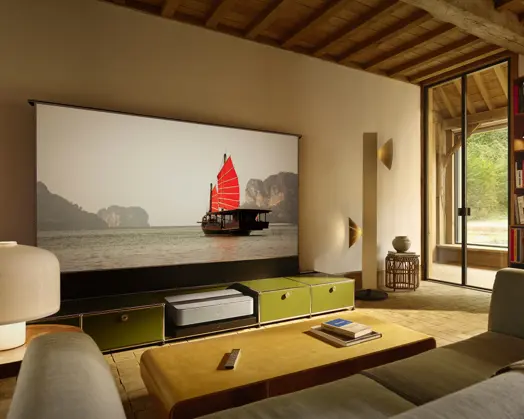
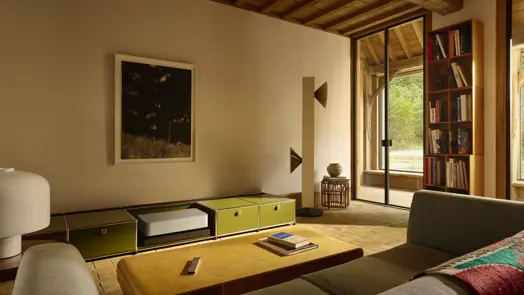
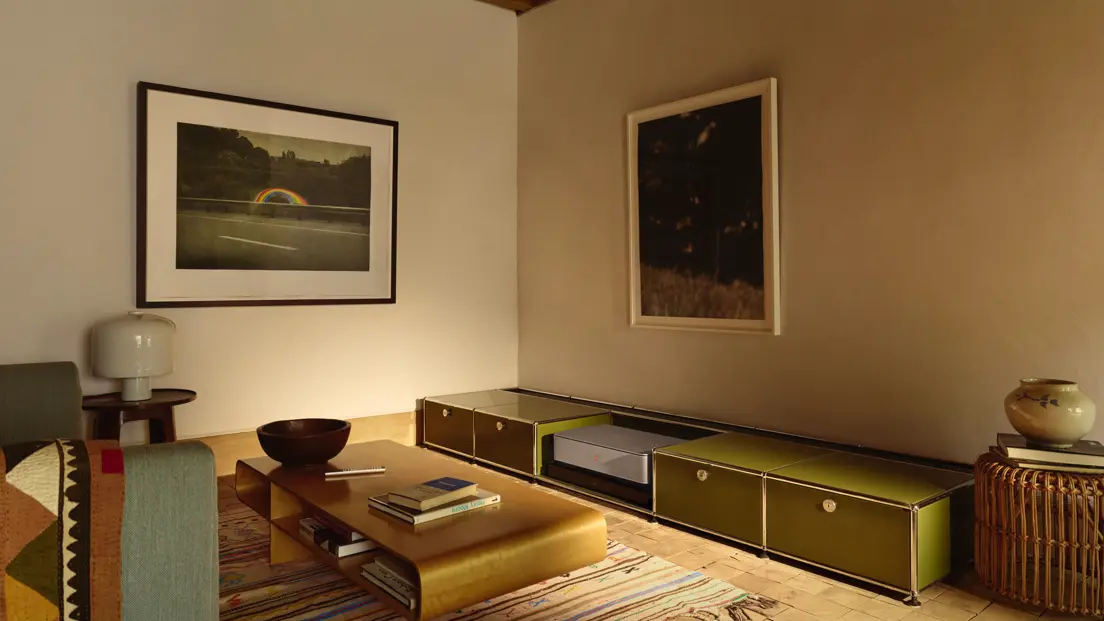
You’ve integrated the Leica Cine 1 into your own living environment using a dedicated USM furniture solution. What motivated this approach instead of opting for a conventional large screen on the wall?
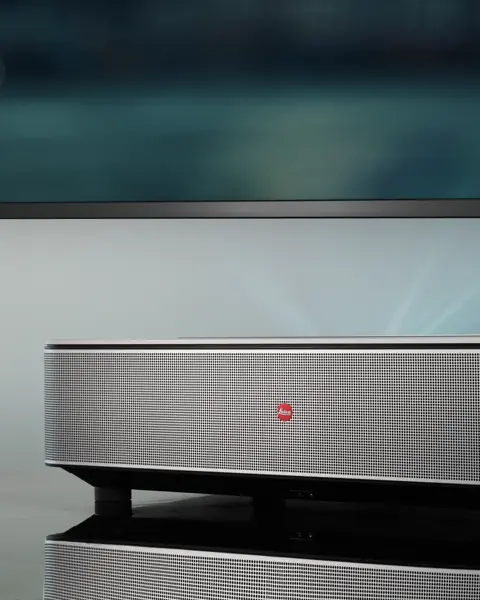
For me, it was about choosing a solution that feels integrated rather than imposed. USM has a precision and modular logic that gives the Cine 1 a natural place in the room; together, they read as part of the architecture rather than as equipment that has simply been added to it. I didn’t want a large black screen permanently occupying the wall. Here, the room remains calm and adaptable, and the cinematic experience appears only when you invite it in.
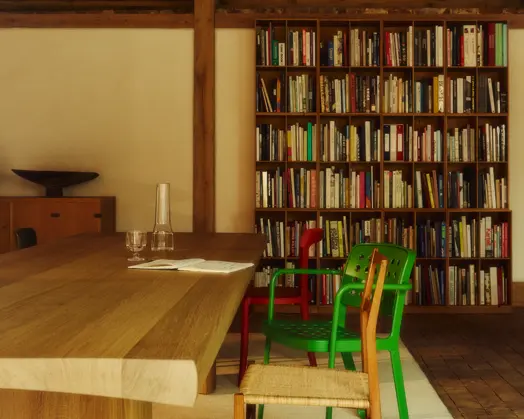
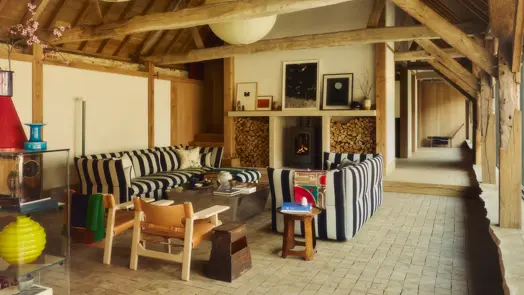
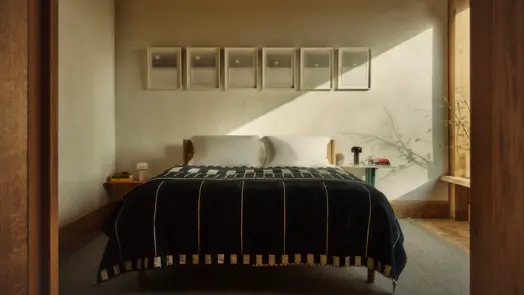
When you experience images through a laser projector in your own space, what stands out to you in terms of atmosphere and spatial quality compared to a conventional television?
What stands out is the combination of scale and visual depth. The image feels architectural: it belongs to the room rather than being contained within a television. Because it is projected light, there is also a subtly different atmosphere, it feels more ambient, more immersive and less centred on an object. When the lights fall and the image appears, there is a genuine sense of occasion; when it ends, the room belongs to everyday life again.
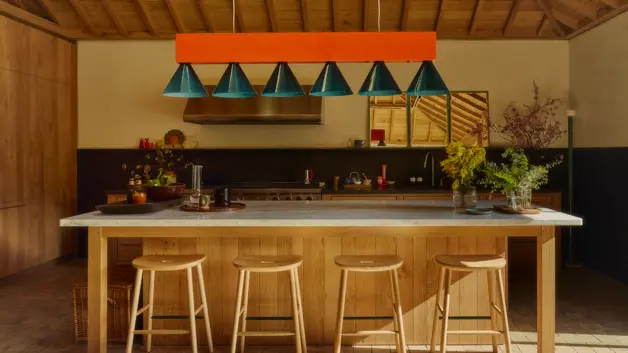
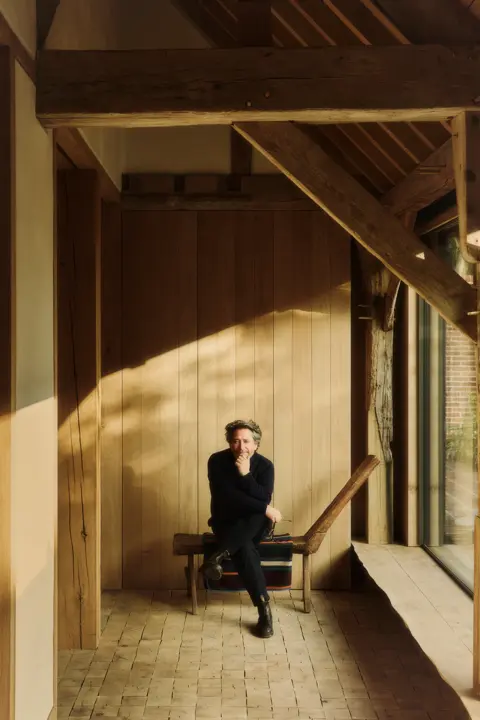
Most of the images we see today arrive on small, personal screens. What is gained when the image becomes large again?
Scale changes the quality of your attention. A large image asks you to stop doing other things and, because it belongs to the room rather than to one person, it can be shared. That is what I enjoy about it, not simply the picture quality, but the small ritual around it: the light changes, the room changes and everyone looks in the same direction. Perhaps that kind of undivided attention is a luxury now. At its best, technology creates the conditions for that moment, then gets out of the way.
Following the conversation, discover how this shared design philosophy translates into a home cinema experience where technology and living space come together naturally.