Penguin Beach
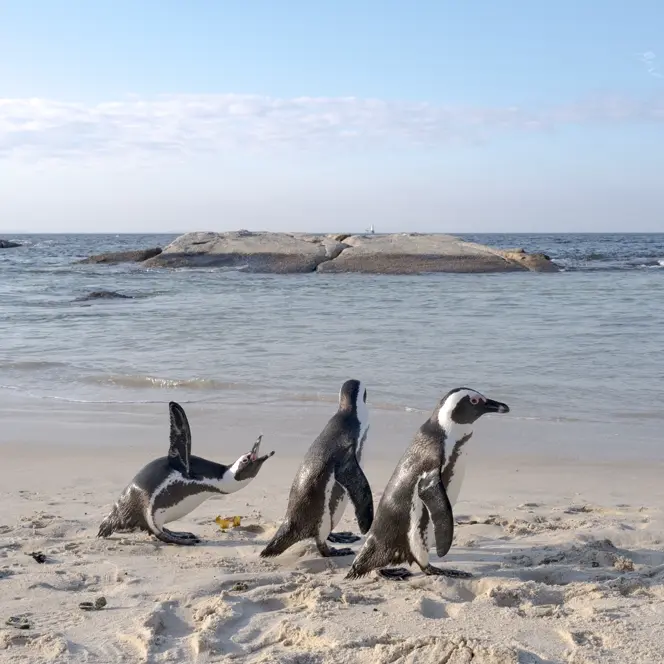
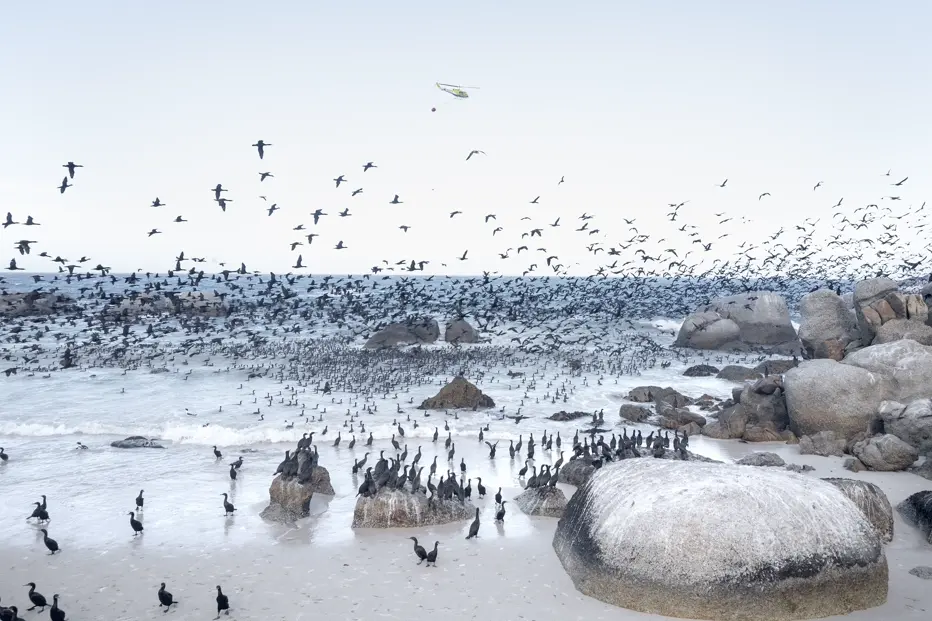
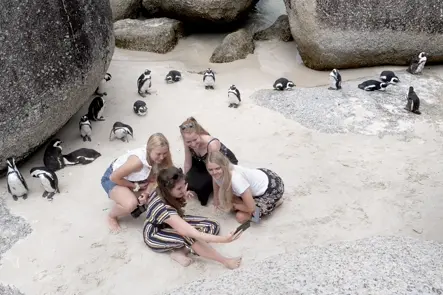
Mélanie Wenger has created an impressive series exploring the areas of tension between nature conservation, mass tourism and the survival of an endangered species. In collaboration with National Geographic and the National Geographic Society, she produced a feature on the Spectacled Penguins in South Africa, which highlights the impact of human intervention on the animals.
The Interview with Mélanie Wenger
How did you come up with the idea to photograph Spectacled Penguins at Boulders Beach?
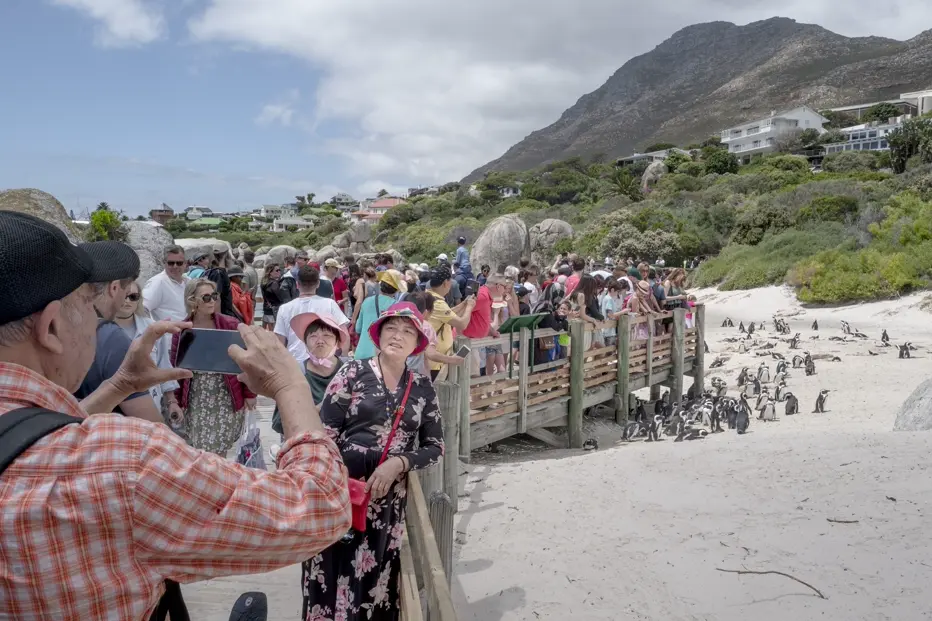
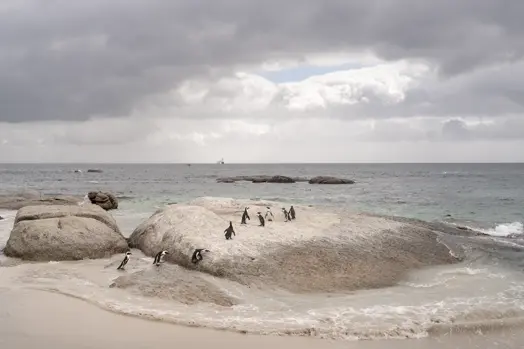
Mélanie Wenger: I was already documenting issues of nature preservation in Africa, when I stumbled across the hashtag #penguinbeach. At the time, I was living in Cape Town near the penguin colony of Boulders Beach, and I could see how social media has transformed a seriously threatened, wild species into a global tourist attraction and backdrop for selfies. As the penguins became increasingly visible online, the species itself was disappearing at an alarming tempo. The project grew out of this tension between our fascination with wild animals and the pressure created by our desire to get closer to them.
Tourism and wildlife often come into close contact in your pictures. How did you experience this proximity?
This direct confrontation between tourism and wild animals was both fascinating and deeply irritating. The penguins would return from a long and dangerous search for food, swimming at times for up to 70 kilometres, only to encounter a beach full of people, cameras and selfie sticks. This stress even led to some of them abandoning their nests. Boulders Beach was the only colony of Spectacled Penguins on the South African coast that still had a stable population. I wanted to understand how human presence might be a threat while indirectly also contributing to their protection.
How does your knowledge concerning the state of the species influence your view of the project?
Spectacled Penguins suffer under external influences: overfishing, climate-related changes to sea currents and fish populations, environmental pollution, loss of habitat and disturbances caused by people. That’s why the colony at Boulders Beach was so significant. The key factor is their location within a no-fishing conservation zone. The penguins there face significantly less competition from commercial fisheries that go for sardines and anchovies.
In your opinion, what role does tourism play in both protecting and endangering the species?
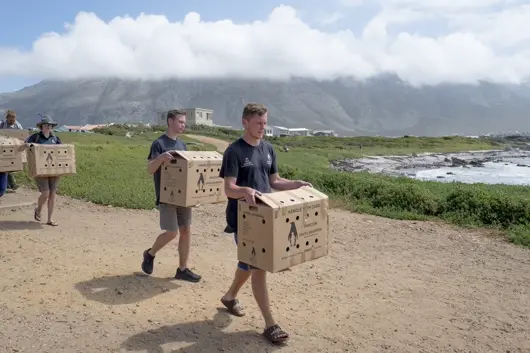
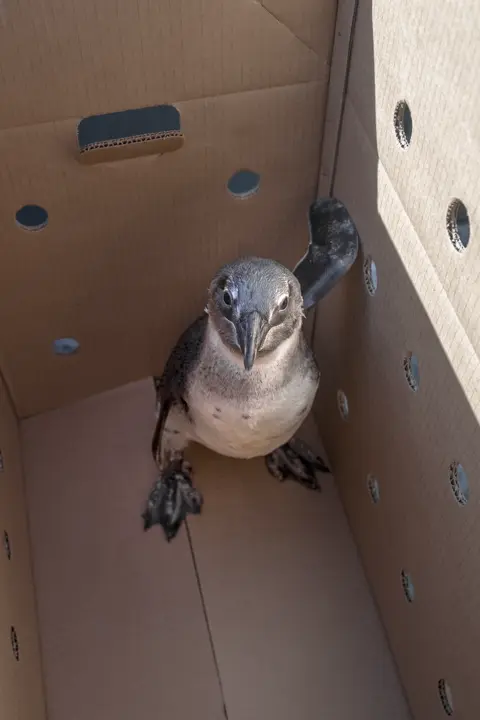
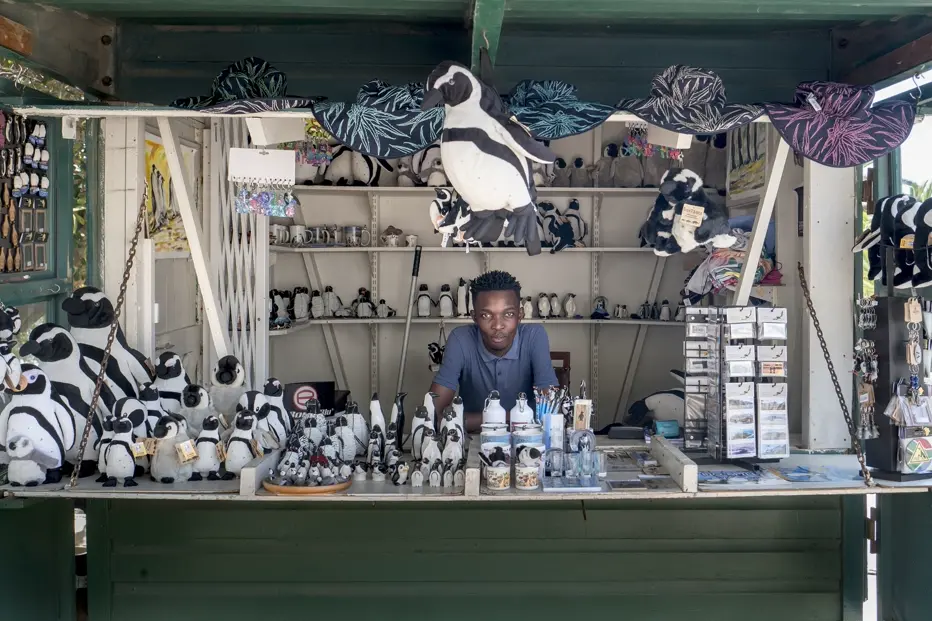
Tourism plays an ambivalent role: well-regulated wildlife tourism can support nature conservation by funding protected areas and raising public awareness. At Boulders Beach, the popularity of the Spectacled Penguins has helped to secure conservation measures such as the no-fishing zone in False Bay – one reason why the colony has remained relatively stable. Mass tourism, on the other hand, fuelled by social media, can endanger wild animals.
The penguins get very close to people and cameras. How did you find the right photographic distance?
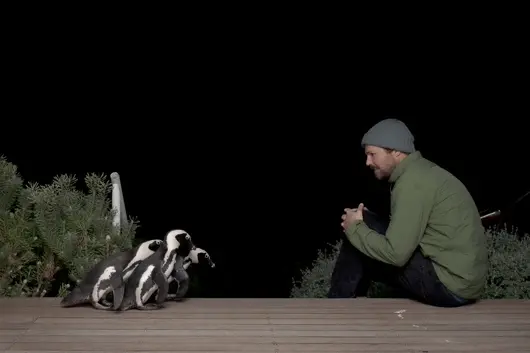
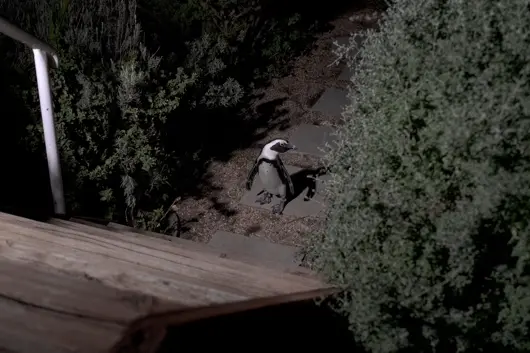
Because the project was investigating the stress caused to this fragile colony by human activity, we wanted to photograph the penguins with as little disturbance as possible. It wasn’t about documenting the encounter between people and animals, but to gain insight into the lives on the penguins without influencing their behaviour. The animals are very shy, which is why most of the pictures were taken with special camera traps. Commercially available systems were unsuitable for this purpose, so we developed our own, which we placed near nests and along their feeding routes. We also dived twice a day, before sunrise and before sunset, to position camera traps for underwater footage. The conditions off Cape Town were extreme: cold water, strong currents and high waves. It was 15 days before we got our first image.
Was there a particular moment during the project that you still remember to this day?
In 2021, after the pandemic, I was living in Simon’s Town, where a number of penguins pairs had built nests in my garden. I installed camera traps to document their behaviour unobserved. One evening I heard a noise on the terrace and suddenly saw a young penguin come into the house. He curiously explored the kitchen, the wine cellar, and afterwards the other rooms.
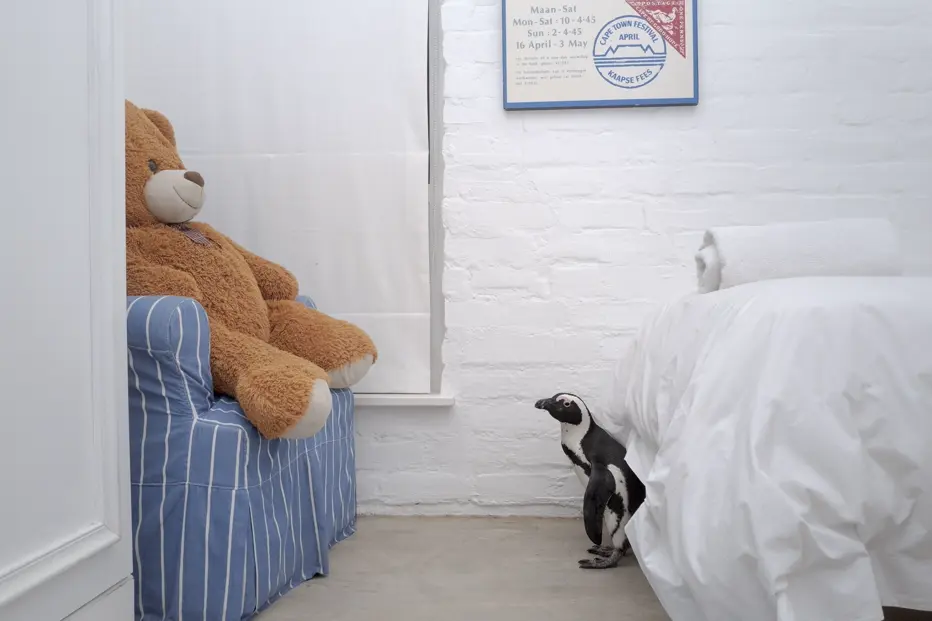
He went into the children’s room where he crawled under the bed and came out again with an enormous teddy bear – a moment captured by a camera trap. That was how my iconic The Penguin and the Teddy Bear picture came about. For me, this photo tells a whole story: it combines nature protection with the absurdity of our relationship to animals whose images are all around us, whilst we often forget how to live alongside the real creatures.
In the decisive moment, do you tend to work intuitively or do you deliberately wait for a specific behavioural pattern?
My work demands preparation and patience, yet also thrives on intuition and surprise. With wild animals it’s possible to study their behaviour, trace their movements, understand their routines and anticipate certain situations – yet you can never fully control them. In this project, a large part of the work involved observing without intervening. The use of camera traps requires a very conscious approach. We needed to understand where the penguins were nesting, which paths they followed and when they would head out to sea or return. However, as soon as the cameras were in place, we had to accept that the animals themselves would decide what the final image would look like.
The moment with the penguin and the teddy bear could never have been planned. I had merely created the conditions where an image could be captured – the image itself came about because of the animal’s curiosity.
What equipment did you work with and how did your Leica support the project?
Most of the pictures on land were taken with a Leica Q. Thanks to its compact design and quiet shutter, I was able to take photos discreetly and intuitively. The colour reproduction of a Leica is unique and suited the light and atmosphere of this place perfectly.
Mélanie's Gear


What influences did beach, wind, light reflections and people play on your technical approach?
We had to plan around the light, the tides, the weather and, above all, the schedule of the animals. In order to tell this story, we had to learn to surrender to nature as much as possible. For me, that’s precisely the crux of the matter – and that’s exactly what I love about both nature and photography. At some point, however, you have to let go of control and allow the world to reveal itself on its own terms.
About Mélanie Wenger
The French photographer holds a degree in literature and journalism. Her pictures have appeared in publications such as Le Figaro and National Geographic. She is the winner of the 2017 HSBC Photography Prize. Wenger was named LensCulture Emerging Talent 2018 with her Sugar Moon project, which was the subject of an interview in LFI 2.2022; the photographs were also exhibited at the 2019 Visa pour l’image festival. She is a founding member of the Inland Photographers’ Cooperative.
© Mélanie Wenger. All rights reserved.