The Leica Gallery Wetzlar presents a multifaceted selection of significant Leica photography, from 26th June to 20th September 2026
With the “Personal Perspectives” exhibition this summer, the Leica Gallery Wetzlar will be celebrating its own history while, at the same time, honouring the significance of Leica Galleries within the context of the company’s cultural work. A collaboration with Leica gallerists around the world has resulted in an exciting and varied exhibition, with numerous classics presented alongside many new discoveries.
With the opening of the first Leica Gallery at the company’s headquarters in Wetzlar 50 years ago, Leica laid down the foundation for its cultural commitment, a successful concept that continues to this day. In April 1976, the first exhibition space was opened in Wetzlar in the foyer of what was then the Leica administration building. Over the following decades, further locations were established around the world, from New York City to Prague, from Frankfurt on the Main to Tokyo. In 2008, a significant milestone was reached when the Leica Gallery Salzburg was opened by Karin Rehn-Kaufmann. She was subsequently appointed General Representative of Leica Galleries International, which has led to the rapid expansion of the global network, which now comprises 27 venues. And the trend is set to continue, with a Leica Gallery due to open in Shanghai this year.
The chance to see photography exhibitions all over the place, whether in galleries or museum institutions, was anything but self-evident 50 years ago. In this regard, it is evident that Leica had shown great foresight: today, the galleries are visible ambassadors for the shared aim of making photography – as an art form, a historical record and a social voice – tangible and available to people around the globe. Presenting around 150 exhibitions a year, the galleries have achieved the delicate balance between showcasing contemporary photography and the iconic works of the past. Leica Galleries are synonymous with outstanding imagery, cultural dialogue and the promotion of photography. They see themselves as places of encounter, reflection and interaction – between photographers and an international public –, and offer a space for visual narratives that explore historical, political and social issues, and encourage discussion. For half a century now, the venues have stood for photographic excellence and the diversity of the medium: a very good reason for Leica Camera AG to celebrate these five decades.
“Leica Galleries are much more than simple exhibition spaces; they are emotional meeting points. These are places where photography is not only shown, but experienced; spaces where stories become visible; where different perspectives come together; and where Leica values – precision, authenticity, humanity – are tangible,” says Rehn-Kaufmann. “It is precisely in this increasingly digital and fast-paced world that these physical places become invaluable. They provide the possibility for a direct interaction between the artists and the general public, foster dialogue and inspiration, and give photography a stage that touches and resonates. They combine technology with emotions, handicraft with approach, and provide real cultural relevance.”
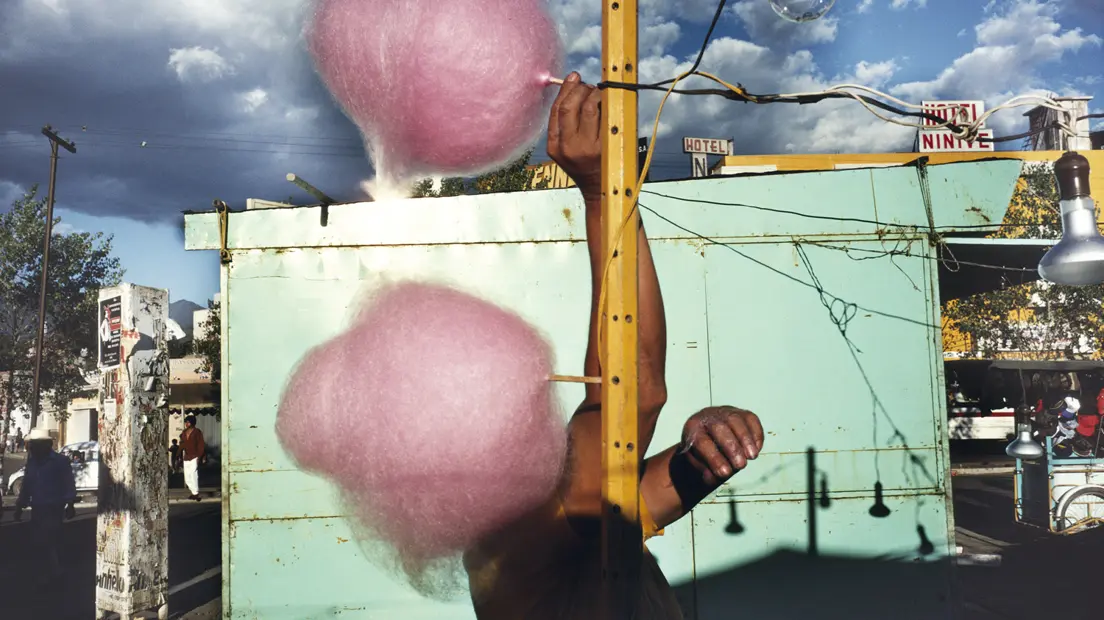
“Personal Perspectives”: Launched around a year ago, the call for current gallerists to select their favourite images from the Leica Galleries programme met with a wide response. The diversity of the photography that has been on display ensured great variety in the proposals, with the classics holding their own, alongside newer voices. The scope of this exhibition includes such greats as Werner Bischof, Elliott Erwitt, Gianni Berengo Gardin, Thomas Hoepker, Bruce Gilden, Barbara Klemm, Ralph Gibson and Joel Meyerowitz. Classic photojournalistic approaches are well represented, as are free, artistic works – from portraiture to reportage; and, of course, the street photography genre, which is linked to Leica like few others. There is the opportunity to revisit the works of past Leica Oskar Barnack Award winners, as well as discover newer photographic approaches that engage in surprising dialogues with the classics, as demonstrated by the works of Franziska Stünkel, Lys Arango and M’hammed Kilito. And so, the jubilee exhibition at the Leica Gallery Wetzlar presents history and stories – from personal perspectives and with in-depth expertise.
With its impressive and exemplary selection, the current display in Wetzlar underlines the great significance of Leica Galleries. For 50 years, they have been shaping an exciting chapter dealing with photographic perception – not just within the world of Leica, but also in connection with the international photography scene. This applies, just as much, for the future: “My hope is that Leica Galleries will continue to be places that touch people, encourage reflection and offer inspiration. Places where photography is not only viewed, but also felt. If they can retain this emotional power, they will remain a vibrant part of cultural life over the coming decades – serving as a guiding light, a meeting place and a source of new visions,” Rehn-Kaufmann concludes.
Press_Release_-Leica-Gallery-Wetzlar-presents-exhibition-Personal-Perspectives.pdf
English
50 ans des Galeries Leica
Depuis 50 ans, les galeries Leica sont bien plus que de simples salles d’exposition. Ce sont des lieux dédiés à l’imagination, au dialogue et à la rencontre. La toute première galerie Leica a ouvert ses portes à Wetzlar en 1976. Depuis, elle est devenue un réseau international de galeries réparties sur plusieurs continents, unies par la conviction que les images peuvent toucher l’humanité et changer les perspectives. Les galeries Leica célèbrent l’art de l’observation et la force de la photographie. Elles réunissent depuis un demi-siècle les cultures, les générations et les histoires par-delà les frontières, renforçant l’idée que la véritable photographie est intemporelle et que l’expression visuelle demeure un langage universel.
À propos de Leica Camera
Leica Camera AG est un fabricant haut de gamme d’appareils photo, d’objectifs et de produits d’observation. Entreprise internationale, elle peut s’enorgueillir d’une histoire qui couvre plus d’un siècle et demi. Dans le contexte de sa stratégie de développement, elle a étendu ses activités au Mobile Imaging (smartphones), ainsi qu’à la conception de verres de lunettes et de montres de qualité supérieure. Elle est également représentée dans le segment du home cinéma par ses projecteurs.
Le groupe Leica Camera AG se compose de son siège situé à Wetzlar, en Allemagne, d’un deuxième site de production à Vila Nova de Famalicão, au Portugal, et d’un réseau de plus de 120 Leica Stores dans le monde. L’entreprise emploie plus de 2400 collaboratrices et collaborateurs et a réalisé un chiffre d’affaires de 554 millions d’euros sur l’année financière 2023/24.
La marque Leica, c’est une qualité supérieure, ainsi qu’un savoir-faire et un design industriel allemands, le tout combiné à des technologies innovantes. Un élément important de la culture de la marque est la promotion de la photographie par le biais de près de trente galeries Leica, des Leica Akademies ainsi que de prix internationaux tels que le Leica Hall of Fame Award et le Leica Oskar Barnack Award (LOBA).
Please find further information at:
Leica Camera AG
Global Corporate Communications
E-Mail: press@leica-camera.com
Internet: www.leica-camera.com