
Grand’Hotel Metropoliz
Over ten years ago, a former sausage factory in Rome was converted into accommodation for people of diverse ethnicities. The photographer tells their story.
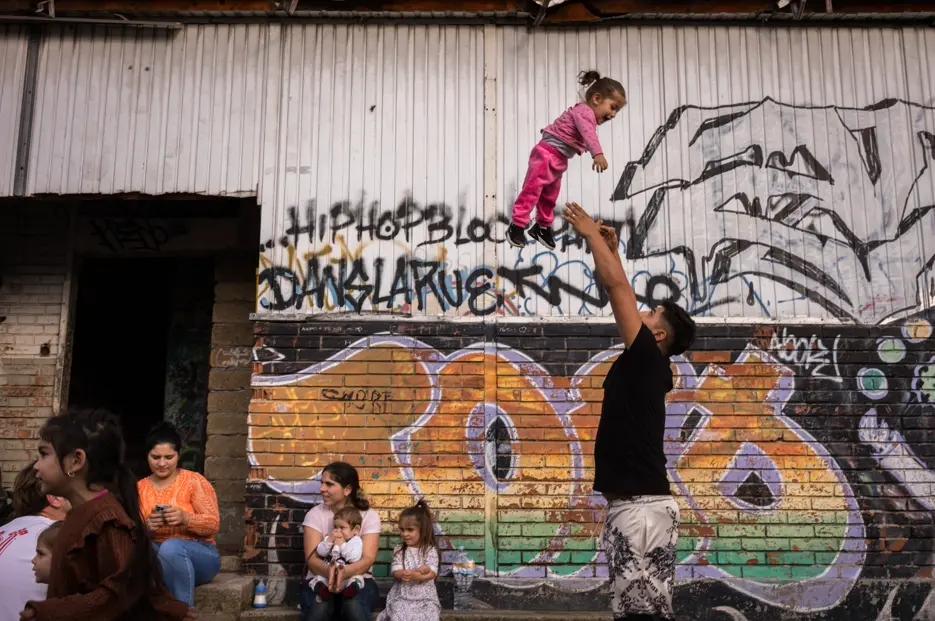
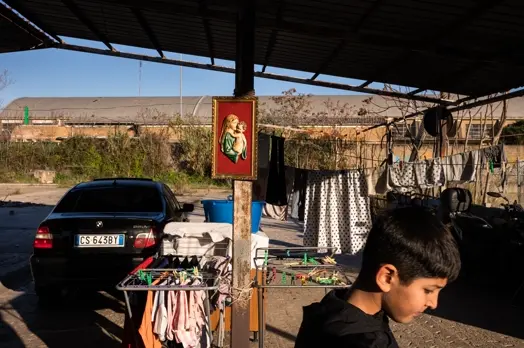
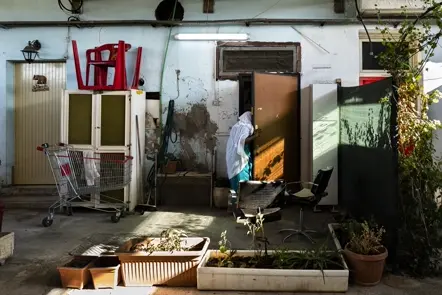
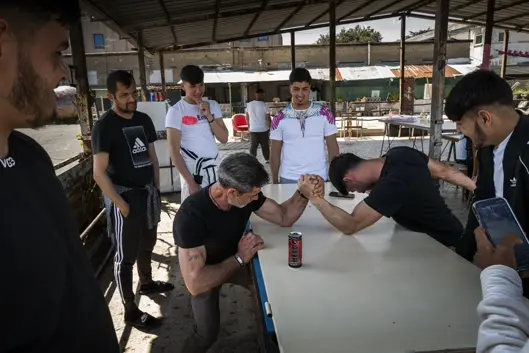
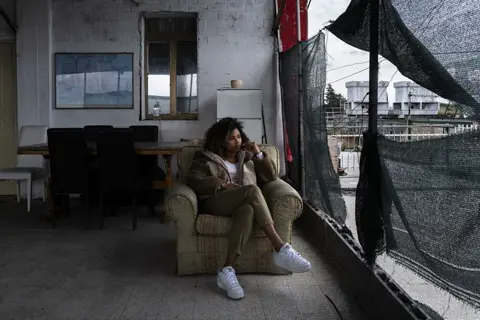
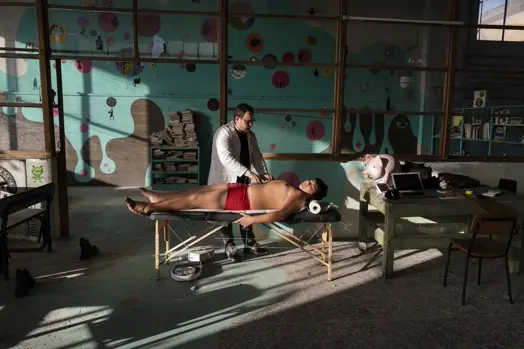
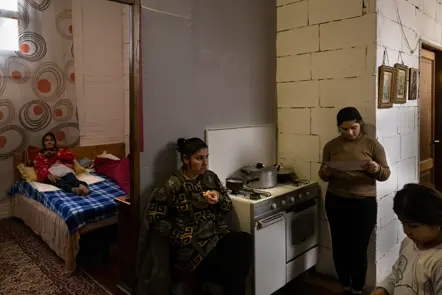
In 2011, around two hundred people from seventy families moved into a vacant property in the Italian metropolis, and have been living there peacefully integrated ever since. The photographer’s series follows the daily life of the commune made up of different nationalities, and describes the project that, with the help of art, has become the world’s first inhabited museum.
The Interview with Franco Buoncristiani
What is life in Metropoliz like?
Metropoliz reminds me of my childhood, which I spent in a small town in the Tuscan countryside, where everyone knew each other, families helped each other, the doors of the houses were always open and we children played in the squares. An aggregating and inclusive society that flowed slowly: today this is represented by the Metropoliz.
How did you come up with the project?
I had visited the Metropoliz about ten years ago. It was a visit in which I was accompanied by De Finis, the curator and creator of the museum area, full of installations and street art: it was a targeted visit in which I did not take the inhabitants into account. Three years ago I returned to show it to friends who were passionate about street art. It was during that visit that I interacted with the inhabitants and a few days later I decided to speak about them through my photos.
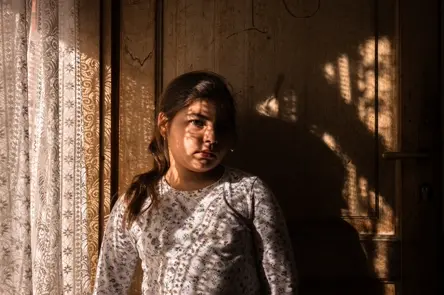
How did people react to you and your camera?
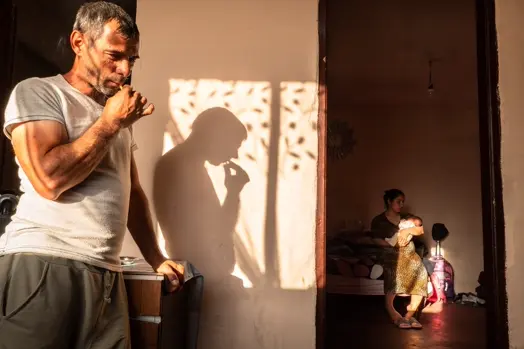
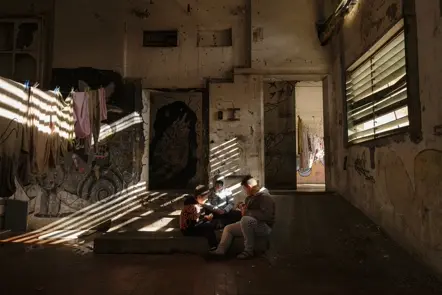
I came in without a camera and explained my project to them. I continued to hang out with them and I was useful to their community. When I started photographing their lives, at least a month later, these people had gained trust in me. They knew that I would use these photos only for positive purposes.
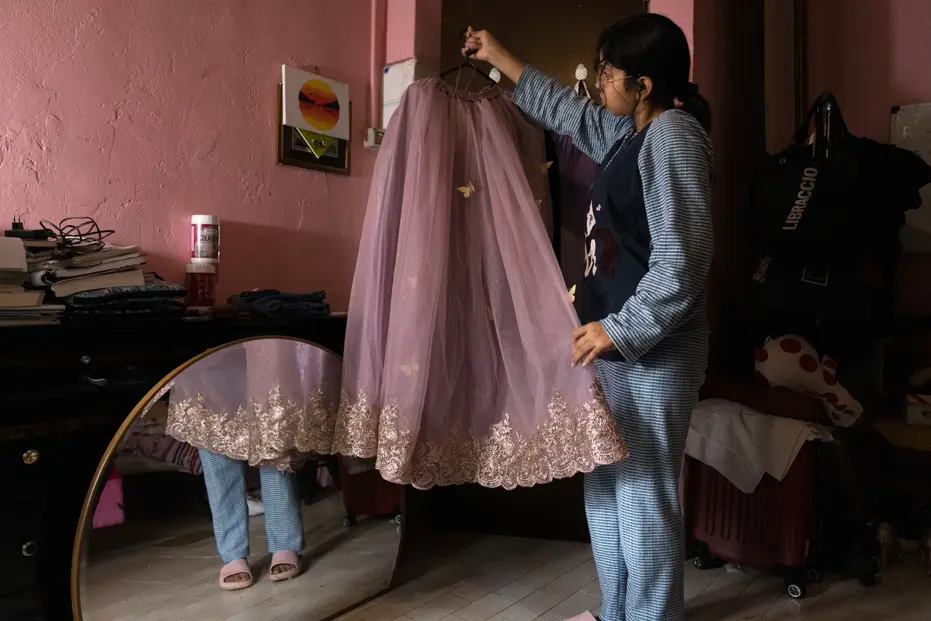
How were your pictures created?
This work lasted three years, as I was in no hurry. I studied the natural light at the right time for each photo. I documented countless religious events and celebrations, living the most intense moments with these people. The work grew and matured very naturally.
What were the challenges – and what was it like working with the Leica Q?
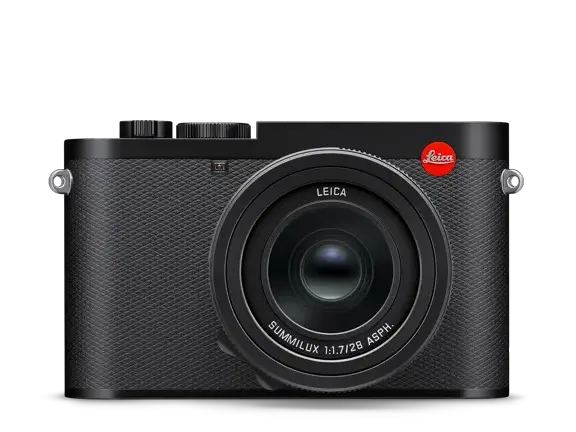
To achieve the goal of making myself invisible, I chose to work lightly, without a tripod or auxiliary lights. Everything had to be natural. For this reason, I chose a Q2 (and later a Q3). An essential and fast camera. I was rewarded for this choice with work that gave me enormous satisfaction.
Franco's Gear
Metropoliz – the name is the epitome of cities and urbanization, and also makes reference to the shortage of (affordable) living space in cities…
The name Metropoliz was chosen by the first residents and activists who occupied a former industrial plant located in Via Prenestina 913 in Rome in 2009. The name reflected the idea of creating an inclusive and multicultural “metropolis”, open to people from different nationalities, cultures and social conditio. The “z” at the end suggests a certain urban creativity and a young and innovative spirit. Furthermore, the name was intended to represent a social and political project, focusing on the reappropriation of abandoned spaces and the self-organization of marginalized communities. I hope I have contributed to documenting this project with my photos.
You called your series Grand’Hotel Metropoliz... although life there seems anything but “grand”.
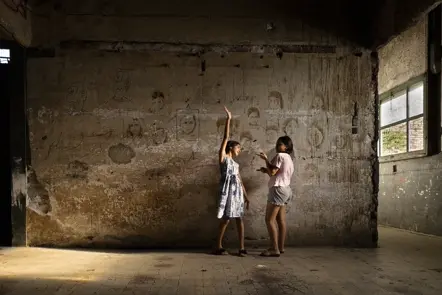
Grand’Hotel Metropoliz wants to pay homage to both Copacabana Palace, the work of Peter Bauza, which inspired me, and to distance itself from the many other squats in Rome, compared to which this is truly like living at the Grand’Hotel. The model of life it proposes is also great: a large common space where children grow up and have fun surrounded by art, without danger, while outside this place, children in Rome under 16 years of age must be accompanied by an adult for every activity they do outside their apartment, in order to avoid danger.
What do you consider special about this place?
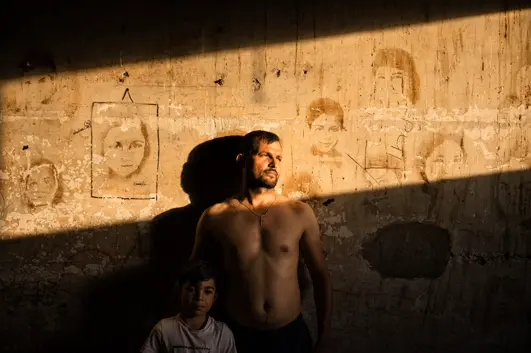
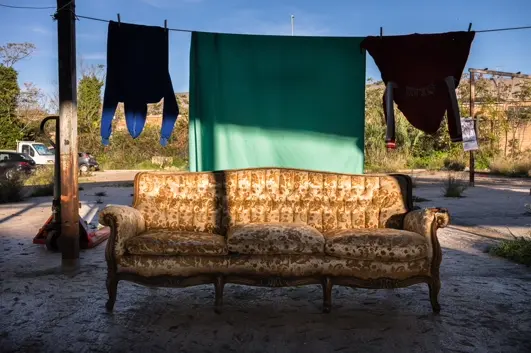
It is the inhabitants and the art that surrounds them that is special. Special is their ability to erase any prejudice the moment they step through the entrance gate. It was exciting to live in this timeless oasis in the middle of a frenetic metropolis like Rome.
What is the current situation in Metropoliz – and what will happen in the future?
These people fought hard to stay in these homes; the risk of eviction was a sword of Damocles hanging over their heads, until this year when the municipality of Rome committed to buying the space, to reclaim it by building apartments to be delivered to the inhabitants at subsidized rent. They have finally won their battle: they will have real houses in the future. The museum space will be partially preserved. My photos will represent a historical memory, I would like them to find a definitive position here.
About Franco Buoncristiani
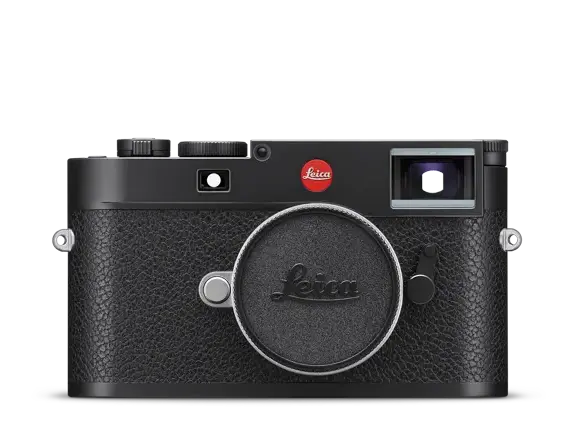
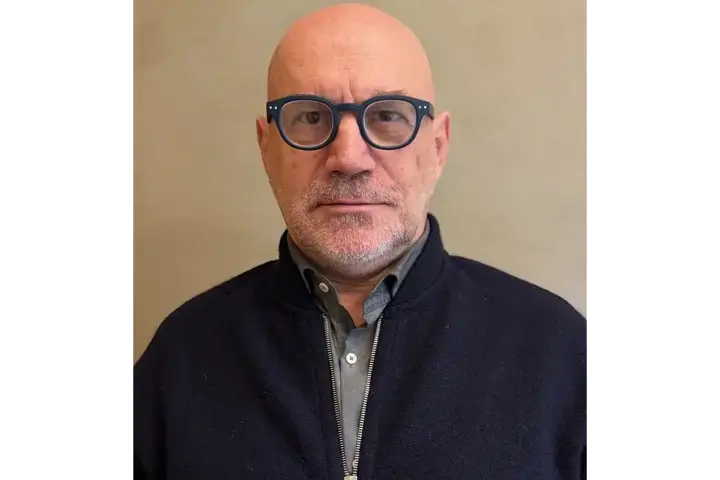
Franco Buoncristiani, 59, lives in Rome. His interest in photography began in 1999. His work is aimed at social issues, particularly in the suburbs of Rome, the new immigration, and street photography. He mastered in photography in Bologna with Photo Image and Fulvio Bugani. He works with a Leica Q3 (previously Q2) and a Leica M11, with Summilux-M 28 f/1.4 ASPH., Summilux-M 35 f/1.4 ASPH., and a Summicron-M 50 f/2.
© Franco Buoncristiani. All rights reserved.