-
© Peter Kuhnle
-
© Peter Kuhnle
-
© Peter Kuhnle
-
© Peter Kuhnle
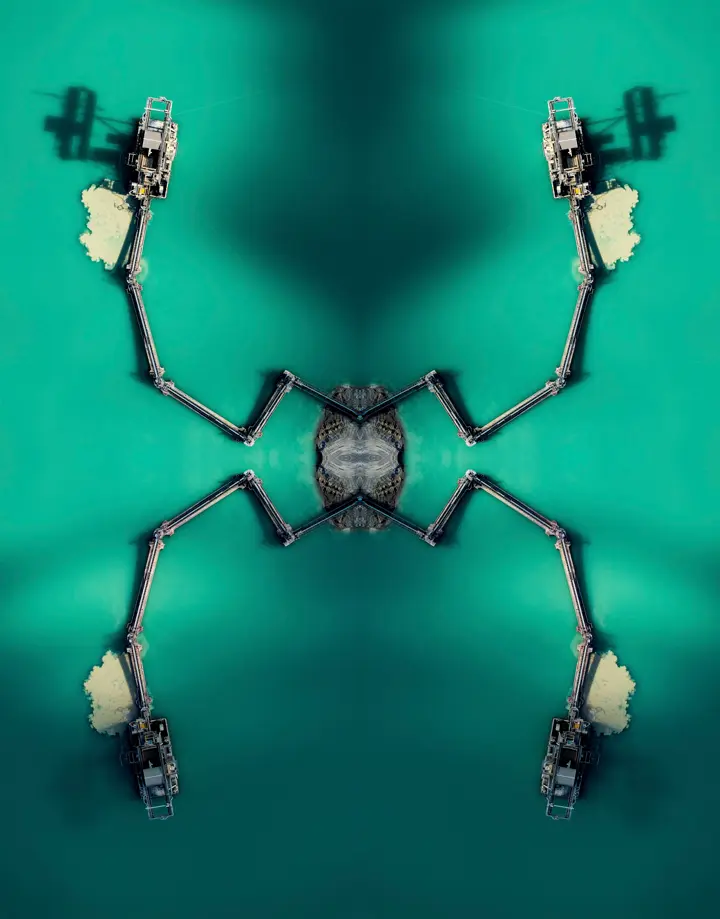
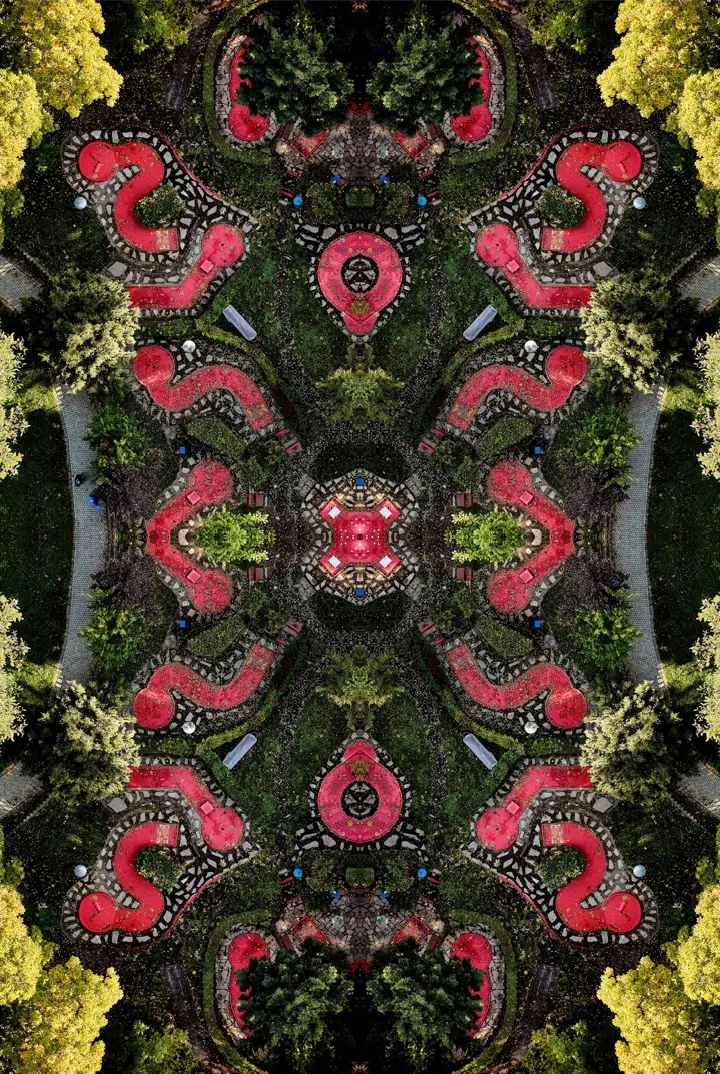
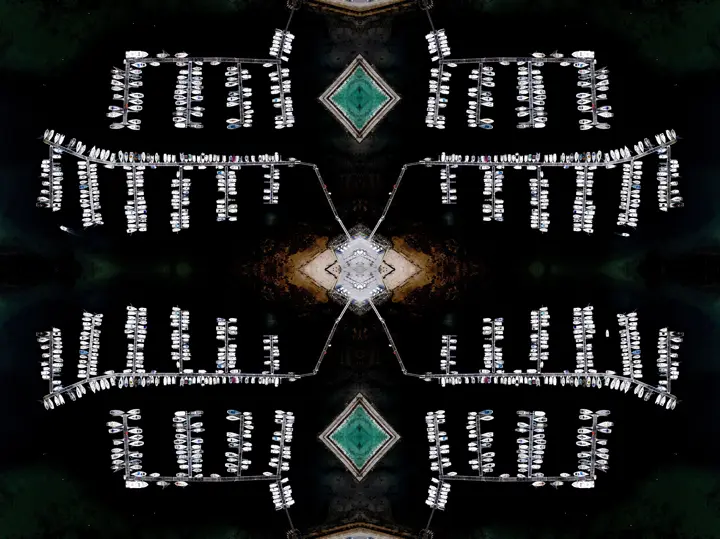
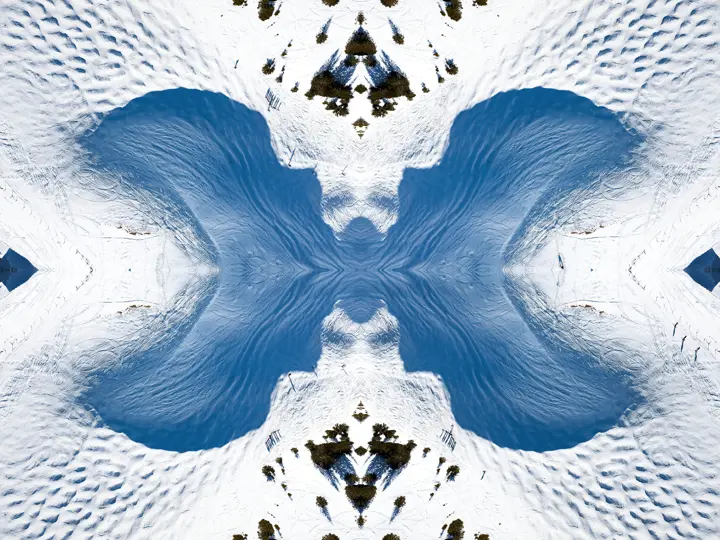
In the exhibition “multiple realities”, photographer Peter Kuhnle from Radolfzell presents photographic series that explore formal principles of order and the construction of visual space. Among the works on display are pieces from the series “kaleidoscopes” and “symmetrics.”
Through the multiplication, mirroring, and rearrangement of photographic images from different moments in time, Kuhnle creates complex visual spaces in which the photographic instant is transformed into a new form of visual simultaneity. Different moments appear to coexist side by side and merge into a single image, although each individual detail could just as easily stand on its own.
The exhibition invites viewers to question familiar ways of seeing and to experience perception anew. Although the series are based on similar formal principles, each develops its own distinct visual language. Repetition, symmetry, and reflection form their common foundation, yet these elements are employed in different ways. The resulting works create ornamental condensations that nevertheless feel light and airy, or geometric structures that at first glance seem to follow no discernible order at all.
In the photographic series “kaleidoscopes,” which consists primarily of drone photography, abstract-looking image compositions emerge from real photographic motifs through processes of reflection and rearrangement. Small details disrupt the seemingly perfect order. In this way, it becomes apparent that harmony is never static, but is always shaped by tension, movement, and deviation.
With “symmetrics,” Kuhnle takes up the principle of geometric balance while simultaneously disrupting it through irregularities and shifts. At first glance, the works in this series appear rigorously structured: mirrored image elements create a clear sense of formal stability. On closer inspection, however, it becomes evident that the forms are not completely closed. This gives rise to a visual language in which order and deviation do not appear as opposites but rather as mutually dependent forces that create a new dimension.
Leica Gallery Constance
Gerichtsgasse 14
78462 Constance
Germany
Saturday 9.30 a.m. - 2.00 p.m.