
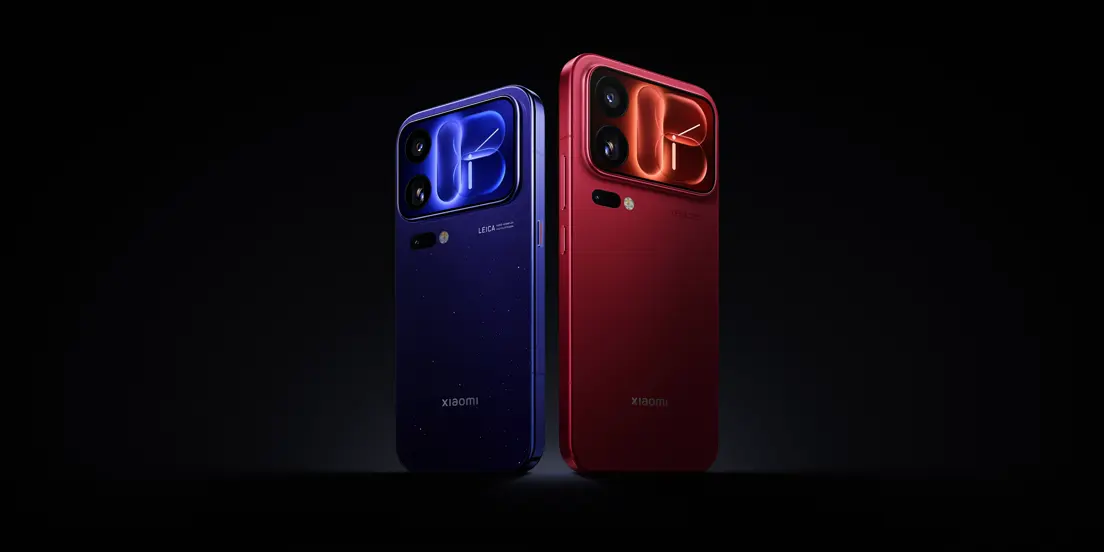
Leica Summilux optics and two 200-megapixel cameras enable users to capture detailed images and explore a wide range of compositions
Xiaomi and Leica Camera AG are introducing the Xiaomi 18 Pro smartphone series. This co-engineered camera system combines Leica Summilux optics with 200-megapixel main and telephoto cameras. Digital simulations of classic Leica lenses provide additional possibilities when composing images.
The new Xiaomi 18 Pro series of smartphones – consisting of the Xiaomi 18 Pro and Xiaomi 18 Pro Max – is the next step in the successful technology partnership between the electronics manufacturer Xiaomi and Leica Camera AG. The co-engineered camera system – featuring Leica Summilux lenses and 200-megapixel main and telephoto cameras – combines optical precision with high-resolution image sensors. Leica image aesthetics broaden the scope of mobile photography, enabling expressive portraits and detailed close-ups. The Xiaomi 18 Pro Max sets itself apart from the Xiaomi 18 Pro primarily through its Light Fusion 960L image sensor with LOFIC HDR technology, larger display and more powerful processor.
Development has been based on a shared ambition to combine optical performance and artistic freedom in a compact smartphone. As a result, the optics are precisely tuned to the sensor technology, laying the groundwork for nuanced reproduction of light, colour and fine subject details.
“With the Xiaomi 18 Pro series, we are combining Leica Summilux optics with the classic imagery of Leica lenses. Our main goals have been to make photography enjoyable and to allow personal moments to be captured with Leica’s distinctive character”, says Marius Eschweiler, Vice President Business Unit Mobile at Leica Camera AG.
Leica Summilux Lens for the 200-Megapixel Main Camera
The main camera on both models combines a 1/1.28″ sensor with a Leica Summilux lens. The sensor boasts 200 megapixels, i.e., 200 million pixels. The fast f/1.67 lens enables a very wide maximum aperture.
The Leica UltraPure optical system is designed to reduce unwanted light reflection and haze. This complements the finely tuned lens and image sensor.
A Light Fusion 960L image sensor with LOFIC HDR technology is built into the Xiaomi 18 Pro Max. This technology allows large differences in the brightness of a subject to be captured. The sensor offers a dynamic range of up to 16.2 stops. This allows details to be reproduced both in light and dark areas, even with backlighting.
Both models feature an additional ultra-wide-angle camera alongside the main and telephoto cameras. This has a resolution of 50 megapixels and a focal length of 17 mm. The wide field of view is perfect for taking pictures of landscapes, architecture and groups.
75 mm Telephoto Camera for Portraits and Close-ups
The telephoto camera on both models features a 200-megapixel sensor in the 1/1.56″ format. Its 75 mm focal length offers a classic perspective for portrait photography.
The Power Prism periscope module both bends and concentrates light. Its folded optical path allows the telephoto lens to fit within the limited space available in the camera system.
The close focus distance is only 12 cm, representing the nearest point the camera can focus on. This enables the telephoto camera to be used for close-ups of small subjects and fine surface structures.
In addition, zoom levels equivalent to focal lengths of 150 and 300 mm are available. These values indicate the available framing options. The optical telephoto focal length is 75 mm.
Image Styles and Digital Leica Lens Simulations
The “Essential Moment” mode offers three image styles. It uses AI to process images in the device.
- B&W Film is based on the tonal gradation of classic black-and-white photography.
- Iconic CCD evokes the bold colour rendering of early digital cameras.
- Modern Vintage combines understated tones with crisp details.
The software also simulates the image characteristics of two Leica rangefinder lenses. The simulation of the Leica Summicron-M 35 f/2 is perfect for documentary photography. The simulation of the Leica Summilux-M 75 f/1.4 is designed for portraits with soft bokeh. Bokeh describes the rendering of the out-of-focus areas.
Rear Display Simplifies Composition
The rear display shows a live preview from the rear cameras. This allows users to check the framing and facial expressions before taking selfies or group photos, or recording videos.
The series supports videos in 8K at up to 30 frames per second and in 4K at up to 120 frames per second. 8K and 4K refer to resolutions of approximately 8,000 and 4,000 pixels in width, respectively. 4K videos can be captured with Dolby Vision. This HDR format allows a larger range of brightness to be recorded.
Log recording with 10-bit colour depth enables colour correction in post-production. Log refers to a recording format that preserves greater flexibility for adjusting brightness and colour in post-processing.
Please find further information at:
Leica Camera AG
Global Corporate Communications
E-Mail: press@leica-camera.com
Technical Specifications at a Glance
Press Release: Xiaomi and Leica Camera Present the Xiaomi 18 Pro Series.pdf
Über Leica Camera
Die Leica Camera AG ist ein internationaler Premiumhersteller von Kameras, Objektiven und Sportoptikprodukten mit einer über 150-jährigen Unternehmensgeschichte. Im Zuge seiner Wachstumsstrategie hat das Unternehmen sein Geschäft auf Mobile Imaging (Smartphones) sowie die Fertigung hochwertiger Brillengläser und Uhren ausgeweitet und ist mit eigenen Projektoren im Heimkino-Segment vertreten.
Die Leica Camera AG mit Sitz in Wetzlar (Deutschland) und einem zweiten Produktionsstandort in Vila Nova de Famalicão (Portugal) verfügt über ein weltweites Netzwerk eigener Vertriebsgesellschaften mit über 120 Leica Stores.
Die Marke Leica steht für exzellente Qualität, deutsche Handwerkskunst und Industriedesign verbunden mit innovativen Technologien. Fester Bestandteil der Markenkultur ist die Förderung der Kultur der Fotografie mit weltweit rund 30 Leica Galerien, Leica Akademien sowie internationalen Auszeichnungen wie dem Leica Hall of Fame Award und dem Leica Oskar Barnack Award (LOBA).