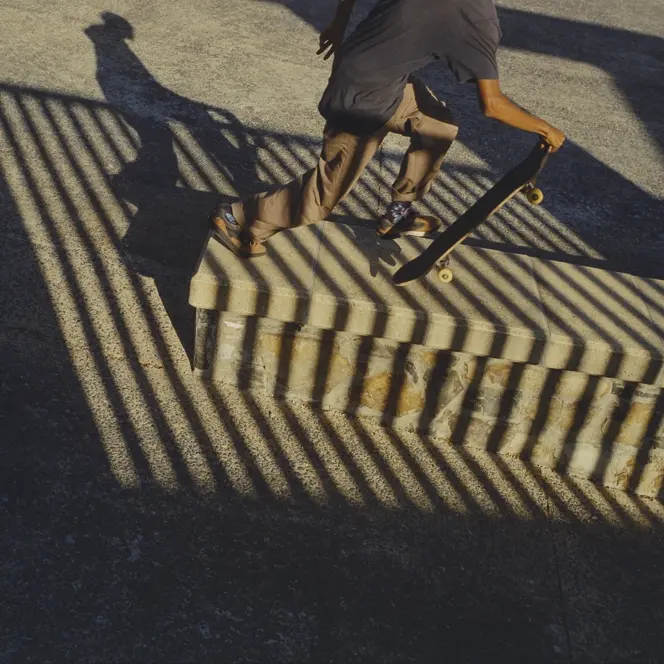
Follow Your Feet
For over 30 years, Rune Glifberg has been exploring the world with his skateboard – always a Leica M6 and a Minilux by his side. His fascination with the journey rather than the destination defines not only his subjects but also his photographic approach.
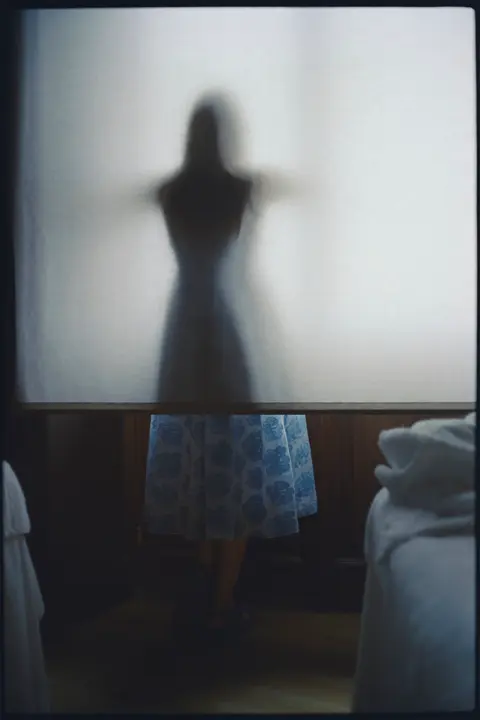
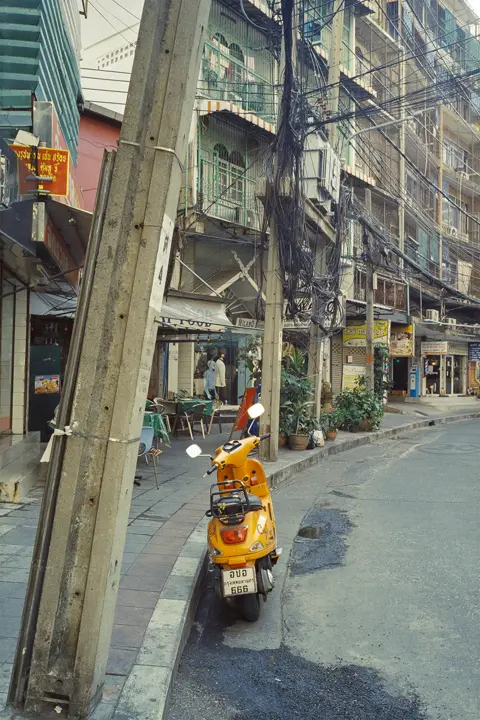
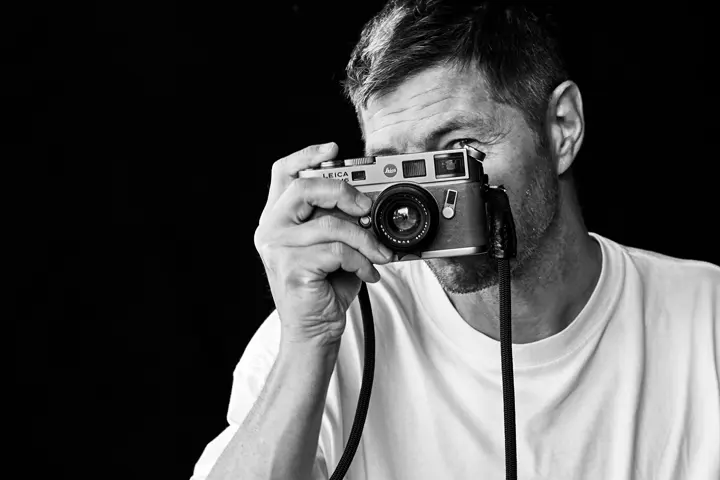
It is the small, unassuming moments that hide the stories that the Danish professional skateboarder, Rune Glifberg, wishes to tell. All over the world, he captures tender moments of daily life that remind us of our shared humanity. Shooting on film, and using a Leica M6 and a Minilux, his images are characterised by a timeless and nostalgic quality. Textures, light and his understanding of movement and spatiality – honed through sport – intuitively guide his photographic practice. Follow Your Feet is his first photo series, created in collaboration with the Leica Store Copenhagen.


The Interview with Rune Glifberg
Can you tell us something about your Follow Your Feet project?
We thought it was fitting to bring the pictures I’ve taken all over the world to life, instead of letting them just live on my hard drive and in my personal office space. I don’t often share my photos online – especially not the ones I’m most fond of. When we started curating Follow Your Feet, I was looking for pictures that I felt had a deeper meaning or story behind them.
Skateboarding has taken you to cities all over the world. How has it shaped the way you experience new places?
Skateboarders have a natural way of fitting into new cities and unknown places – at least in most parts of the Western world. We sit, fall, and play on the ground, and we explore and see local architecture in ways which often remain hidden to non-skateboarders. I’ve always been curious about what’s around the next corner, and that’s definitely something I picked up from skateboarding.

Your photographs aren’t about skateboarding itself. Instead, they focus on everyday life, people and urban landscapes. What draws you to these subjects, and what catches your attention?
I’m not sure I’ve figured out what really gets me going in photography yet. The title of this exhibition kind of sums that up. It could just as easily have been called Follow Your Heart because, when I shoot, I usually don’t have a certain goal or picture in mind. I just set off, and whatever happens, happens. One thing that definitely draws me in is timelessness. Capturing something that could have been photographed yesterday just as easily as 50 years ago really excites me. Sometimes, maybe too much so. I can tend to hyperfocus on the wrong thing and want too much from a scene.
As a professional skateboarder, you’ve spent much of your life in front of the camera. What made you want to step behind it?
Maybe I was too lazy to learn the basic principles of photography at an earlier age. It always felt natural for me to pick up a camera, compose a shot, and know what I wanted to see in an image. It was the technical side of things – figuring out the exposure triangle, understanding aperture, and learning the fundamentals – that kept me from pursuing photography in my twenties and thirties.
When working with photographers as a skateboarder, you have to collaborate with them. You’re creating an image together. Brilliant photographers can’t necessarily make brilliant skate photos on their own. The skateboarder has to know what’s going on behind the lens, and to know which tricks work best with certain angles or compositions. Sometimes, I feel like I’ve been making photographs for decades. I just wasn’t the one pressing the shutter.

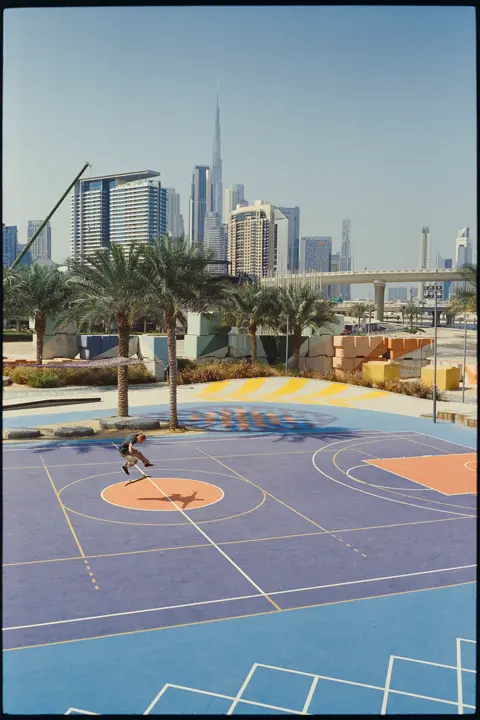
What do you consider makes a good photo?
For me, texture plays a big part. It adds an emotional layer to a photograph. Texture is like patina. There’s a story in texture, and everything has it: skin tones, wrinkles, and surfaces tell you a lot about a scene or a person and give the viewer a deeper connection to the image. Any time you have a picture that lets your imagination continue the story beyond the frame, you have a good photograph.
What emotions do you want to evoke in the viewer?
I want people to enjoy my pictures first of all for their simplicity and beauty. If it’s enough to make the viewer engage with the image and feel something, then that’s amazing.
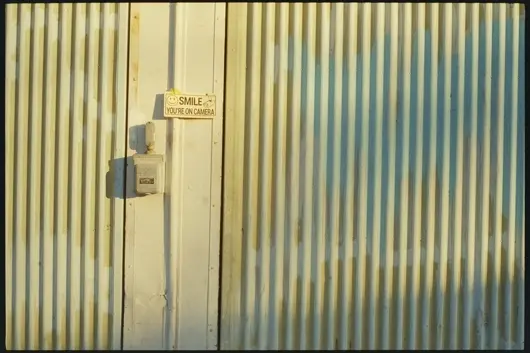
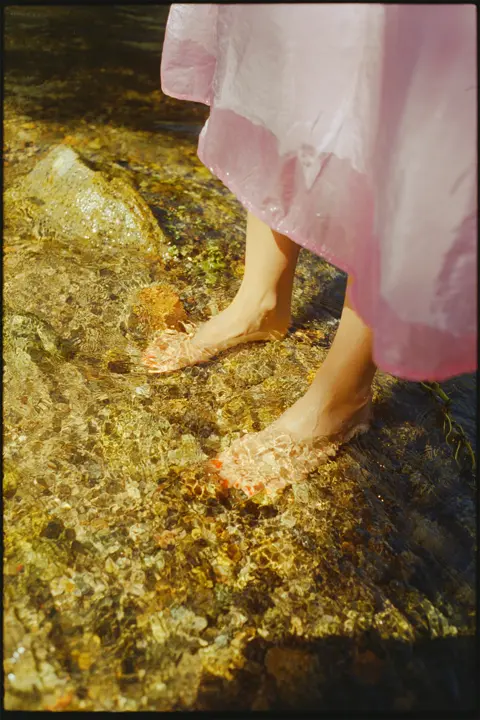
What is it about analogue photography that fascinates you?
I like the fact that it slows things down and, in all honesty, I don’t really enjoy editing photos when shooting digital. When I shoot digitally, I always feel like I have too many options. Even when I already have a great picture, I usually end up taking a couple of additional shots. That usually leads to some level of dissatisfaction, which is a shame because I should be enjoying the moment instead.
I also love the waiting game that comes with shooting analogue and not knowing exactly how a shot will turn out. You leave the moment wondering, and there is a new excitement when you finally see a picture you’ve taken. Hopefully, one day I’ll have more time to focus on darkroom printing myself.

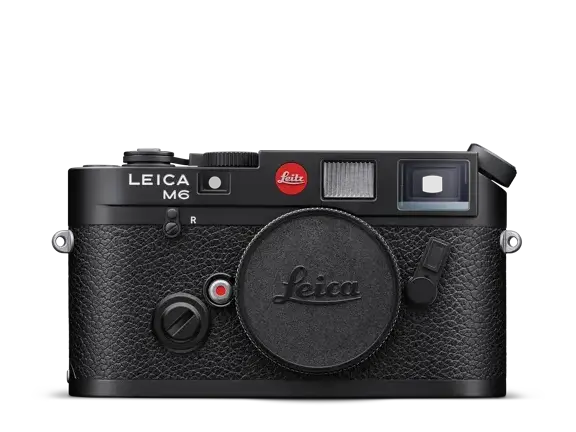
You photograph with a Leica M6, a camera closely associated with street photography. What do you appreciate most about working with a rangefinder?
It’s such an intuitive system once you get the basics down. That being said, I still feel like I miss a lot of shots and could be much faster and more precise when adapting to changing light and zone focusing. For Follow Your Feet I also worked with my Minilux. I love that camera! As a compact camera, it’s simply a must for travelling. It fits in any jacket pocket, which makes it the perfect companion.
Equipment:
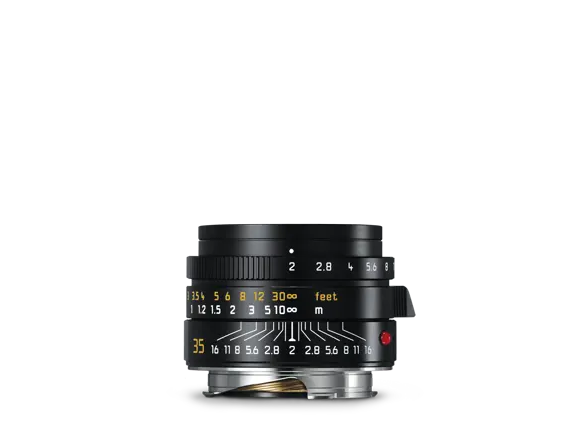
Leica M6, Leica Minilux, Summicron-M 35 f/2 ASPH, Summilux-M 50 f/1.4 (Edition 1913-1983)

© Arto Saari
About Rune Glifberg
Born in 1974, Rune Glifberg is a Danish, professional skateboarder with an exciting, over-thirty-year career. In more recent years, he has increasingly dedicated time to his photography. With a keen eye for detail, he captures urban environments, textures and mundane situations from around the world, creating a body of work that is both nostalgic and timeless.
© Rune Glifberg. All rights reserved.